

½ Crown – United Kingdom
United Kingdom
Context
Years: 1820–1823
Issuer: United Kingdom 
Ruler: George IV
Currency:
(1158—1970)
Demonetization: 31 December 1969
Total mintage: 32,236,500
Material
References
KM: #Click to copy to clipboard676
Numista: #13178
Value
Bullion value: $37.78
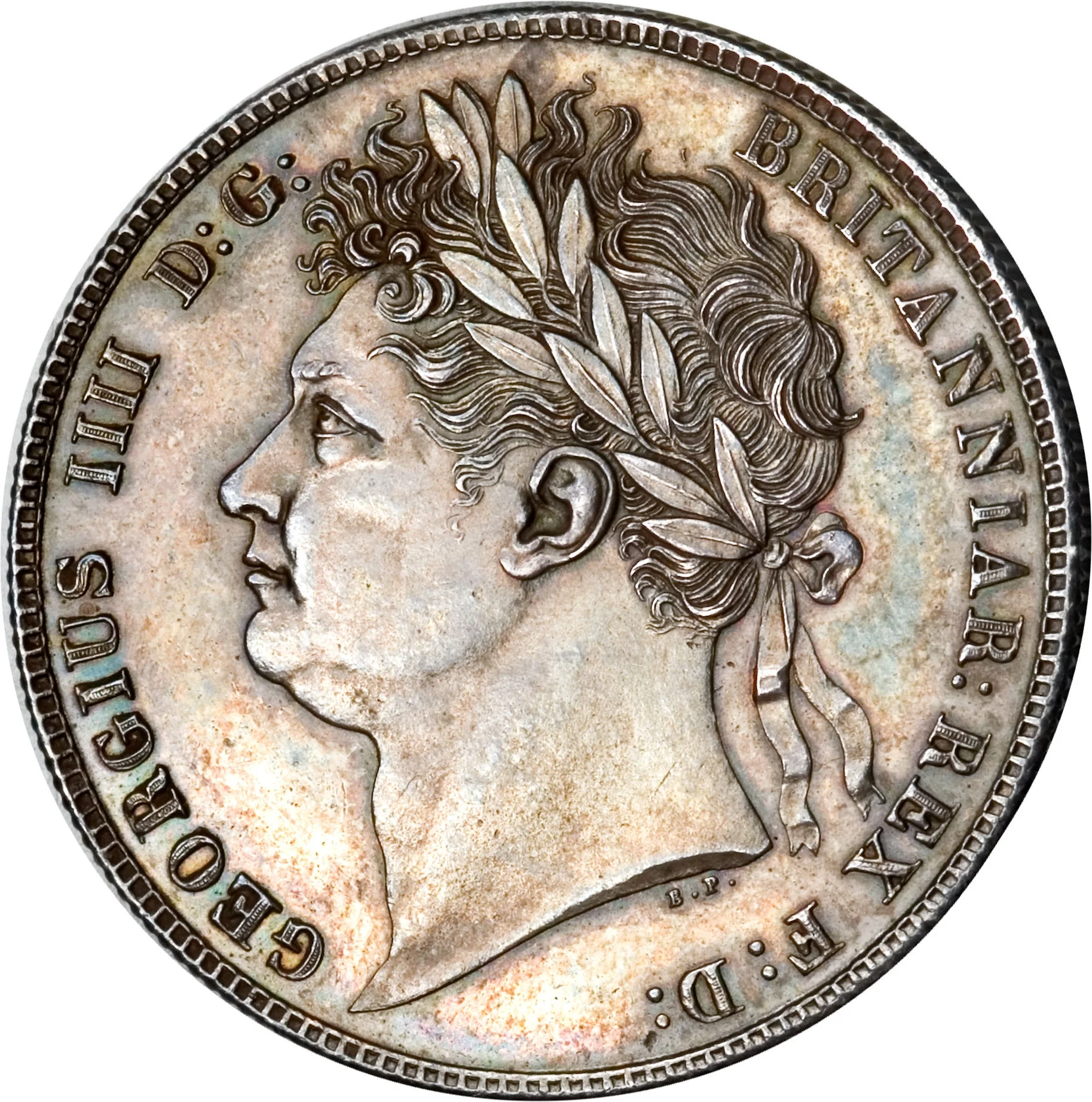
Obverse
Description:
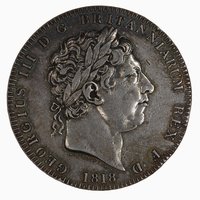
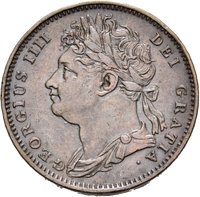
King George IV, first laureate portrait, left. Legend encircles.
Inscription:
GEORGIUS IIII D:G: BRITANNIAR: REX F:D:
Translation:
George the Fourth, by the Grace of God, King of the Britains, Defender of the Faith.
Script: Latin
Language: Latin
Engraver: Benedetto Pistrucci
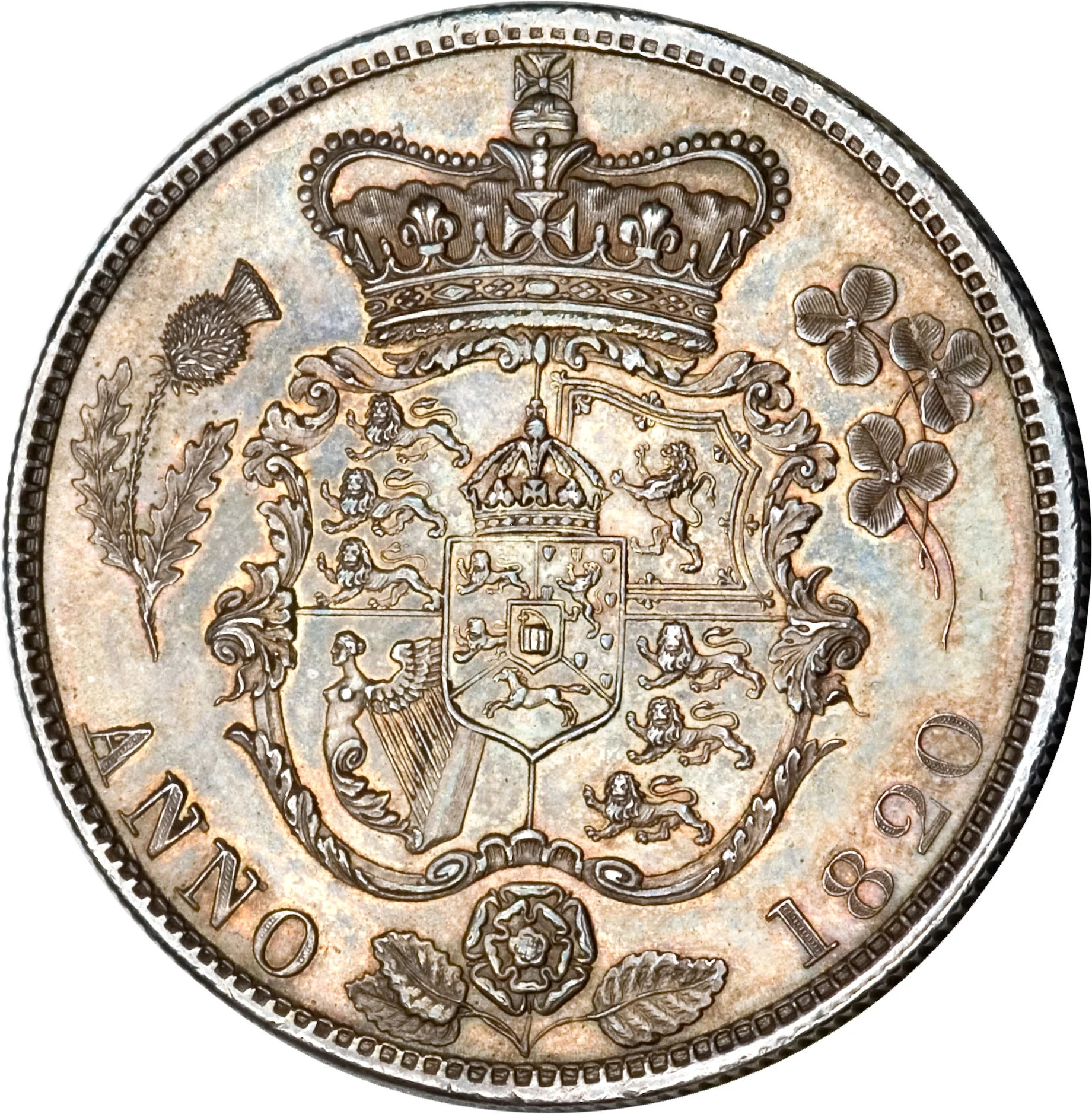
Reverse
Description:
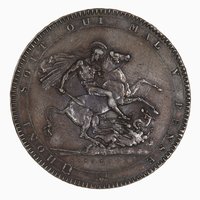
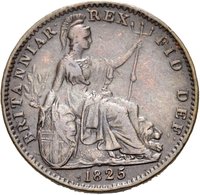
First shield with crown and mantle, floral emblems, date beneath.
Inscription:
ANNO 1820
Script: Latin
Engraver: Jean Baptiste Merlen
Edge
Reeded
Mints
| Name | Mark |
|---|---|
| Royal Mint (Tower Hill) | — |
Mintings
| Year | Mint Mark | Mintage | Quality | Collection |
|---|---|---|---|---|
| 1820 | — | — | Proof | |
| 1820 | mintage incl. KM#672 | 2,396,500 | ||
| 1820 | mintage incl. KM#672 | 2,396,500 | ||
| 1820 | mintage incl. KM#672 | 2,396,500 | ||
| 1820 | mintage incl. KM#672 | 2,396,500 | ||
| 1820 | mintage incl. KM#672 | 2,396,500 | ||
| 1820 | mintage incl. KM#672 | 2,396,500 | ||
| 1820 | — | 2,396,500 | ||
| 1821 | — | — | Proof | |
| 1821 | — | 1,435,100 | ||
| 1823 | mintage incl. KM#688 | 2,003,700 | ||
| 1823 | mintage incl. KM#688 | 2,003,700 | ||
| 1823 | mintage incl. KM#688 | 2,003,700 | ||
| 1823 | mintage incl. KM#688 | 2,003,700 | ||
| 1823 | mintage incl. KM#688 | 2,003,700 | ||
| 1823 | mintage incl. KM#688 | 2,003,700 | ||
| 1823 | — | 2,003,700 |
Historical background
In 1820, the United Kingdom was navigating the complex aftermath of the Napoleonic Wars, with its currency system at the centre of a heated economic and political debate. The nation was operating under a de facto gold standard, but the pivotal legislation was the Restriction Act of 1797, which had suspended the convertibility of Bank of England notes into gold. This move, intended to prevent a run on the Bank's gold reserves during wartime, led to a period of significant inflation and a depreciated paper pound. By 1820, the war was over, but the suspension remained, creating a divided "bullionist" controversy between those who advocated for an immediate return to gold convertibility at the pre-war parity and those who feared the deflationary consequences.
The government, influenced by the Bullion Report of 1810, was committed to restoration. The Coinage Act of 1816 had formally demonetised silver and established gold as the sole standard of value, defining the sovereign coin. However, the crucial step of making banknotes redeemable for gold was only enacted with the Resumption Act of 1819 (Peel's Act). This law mandated a phased return to full convertibility by 1823, a deadline ultimately met ahead of schedule in 1821. Thus, 1820 was a transitional year, marked by the active deflationary pressure of this policy as the money supply was contracted to raise the value of paper notes to the mandated gold price.
Consequently, the economic climate in 1820 was one of adjustment and strain. The return to the pre-war gold parity made British exports more expensive and contributed to a period of economic distress, particularly in agricultural and industrial sectors, alongside significant public debt burdens. This painful transition, however, successfully re-established the gold standard that would underpin British financial dominance for the next century, prioritising currency stability and international confidence over short-term domestic ease. The decisions cemented in this period shaped the UK's monetary orthodoxy for generations.
The government, influenced by the Bullion Report of 1810, was committed to restoration. The Coinage Act of 1816 had formally demonetised silver and established gold as the sole standard of value, defining the sovereign coin. However, the crucial step of making banknotes redeemable for gold was only enacted with the Resumption Act of 1819 (Peel's Act). This law mandated a phased return to full convertibility by 1823, a deadline ultimately met ahead of schedule in 1821. Thus, 1820 was a transitional year, marked by the active deflationary pressure of this policy as the money supply was contracted to raise the value of paper notes to the mandated gold price.
Consequently, the economic climate in 1820 was one of adjustment and strain. The return to the pre-war gold parity made British exports more expensive and contributed to a period of economic distress, particularly in agricultural and industrial sectors, alongside significant public debt burdens. This painful transition, however, successfully re-established the gold standard that would underpin British financial dominance for the next century, prioritising currency stability and international confidence over short-term domestic ease. The decisions cemented in this period shaped the UK's monetary orthodoxy for generations.
🌟 Uncommon