

20 kroner (Supreme Court) – Norway
Add to wishlist
Circulating commemorative coins
Commemoration: Bicentenary of the inception of the Supreme Court
Norway
Context
Material
References
KM: #
Numista: #68577
Value
Exchange value: 20 NOK
Inflation-adjusted value: 27.79 NOK
Obverse
Description:
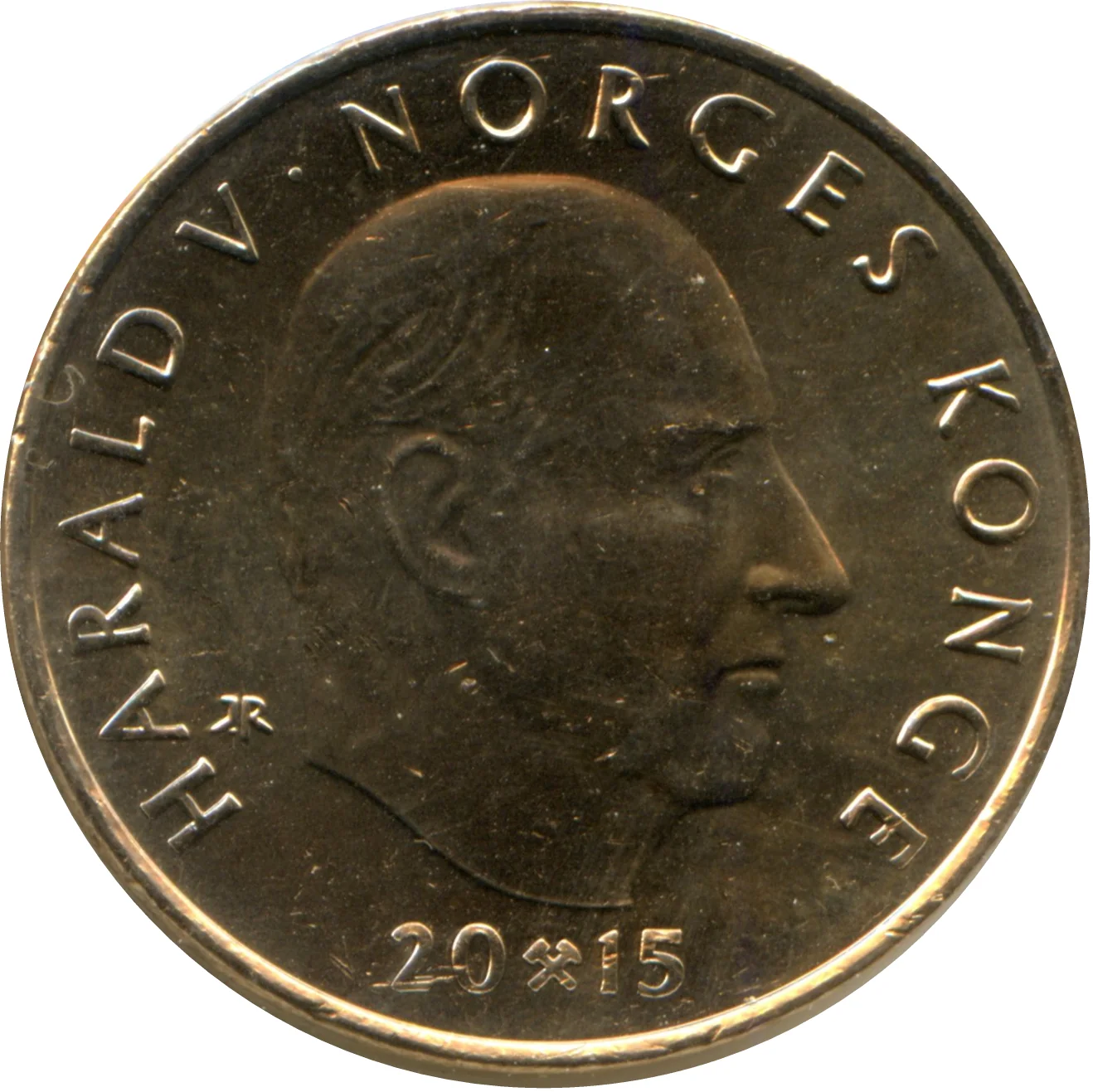
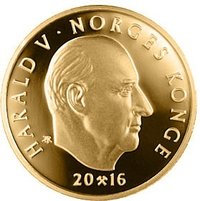
Bust of King Harald V facing right, with engraver's initials behind it. Inscription surrounds the bust, and a mintmark divides the date below. Solid ring on the rim.
Inscription:
HARALD V · NORGES KONGE
IAR
20 ⚒ 15
IAR
20 ⚒ 15
Translation:
Harald V, Norway's King
20th Anniversary
20 · 15
20th Anniversary
20 · 15
Script: Latin
Engraver: Ingrid Austlid Rise
Reverse
Description:
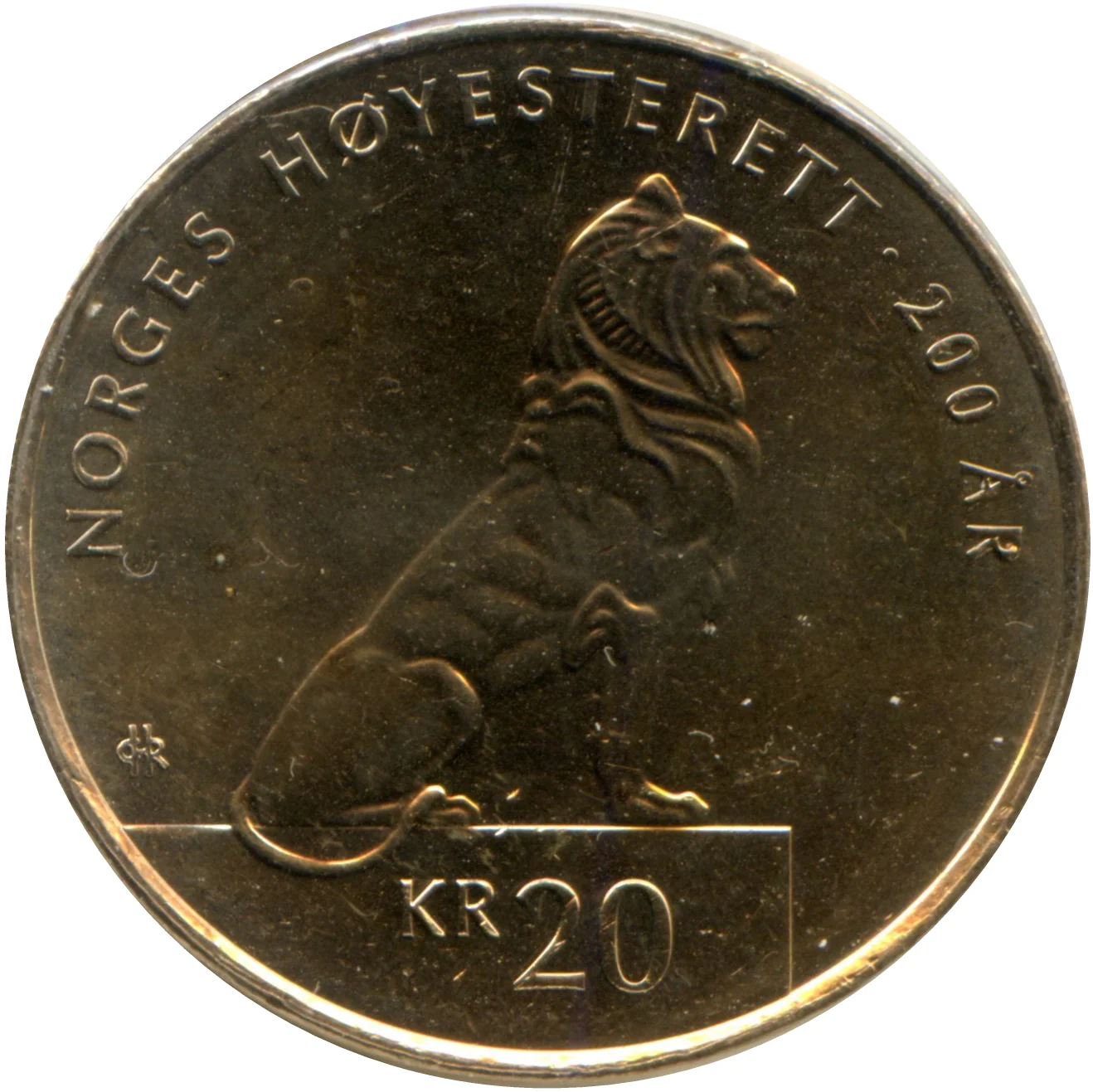
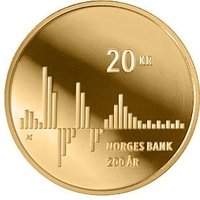
Lion sculpture facing right on Supreme Court stairway. Inscription above; designer's initials behind it. Value on bottom; solid ring on rim.
Inscription:
NORGES HØYESTERETT · 200 ÅR
CHR
KR 20
CHR
KR 20
Translation:
Norway's Supreme Court · 200 Years
CHR
20 KR
CHR
20 KR
Script: Latin
Engraver: Ingrid Austlid Rise
Designer: Christopher Rådlund
Edge
Plain
Mints
| Name | Mark |
|---|---|
| Norwegian Mint | — |
Mintings
| Year | Mint Mark | Mintage | Quality | Collection |
|---|---|---|---|---|
| 2015 | — | 1,972,000 | ||
| 2015 | — | 2,900 | Proof |
Historical background
In 2015, Norway's currency situation was dominated by the dramatic fall in global oil prices, which began in mid-2014 and continued throughout the year. As a major petroleum exporter, Norway's economy and its currency, the krone (NOK), are highly sensitive to oil prices. The sharp decline—with Brent crude falling from over $115 per barrel to around $50—triggered significant economic uncertainty, leading to reduced petroleum investments, lower state revenues, and a substantial depreciation of the krone against major currencies like the euro and the US dollar. This created a complex scenario where a weaker krone benefited traditional non-oil exporters (like the seafood and manufacturing industries) by making their goods cheaper abroad, but simultaneously increased costs for households and businesses reliant on imported goods.
In response, Norges Bank, the country's central bank, faced a challenging policy dilemma. To cushion the economic slowdown and support employment, it cut its key policy interest rate multiple times during the year, reaching a historic low of 0.75% by December. These cuts were intended to stimulate borrowing and investment but also contributed to further weakening the krone. The bank had to carefully balance the need for economic stimulus against the risks of fueling high household debt and potential financial instability, particularly in the housing market, which remained robust despite the broader economic headwinds.
Overall, 2015 was a year of adjustment for Norway, marking a shift from the previous decade of high oil revenue. The currency weakness served as an automatic economic stabilizer, helping to rebalance the economy toward the non-oil sector. However, it also underscored the country's long-term challenge of reducing its dependency on petroleum and managing the transition toward a more diversified economic base, a discussion that gained considerable momentum in policy circles during this period.
In response, Norges Bank, the country's central bank, faced a challenging policy dilemma. To cushion the economic slowdown and support employment, it cut its key policy interest rate multiple times during the year, reaching a historic low of 0.75% by December. These cuts were intended to stimulate borrowing and investment but also contributed to further weakening the krone. The bank had to carefully balance the need for economic stimulus against the risks of fueling high household debt and potential financial instability, particularly in the housing market, which remained robust despite the broader economic headwinds.
Overall, 2015 was a year of adjustment for Norway, marking a shift from the previous decade of high oil revenue. The currency weakness served as an automatic economic stabilizer, helping to rebalance the economy toward the non-oil sector. However, it also underscored the country's long-term challenge of reducing its dependency on petroleum and managing the transition toward a more diversified economic base, a discussion that gained considerable momentum in policy circles during this period.
🌱 Common