

20 kroner (Constitution) – Norway
Add to wishlist
Circulating commemorative coins
Commemoration: 200th Anniversary of the Constitution
Norway
Context
Material
References
KM: #
Numista: #56628
Value
Exchange value: 20 NOK
Inflation-adjusted value: 28.36 NOK
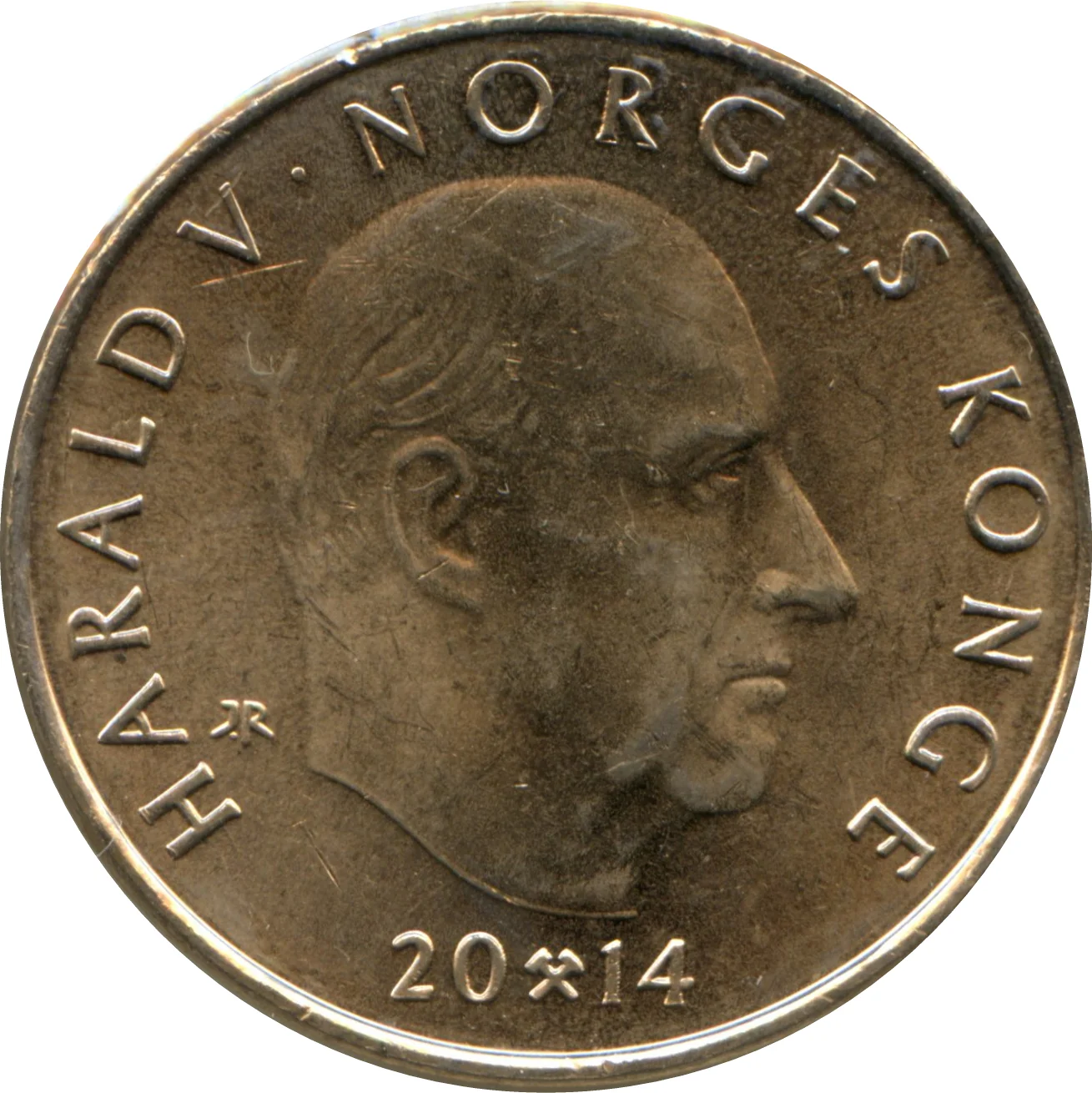
Obverse
Description:
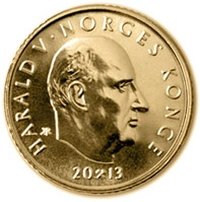
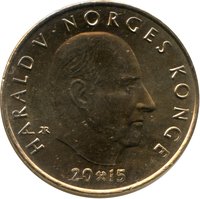
Bust of King Harald V facing right, with engraver's initials behind it. Inscription surrounds the bust, and a mintmark divides the date below. Solid ring on the rim.
Inscription:
HARALD V · NORGES KONGE
IAR
20 ⚒ 14
IAR
20 ⚒ 14
Translation:
Harald V, Norway's King
20th Anniversary 2014
20th Anniversary 2014
Script: Latin
Engraver: Ingrid Austlid Rise
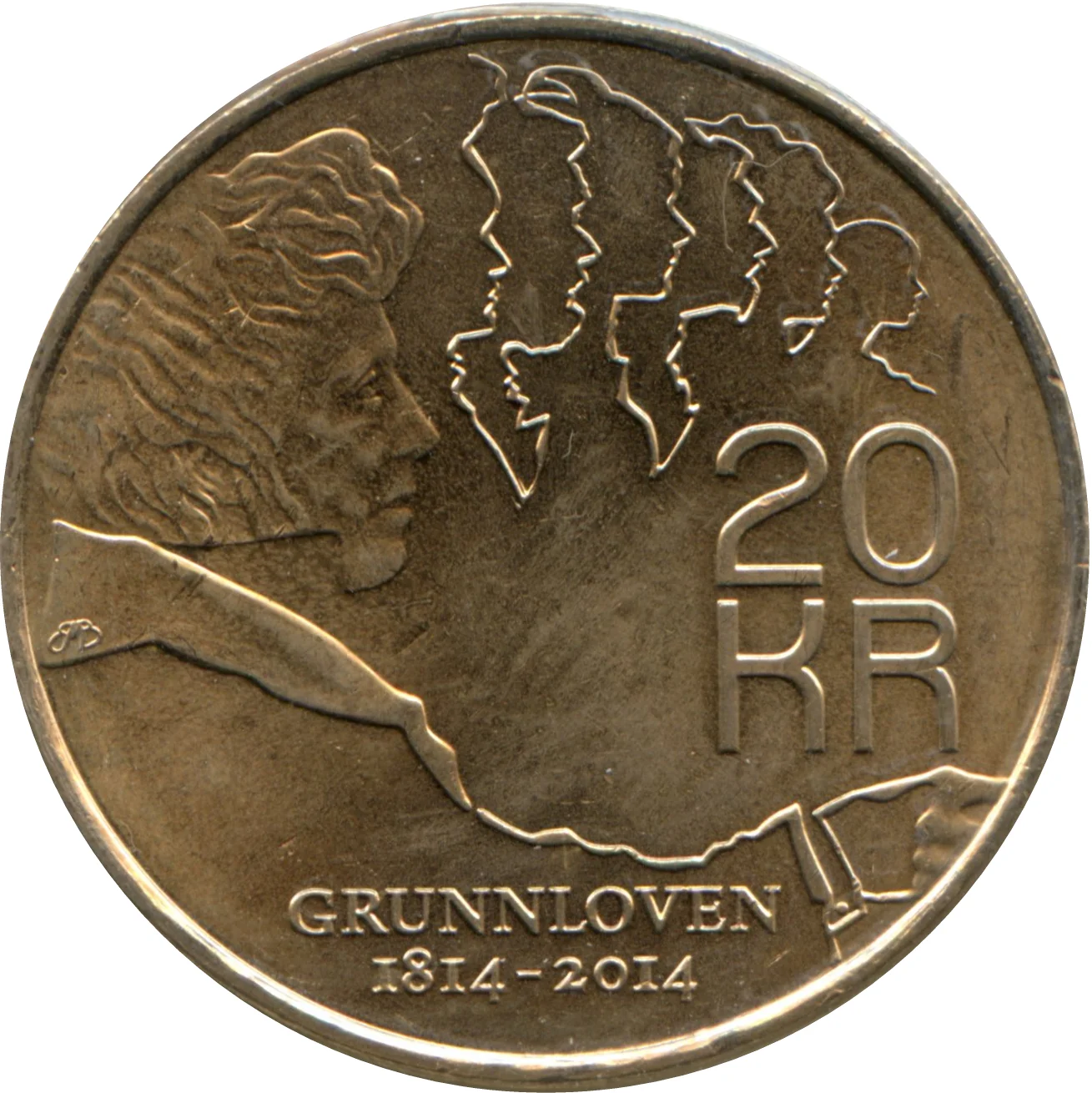
Reverse
Description:
Portrait of Christian Magnus Falsen facing right, with background silhouettes. Designer initials on his collar, value on the right. Inscription and dates below, with a solid ring on the rim.
Inscription:
EMB
20
KR
GRUNNLOVEN
1814-2014
20
KR
GRUNNLOVEN
1814-2014
Translation:
Constitution
1814-2014
1814-2014
Script: Latin
Languages: Norwegian Bokmål, English
Engraver: Ingrid Austlid Rise
Designer: Esther Maria Bjørneboe
Edge
Plain
Mints
| Name | Mark |
|---|---|
| Norwegian Mint | — |
Mintings
| Year | Mint Mark | Mintage | Quality | Collection |
|---|---|---|---|---|
| 2014 | — | 1,996,022 | ||
| 2014 | — | 4,727 | Proof |
Historical background
In 2014, Norway's currency situation was dominated by the significant decline in global oil prices in the second half of the year. As a major petroleum exporter, Norway's economy and its currency, the krone (NOK), are heavily influenced by the oil sector. The price of Brent crude fell from around $115 per barrel in June to under $60 by year's end, driven by oversupply and weaker global demand. This shock immediately raised concerns about future petroleum investments, government revenues, and the broader economic outlook, putting substantial downward pressure on the krone.
Consequently, the Norwegian krone weakened considerably against major currencies throughout 2014, particularly against the US dollar and the euro. The trade-weighted index for the krone fell to its lowest level in over a decade. This depreciation was exacerbated by the monetary policy stance of Norges Bank, the country's central bank. In response to the oil price slump and signs of a cooling housing market, the bank cut its key policy rate in December 2014, diverging from the policy paths of other major central banks and further reducing the krone's yield appeal.
Despite the currency weakness, Norway's fundamental economic position remained robust. The government's substantial sovereign wealth fund (the Government Pension Fund Global) continued to grow, providing a vast financial buffer. Furthermore, the weaker krone provided a welcome boost to the non-oil tradable sectors, such as tourism and traditional exports like fish, by making Norwegian goods and services more competitive internationally. Thus, the 2014 currency situation reflected a economy in adjustment, leveraging its strengths to cushion the impact of a major external shock.
Consequently, the Norwegian krone weakened considerably against major currencies throughout 2014, particularly against the US dollar and the euro. The trade-weighted index for the krone fell to its lowest level in over a decade. This depreciation was exacerbated by the monetary policy stance of Norges Bank, the country's central bank. In response to the oil price slump and signs of a cooling housing market, the bank cut its key policy rate in December 2014, diverging from the policy paths of other major central banks and further reducing the krone's yield appeal.
Despite the currency weakness, Norway's fundamental economic position remained robust. The government's substantial sovereign wealth fund (the Government Pension Fund Global) continued to grow, providing a vast financial buffer. Furthermore, the weaker krone provided a welcome boost to the non-oil tradable sectors, such as tourism and traditional exports like fish, by making Norwegian goods and services more competitive internationally. Thus, the 2014 currency situation reflected a economy in adjustment, leveraging its strengths to cushion the impact of a major external shock.
🌱 Common