

5 cents – United States
Add to wishlist
United States
Context
Years: 1853–1855
Issuer: United States
Period:
(since 1776)
Currency:
(since 1785)
Total mintage: 25,060,020
Material
References
KM: #
Numista: #6846
Value
Exchange value: 0.05 USD = $0.05
Bullion value: $2.85
Obverse
Description:
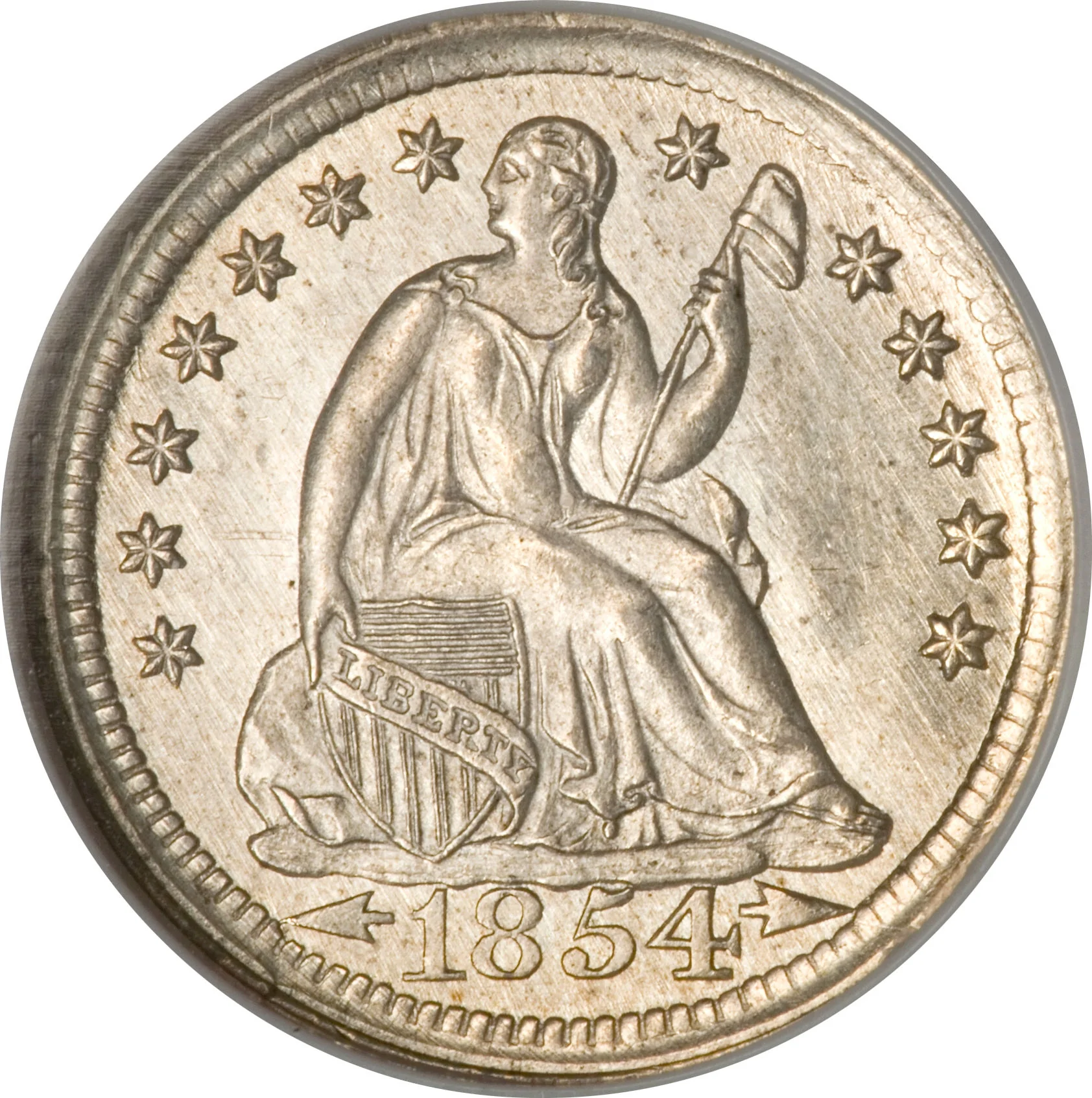
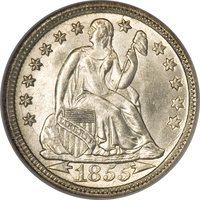
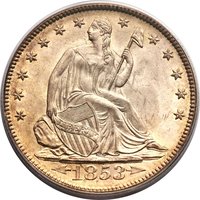
Liberty facing right, wearing a Phrygian cap and holding a shield, with 13 stars surrounding her.
Inscription:
1854
Script: Latin
Engraver: Christian Gobrecht
Reverse
Description:
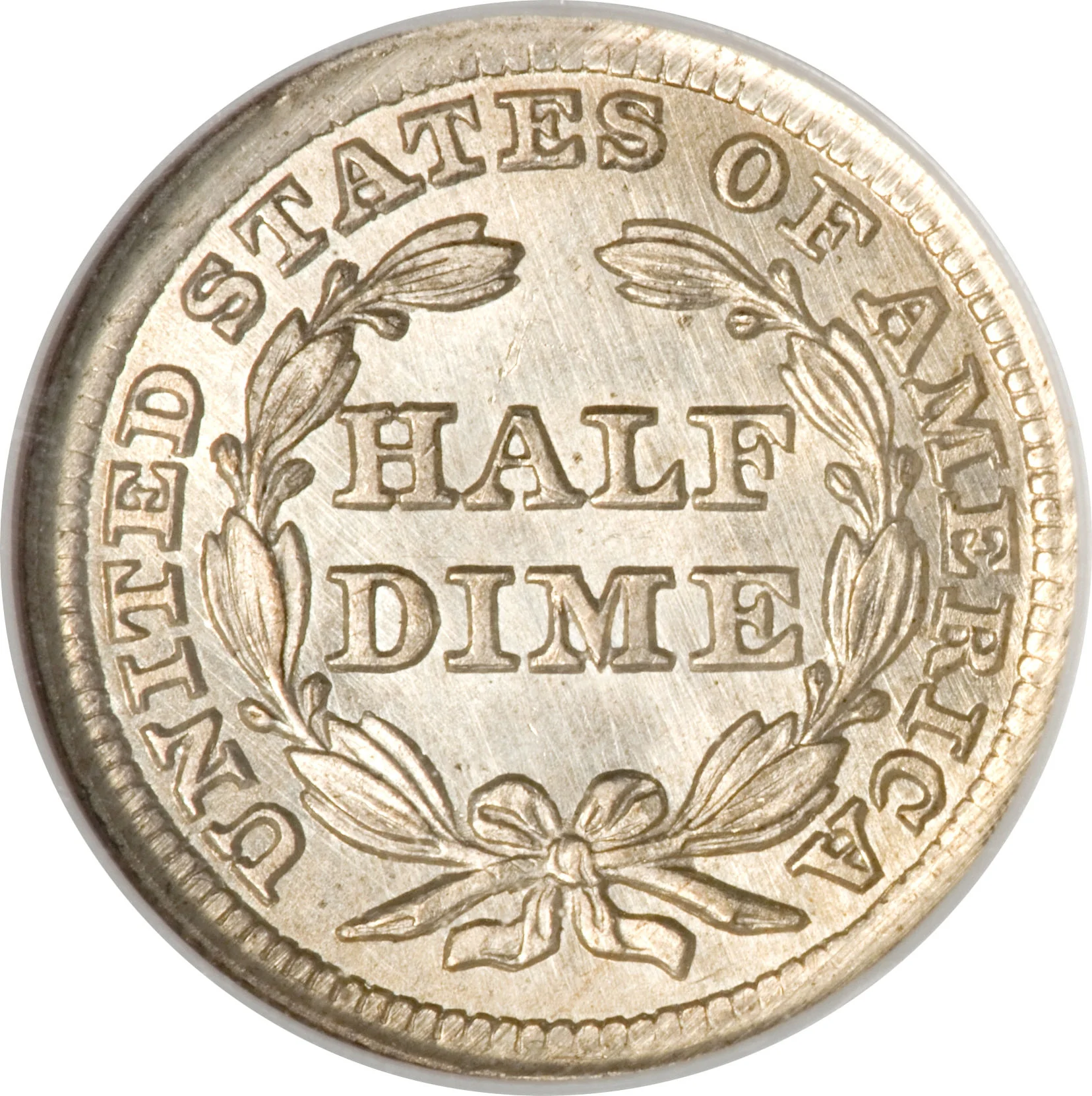
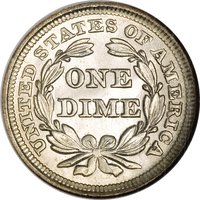
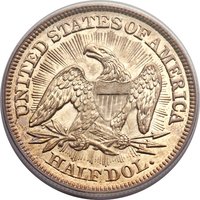
Face value and country on a wreath.
Inscription:
UNITED STATES OF AMERICA
HALF DIME
HALF DIME
Script: Latin
Engraver: Christian Gobrecht
Edge
Reeded
Mintings
Historical background
In 1853, the United States operated under a bimetallic standard, but the system was strained and uneven. The Coinage Act of 1834 had intentionally overvalued gold relative to silver, setting the gold-to-silver ratio at approximately 16:1, which was higher than the global market rate. This meant gold coins were worth more as bullion abroad than their face value at home, causing them to be exported and melted down. Consequently, silver coins, particularly the fractional currency like half-dollars, quarters, and dimes, became the dominant circulating coinage. However, even these began to disappear as the California Gold Rush flooded the market with gold, further depressing its market value and making silver coins more valuable as metal than as money.
This chronic shortage of small change crippled everyday commerce, prompting Congress to pass the Coinage Act of 1853. This pivotal legislation effectively ended the true bimetallic standard for subsidiary silver coinage. It reduced the silver content in coins smaller than the dollar by 6.9%, making them "token" currency whose metallic value was less than their face value. This deliberate debasement removed the incentive to export or hoard them, ensuring they remained in circulation. Crucially, these new coins were not legal tender for large sums, preventing them from being used to pay international debts in gold.
The act was a practical success, solving the small-change crisis and stabilizing domestic circulation. However, it marked a significant step toward a de facto gold standard. The silver dollar was left untouched by the reduction, but its heavier weight meant it too would be exported, effectively removing it from circulation. Thus, while not officially abandoning bimetallism, the U.S. entered a period where gold was the primary standard for large transactions and the basis for the dollar's value, while lightweight silver coinage served a subsidiary role—a system that would define American currency until the early 20th century.
This chronic shortage of small change crippled everyday commerce, prompting Congress to pass the Coinage Act of 1853. This pivotal legislation effectively ended the true bimetallic standard for subsidiary silver coinage. It reduced the silver content in coins smaller than the dollar by 6.9%, making them "token" currency whose metallic value was less than their face value. This deliberate debasement removed the incentive to export or hoard them, ensuring they remained in circulation. Crucially, these new coins were not legal tender for large sums, preventing them from being used to pay international debts in gold.
The act was a practical success, solving the small-change crisis and stabilizing domestic circulation. However, it marked a significant step toward a de facto gold standard. The silver dollar was left untouched by the reduction, but its heavier weight meant it too would be exported, effectively removing it from circulation. Thus, while not officially abandoning bimetallism, the U.S. entered a period where gold was the primary standard for large transactions and the basis for the dollar's value, while lightweight silver coinage served a subsidiary role—a system that would define American currency until the early 20th century.
🌱 Common