

¼ Rupee – Mauritius
Mauritius
Context
Material
Diameter: 19 mm
Weight: 2.95 g
Thickness: 1.3 mm
Shape: Round
Composition: Copper-nickel
Technique: Milled
Alignment: Medal alignment
flip
References
KM: #Click to copy to clipboard27
Numista: #6839
Value
Exchange value: ¼ MUR
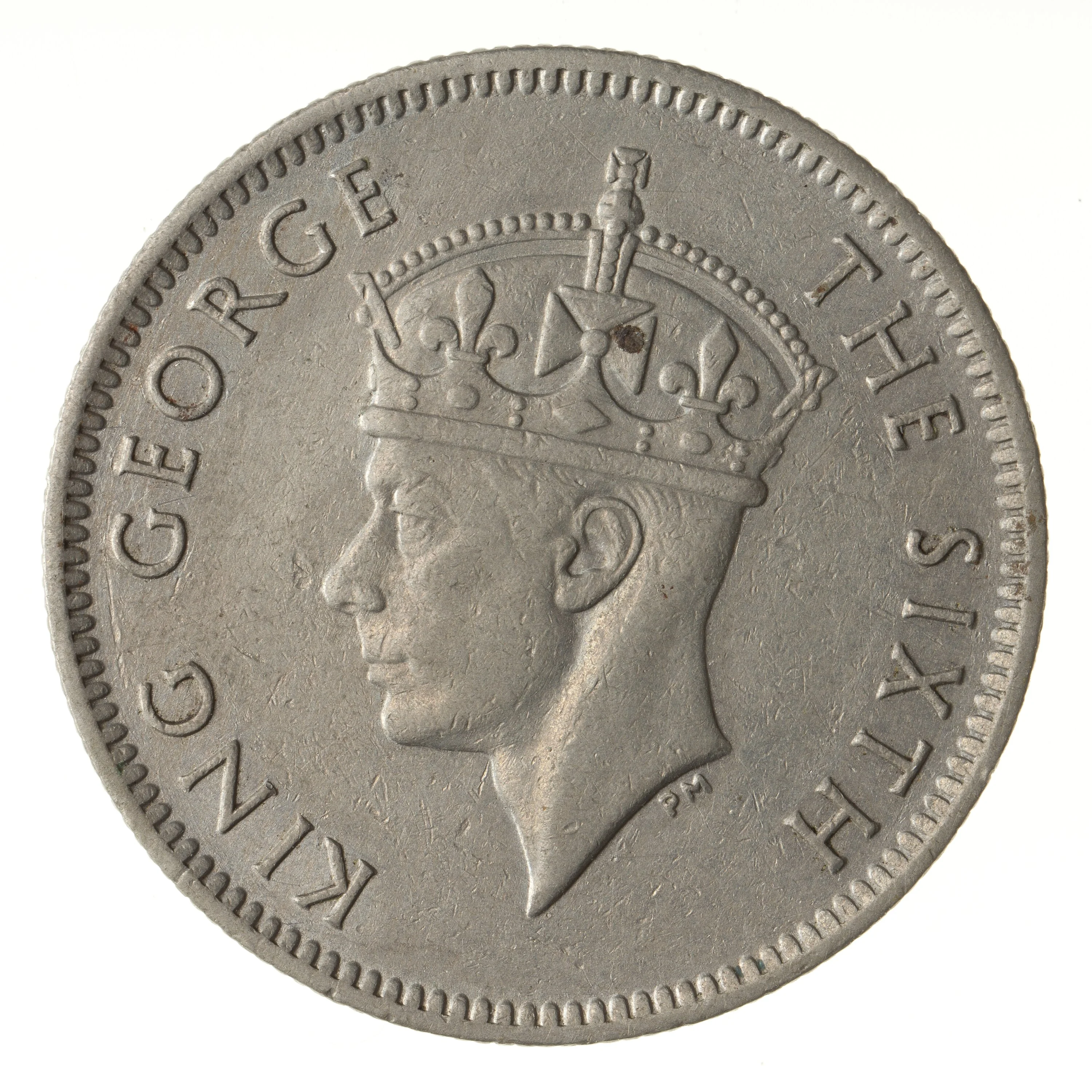
Obverse
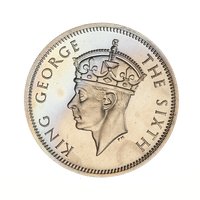
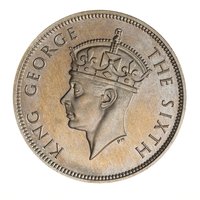
Description:
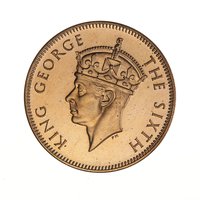
King George VI facing left, surrounded by English legend.
Inscription:
KING GEORGE THE SIXTH
PM
PM
Translation:
KING GEORGE THE SIXTH
BY THE GRACE OF GOD, KING OF ALL THE BRITISH DOMINIONS, DEFENDER OF THE FAITH, EMPEROR OF INDIA
BY THE GRACE OF GOD, KING OF ALL THE BRITISH DOMINIONS, DEFENDER OF THE FAITH, EMPEROR OF INDIA
Script: Latin
Language: English
Engraver: Percy Metcalfe
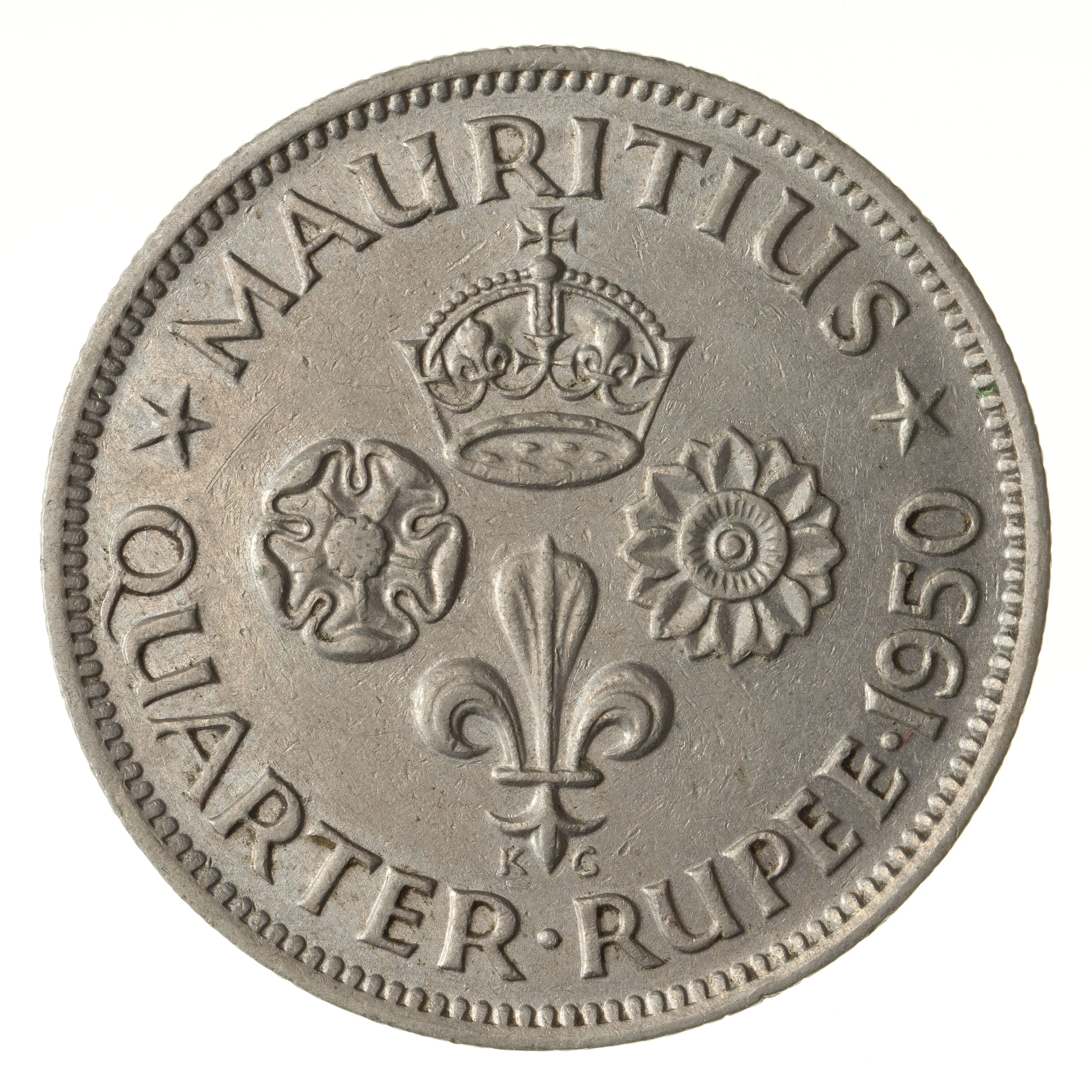
Reverse
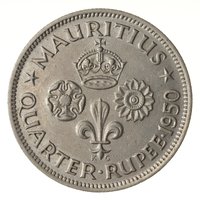
Description:
Clockwise: Crown, Lotus, Fleur-de-lis, Tudor Rose, with country, value, and date.
Inscription:
* MAURITIUS *
K G
QUARTER·RUPEE·1951
K G
QUARTER·RUPEE·1951
Script: Latin
Engraver: George Kruger Gray
Edge
Reeded
Mints
| Name | Mark |
|---|---|
| Royal Mint (Tower Hill) | — |
Mintings
| Year | Mint Mark | Mintage | Quality | Collection |
|---|---|---|---|---|
| 1950 | — | 2,000,000 | ||
| 1950 | — | — | Proof | |
| 1951 | — | — | Proof | |
| 1951 | — | 1,000,000 |
Historical background
In 1950, Mauritius was a British Crown Colony, and its currency system was a direct extension of the sterling area. The official currency was the Mauritian Rupee (MUR), but its value and issuance were strictly governed by the Mauritius Currency Board, established in 1934. This board operated on a colonial currency board model, holding sterling reserves in London to fully back the local currency in circulation. For every Mauritian rupee issued, there was an equivalent value held in British pounds and UK government securities, ensuring complete convertibility at a fixed rate.
The fixed exchange rate was pegged at 1 Mauritian Rupee = 1 shilling and 6 pence sterling (or Rs 13.33 = £1). This peg provided stability for external trade, which was overwhelmingly oriented towards the United Kingdom, particularly the vital sugar industry. However, this system also meant that Mauritius had no independent monetary policy; the money supply was essentially determined by the colony's balance of payments and the flow of sterling reserves. Domestic credit conditions were therefore directly influenced by economic conditions in Britain and the performance of sugar exports.
Economically, the early 1950s was a period of post-war recovery and booming sugar prices due to high global demand, notably driven by the Korean War. This prosperity increased the colony's sterling reserves and, by extension, the money supply. Yet, the currency board's rigid structure offered little flexibility to manage domestic economic cycles or direct credit for local development. The system reflected Mauritius's dependent colonial economic status, where financial policy was subordinated to imperial trade and currency stability, laying the groundwork for future debates about monetary sovereignty that would emerge in the lead-up to independence in 1968.
The fixed exchange rate was pegged at 1 Mauritian Rupee = 1 shilling and 6 pence sterling (or Rs 13.33 = £1). This peg provided stability for external trade, which was overwhelmingly oriented towards the United Kingdom, particularly the vital sugar industry. However, this system also meant that Mauritius had no independent monetary policy; the money supply was essentially determined by the colony's balance of payments and the flow of sterling reserves. Domestic credit conditions were therefore directly influenced by economic conditions in Britain and the performance of sugar exports.
Economically, the early 1950s was a period of post-war recovery and booming sugar prices due to high global demand, notably driven by the Korean War. This prosperity increased the colony's sterling reserves and, by extension, the money supply. Yet, the currency board's rigid structure offered little flexibility to manage domestic economic cycles or direct credit for local development. The system reflected Mauritius's dependent colonial economic status, where financial policy was subordinated to imperial trade and currency stability, laying the groundwork for future debates about monetary sovereignty that would emerge in the lead-up to independence in 1968.
🌱 Common