

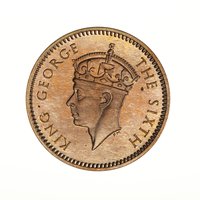
Obverse
Description:
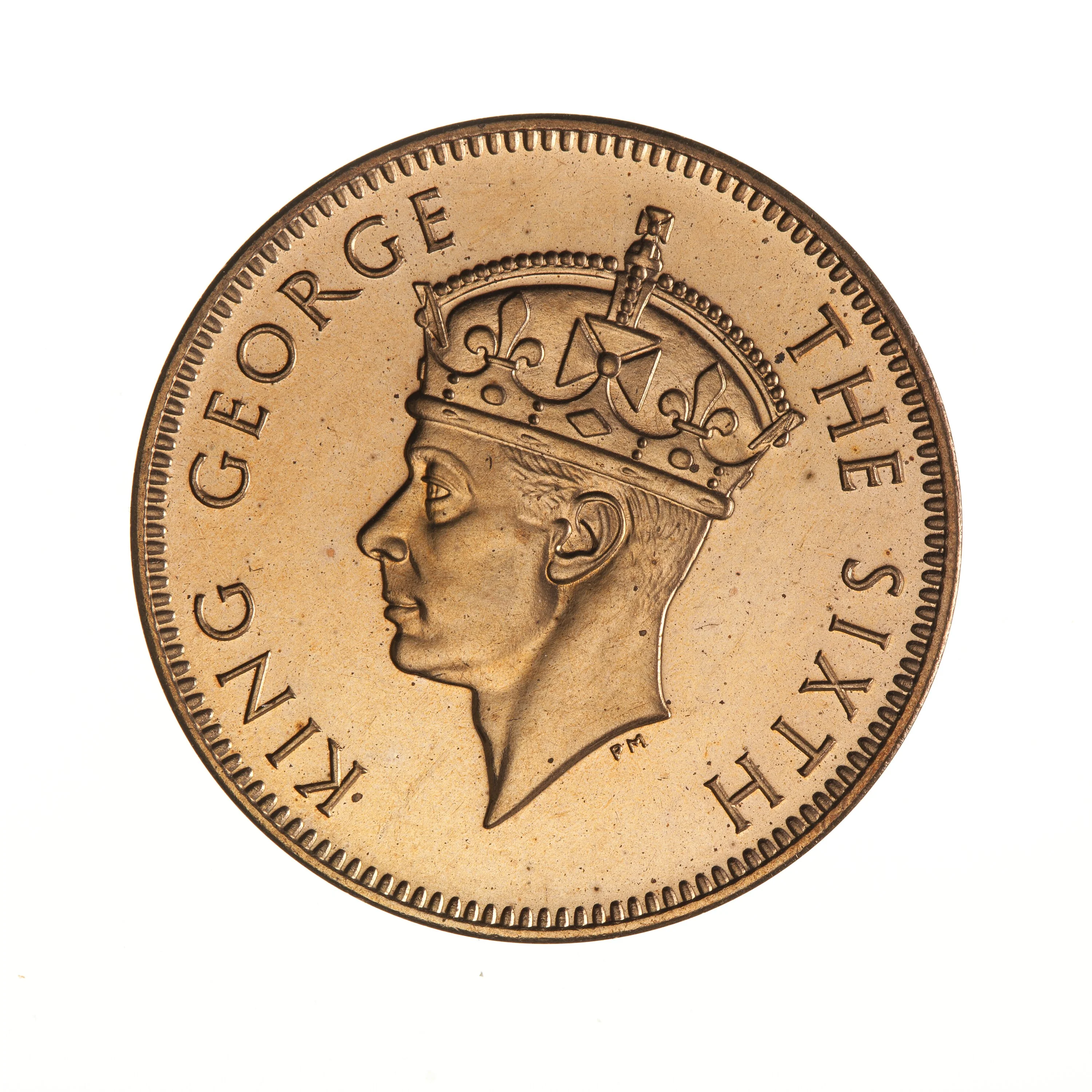
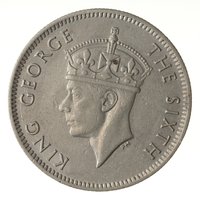
King George VI, facing left.
Inscription:
KING GEORGE THE SIXTH
PM
PM
Translation:
KING GEORGE THE SIXTH
BY THE GRACE OF GOD, KING OF ALL THE BRITISH DOMINIONS, DEFENDER OF THE FAITH, EMPEROR OF INDIA
BY THE GRACE OF GOD, KING OF ALL THE BRITISH DOMINIONS, DEFENDER OF THE FAITH, EMPEROR OF INDIA
Script: Latin
Language: English
Engraver: Percy Metcalfe
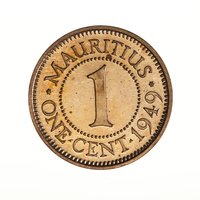
Reverse
Description:
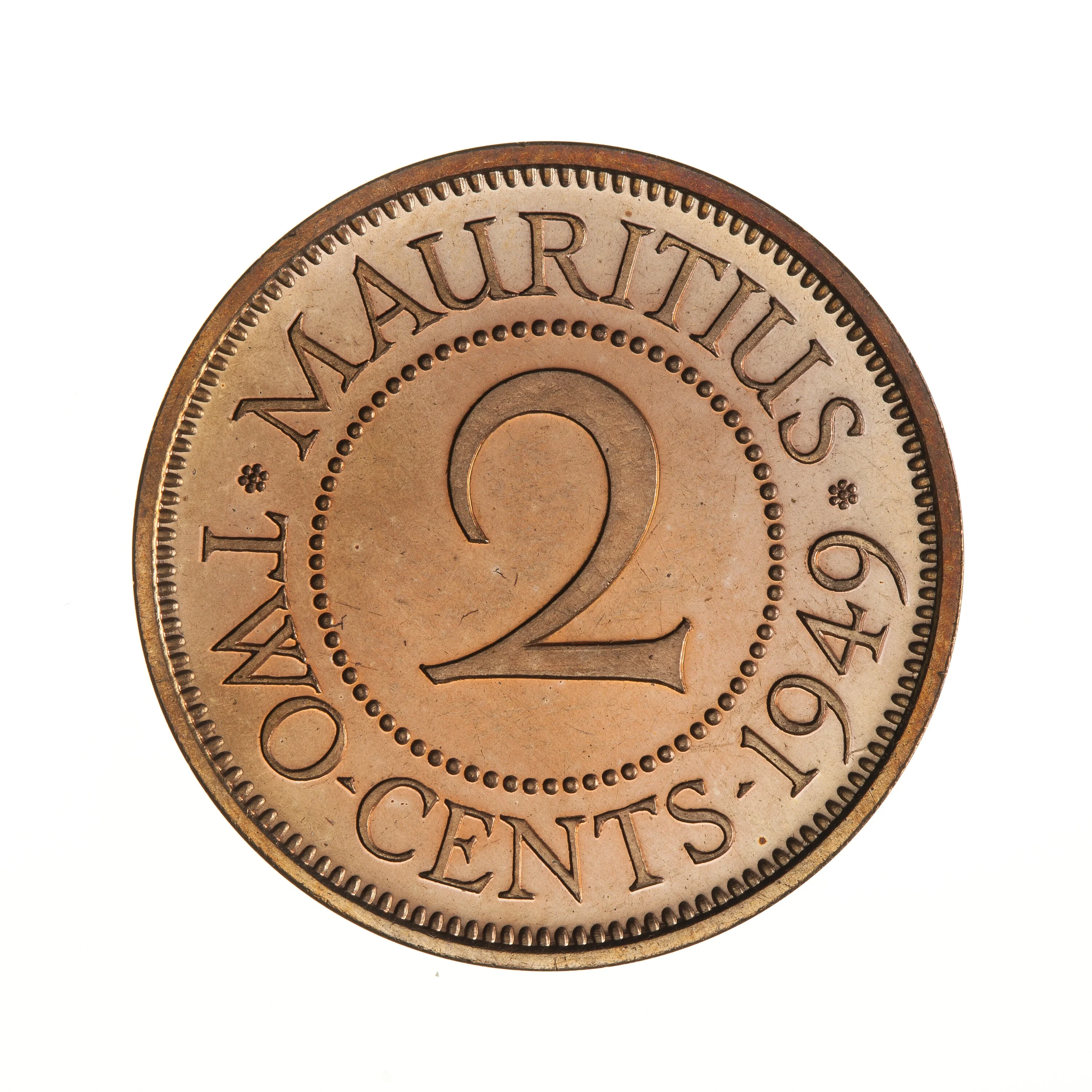
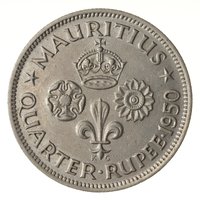
Legend encircles the beaded circle.
Inscription:
*MAURITIUS*
2
TWO·CENTS·1949
2
TWO·CENTS·1949
Script: Latin
Edge
Mints
| Name | Mark |
|---|---|
| Royal Mint (Tower Hill) | — |
Mintings
| Year | Mint Mark | Mintage | Quality | Collection |
|---|---|---|---|---|
| 1949 | — | 250,000 | ||
| 1949 | — | — | Proof | |
| 1952 | — | 250,000 | ||
| 1952 | — | — | Proof |
Historical background
In 1949, the currency situation in Mauritius was defined by its status as a British colony operating under a Currency Board system. The official currency was the Mauritian Rupee (MUR), which was pegged not directly to sterling, but to the Indian Rupee until that same year. This link reflected the island's historical economic and migratory ties with the Indian subcontinent, but by the late 1940s, it had become an economic liability as India's own monetary instability following independence created undesirable volatility for Mauritius.
The pivotal change occurred in 1949 when the Mauritian government, following the recommendations of the 1947 Templewood Commission, severed the link with the Indian Rupee. The Mauritius Currency Board was established, and the Mauritian Rupee was officially pegged to Pound Sterling at a fixed rate of 13.3333 Mauritian Rupees to 1 British Pound. This move was aimed at stabilising the local currency and anchoring the economy more firmly to its primary trading partner and colonial ruler, Great Britain.
This reform provided immediate monetary stability and was a crucial step in modernising the colonial economy, which was then heavily dependent on the sugar industry. The new sterling peg facilitated smoother trade and financial transactions with the United Kingdom and other sterling area members. It established an institutional framework for currency issuance that would govern Mauritius until the establishment of the Bank of Mauritius in 1967, post-independence.
The pivotal change occurred in 1949 when the Mauritian government, following the recommendations of the 1947 Templewood Commission, severed the link with the Indian Rupee. The Mauritius Currency Board was established, and the Mauritian Rupee was officially pegged to Pound Sterling at a fixed rate of 13.3333 Mauritian Rupees to 1 British Pound. This move was aimed at stabilising the local currency and anchoring the economy more firmly to its primary trading partner and colonial ruler, Great Britain.
This reform provided immediate monetary stability and was a crucial step in modernising the colonial economy, which was then heavily dependent on the sugar industry. The new sterling peg facilitated smoother trade and financial transactions with the United Kingdom and other sterling area members. It established an institutional framework for currency issuance that would govern Mauritius until the establishment of the Bank of Mauritius in 1967, post-independence.
🌟 Limited