

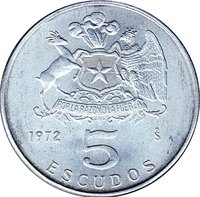
Obverse
Description:
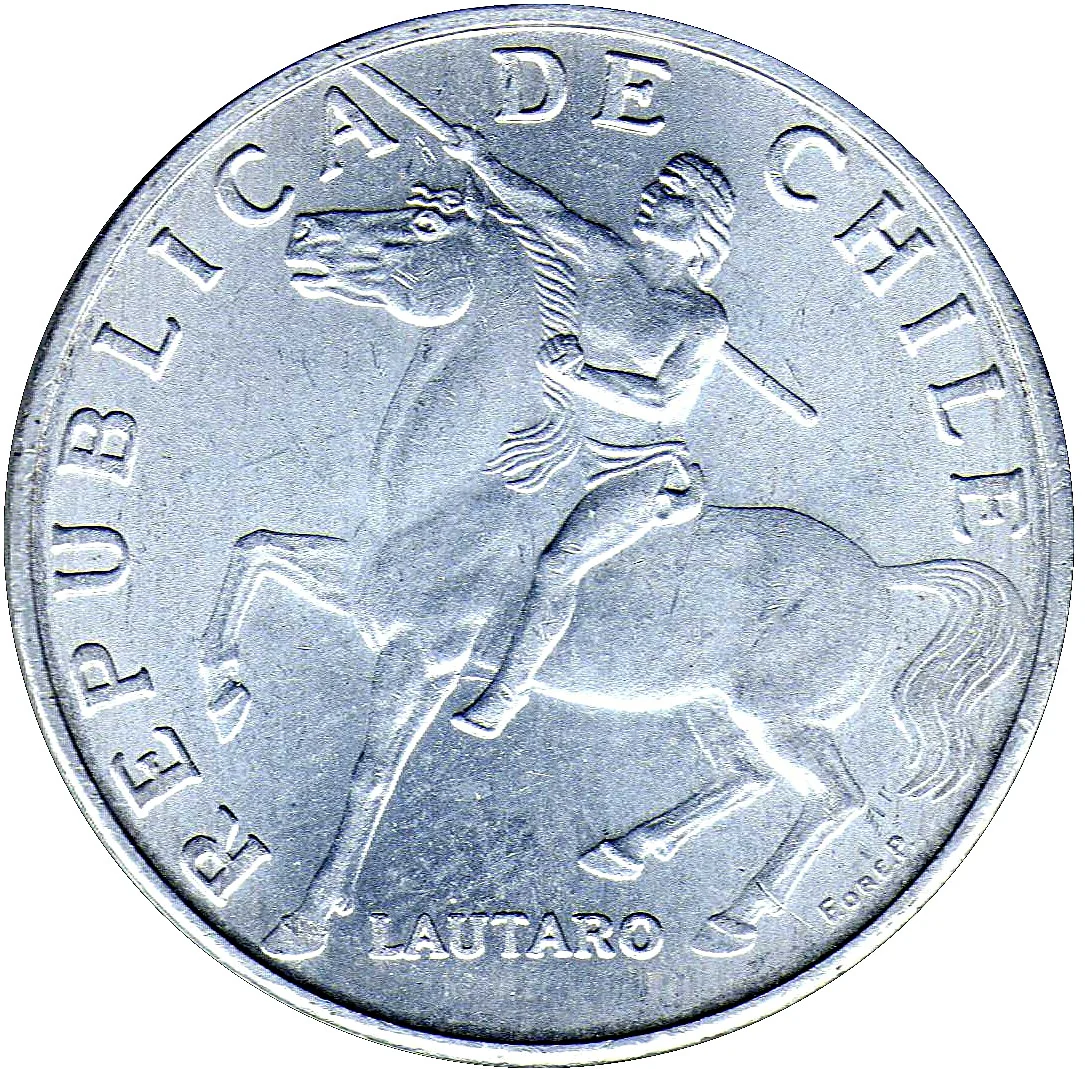
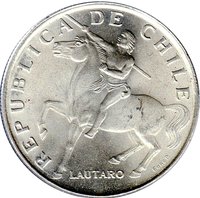
Mounted Araucanian chieftain Lautaro.
Inscription:
REPUBLICA DE CHILE
LAUTARO
F.ORE.P.
LAUTARO
F.ORE.P.
Translation:
REPUBLIC OF CHILE
LAUTARO
F.ORE.P.
LAUTARO
F.ORE.P.
Script: Latin
Language: Spanish
Engraver: Francisco Orellana Pavéz
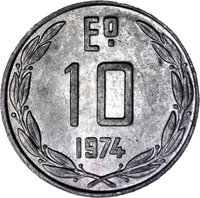
Reverse
Edge
Plain
Categories
| Animal> Horse |
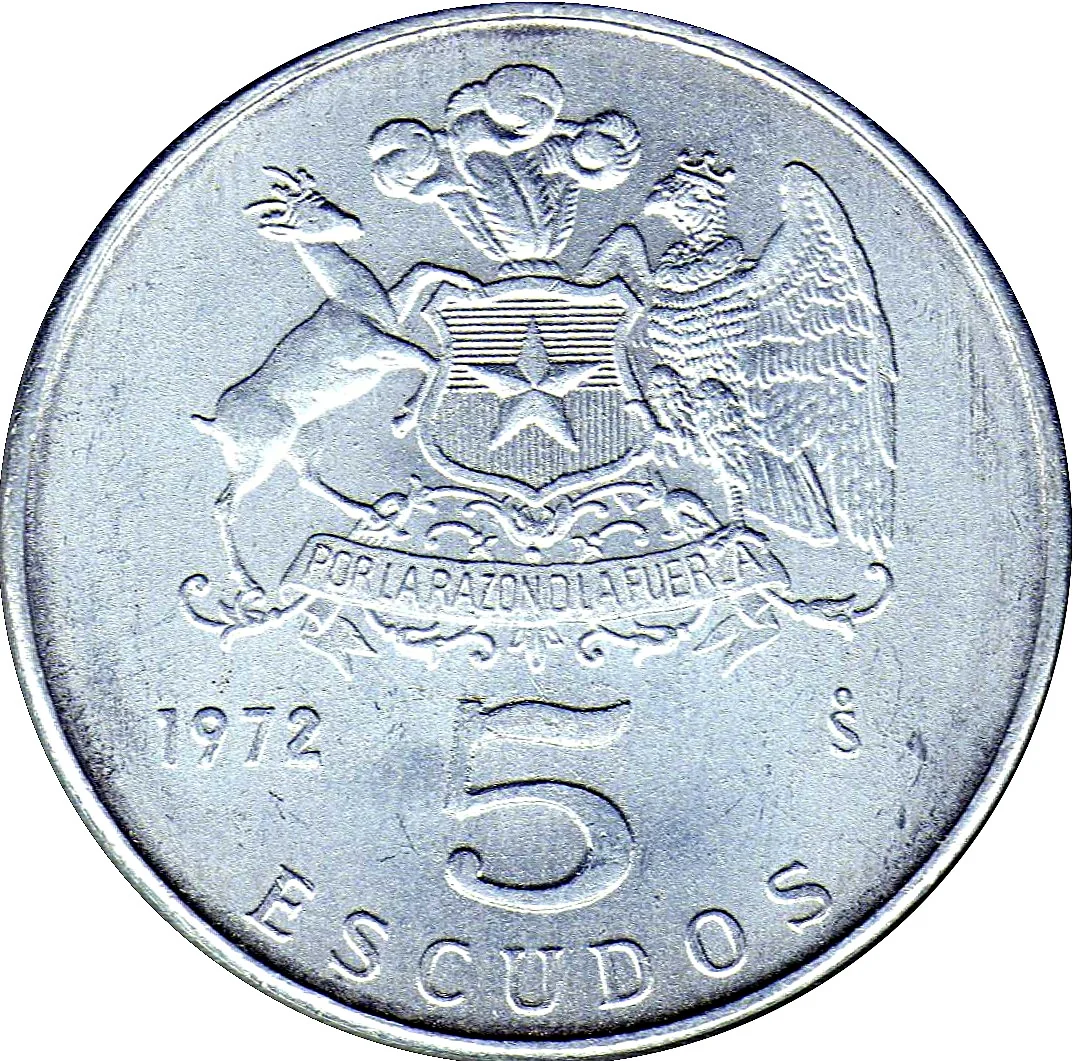
| Symbols> Coat of Arms |
Mints
| Name | Mark |
|---|---|
| Casa de Moneda de Chile | (So) |
Mintings
| Year | Mint Mark | Mintage | Quality | Collection |
|---|---|---|---|---|
| 1972 | So | — |
Historical background
In 1972, Chile's currency situation was a critical symptom of the profound economic and political crisis unfolding under President Salvador Allende's socialist government. Allende's ambitious program of nationalization, expanded social spending, and price controls, pursued within the constraints of a hostile legislature and a US-led economic blockade, led to severe macroeconomic imbalances. The government financed its deficits by printing money, fueling rampant inflation that reached over 200% annually. Simultaneously, fixed official exchange rates, maintained by the Central Bank, became wildly overvalued, creating a massive gap with a flourishing black market for US dollars.
This distorted currency regime had devastating consequences. The overvalued peso made Chilean exports prohibitively expensive and imports artificially cheap, leading to a drain on foreign reserves as demand for dollars at the official rate surged. Shortages of consumer goods and industrial inputs became widespread, exacerbated by panic buying, hoarding, and domestic sabotage from opposition sectors. The black market dollar rate skyrocketed, reflecting a collapse in confidence in the peso and the government's economic management, while capital flight further depleted the country's financial resources.
By the end of 1972, the currency crisis was inextricably linked to political polarization. The government responded with stricter price controls and attempts to enforce exchange regulations, but these measures only deepened distortions and shortages. The economic chaos, symbolized by the worthless peso and empty shelves, fueled massive strikes by middle-class and professional groups, supported by the opposition. The monetary collapse was thus both a cause and a consequence of the instability that would culminate in the military coup of September 1973.
This distorted currency regime had devastating consequences. The overvalued peso made Chilean exports prohibitively expensive and imports artificially cheap, leading to a drain on foreign reserves as demand for dollars at the official rate surged. Shortages of consumer goods and industrial inputs became widespread, exacerbated by panic buying, hoarding, and domestic sabotage from opposition sectors. The black market dollar rate skyrocketed, reflecting a collapse in confidence in the peso and the government's economic management, while capital flight further depleted the country's financial resources.
By the end of 1972, the currency crisis was inextricably linked to political polarization. The government responded with stricter price controls and attempts to enforce exchange regulations, but these measures only deepened distortions and shortages. The economic chaos, symbolized by the worthless peso and empty shelves, fueled massive strikes by middle-class and professional groups, supported by the opposition. The monetary collapse was thus both a cause and a consequence of the instability that would culminate in the military coup of September 1973.
🌱 Common