

10 escudos – Chile
Add to wishlist
Chile
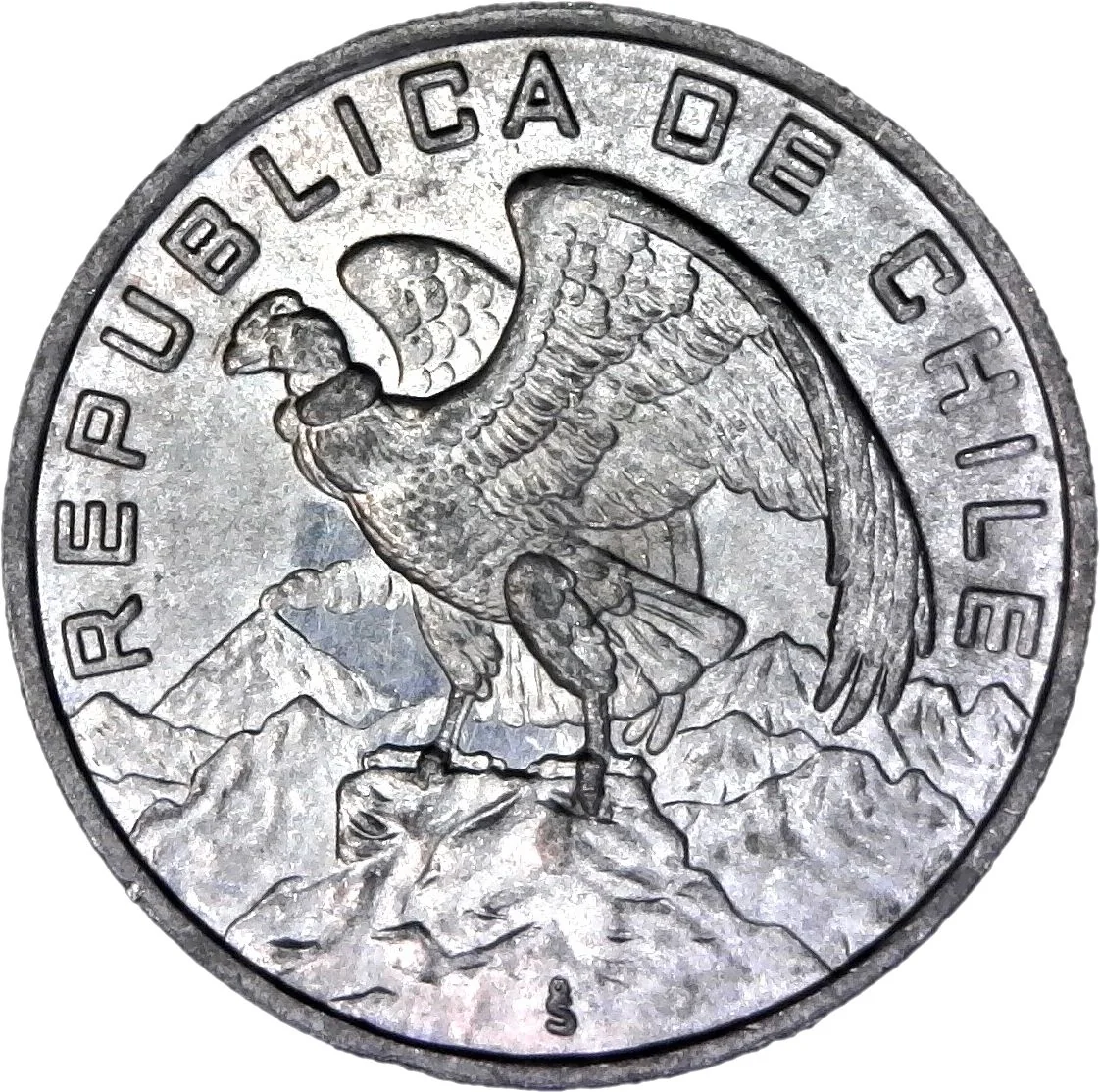
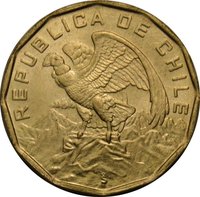
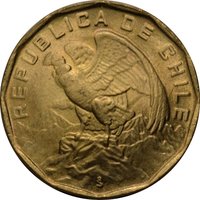
Obverse
Description:
Andean Condor perched.
Inscription:
REPUBLICA DE CHILE
So
So
Translation:
REPUBLIC OF CHILE
Script: Latin
Language: Spanish
Engraver: Louis-Oscar Roty
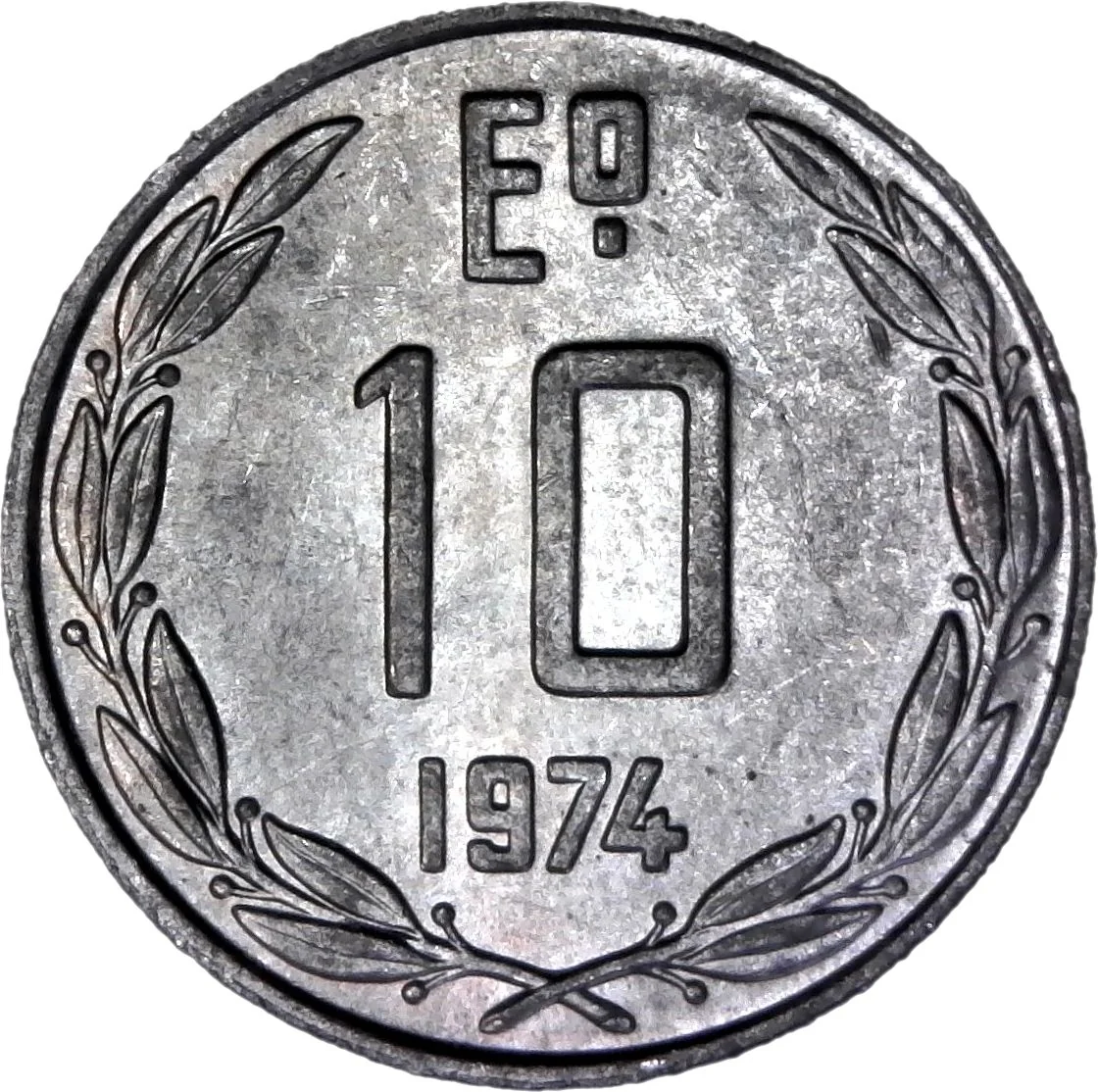
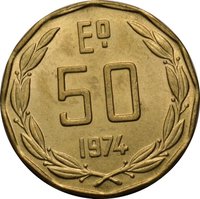
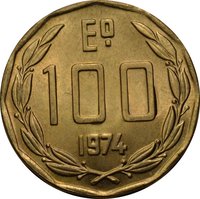
Reverse
Description:
Laurel Wreath Value
Inscription:
Eº
10
1974
10
1974
Translation:
Ten Escudos
1974
1974
Script: Latin
Language: Portuguese
Edge
Plain
Mints
| Name | Mark |
|---|---|
| Casa de Moneda de Chile | (So) |
Mintings
| Year | Mint Mark | Mintage | Quality | Collection |
|---|---|---|---|---|
| 1974 | So | — | Proof | |
| 1974 | So | 33,750,000 |
Historical background
In 1974, Chile was in the midst of a profound economic and political transformation under the military dictatorship of General Augusto Pinochet, who had seized power the previous year. The country was suffering from the severe aftereffects of the socialist policies of the overthrown Allende government, which had left the economy in disarray with hyperinflation estimated at over 600%, massive fiscal deficits, and widespread shortages. The new regime's priority was immediate stabilization, and it turned to a group of free-market economists known as the "Chicago Boys" to design a radical recovery plan.
The currency situation was a central element of this crisis and reform. The Chilean escudo was severely depreciated and unstable. As a critical early measure, in October 1974, the government initiated a major monetary reform, introducing a new currency: the Chilean peso (CLP), which replaced the escudo at a rate of 1 peso for every 1,000 escudos. This redenomination was largely a technical change to simplify transactions and restore some psychological confidence, but it did not, by itself, address the underlying inflationary pressures. Price controls were being dismantled, and the exchange rate was initially set as a fixed, unified rate to curb inflation, a policy that would evolve significantly in the coming years.
Therefore, the currency situation in 1974 was one of transition from chaos to the initial application of a strict monetarist model. While the introduction of the peso marked a fresh start, the fundamental battle against inflation through severe austerity, spending cuts, and trade liberalization was just beginning. The year set the stage for the deep structural adjustments that would follow, including eventual moves towards a pre-announced devaluation schedule (the "tablita cambiaria") later in the 1970s, as the regime pursued its goal of integrating Chile into the global market economy.
The currency situation was a central element of this crisis and reform. The Chilean escudo was severely depreciated and unstable. As a critical early measure, in October 1974, the government initiated a major monetary reform, introducing a new currency: the Chilean peso (CLP), which replaced the escudo at a rate of 1 peso for every 1,000 escudos. This redenomination was largely a technical change to simplify transactions and restore some psychological confidence, but it did not, by itself, address the underlying inflationary pressures. Price controls were being dismantled, and the exchange rate was initially set as a fixed, unified rate to curb inflation, a policy that would evolve significantly in the coming years.
Therefore, the currency situation in 1974 was one of transition from chaos to the initial application of a strict monetarist model. While the introduction of the peso marked a fresh start, the fundamental battle against inflation through severe austerity, spending cuts, and trade liberalization was just beginning. The year set the stage for the deep structural adjustments that would follow, including eventual moves towards a pre-announced devaluation schedule (the "tablita cambiaria") later in the 1970s, as the regime pursued its goal of integrating Chile into the global market economy.
🌱 Very Common