

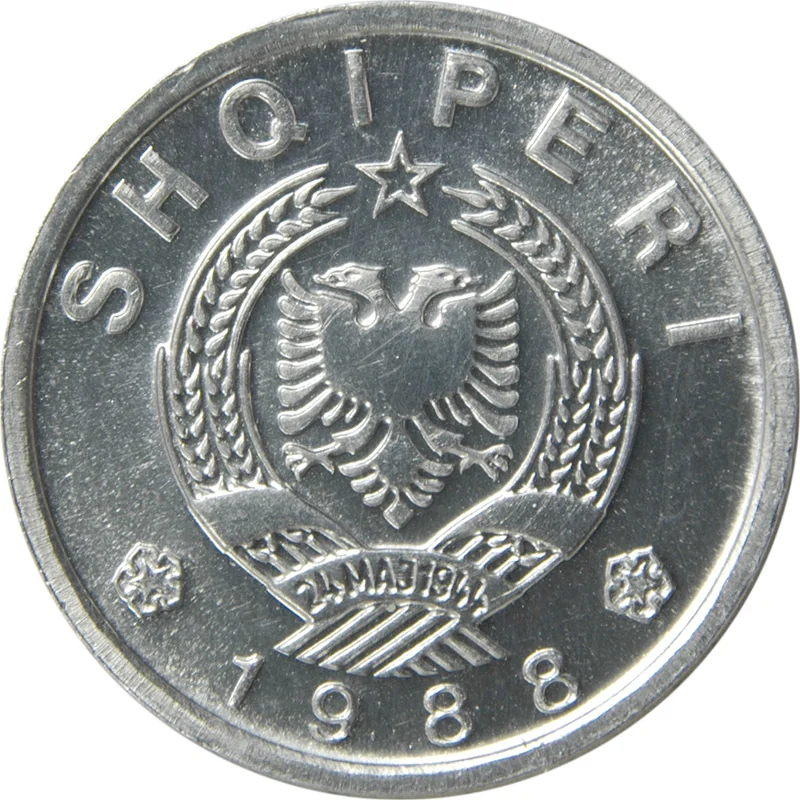
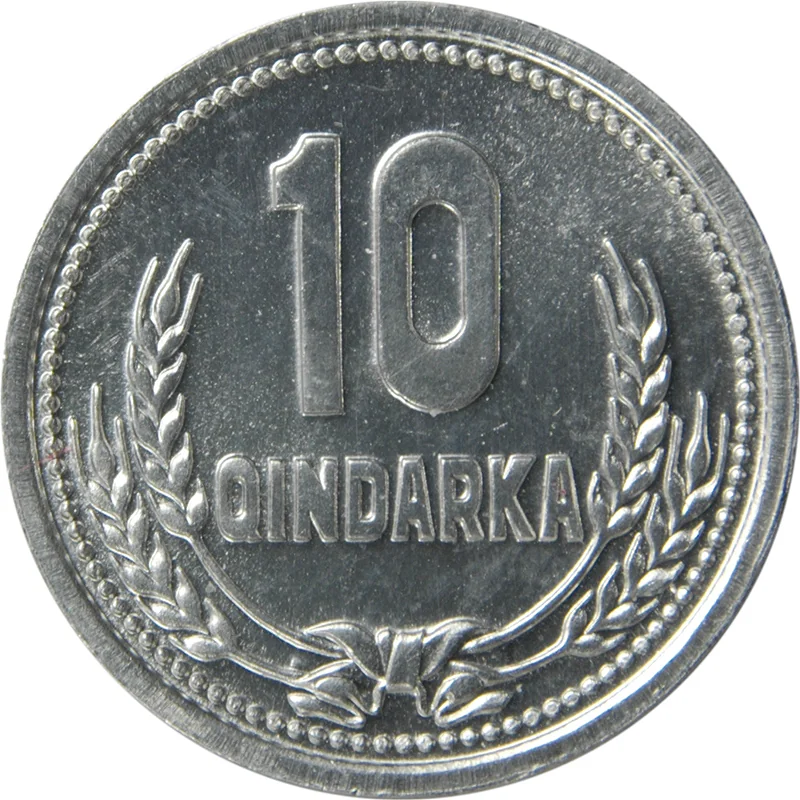
10 qindarka – Albania
Add to wishlist
Albania
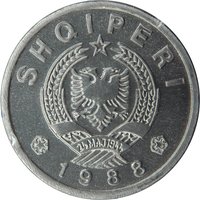
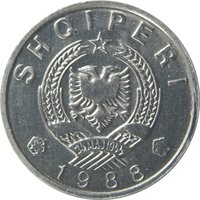
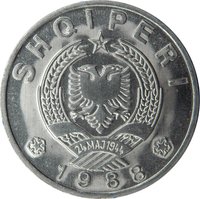
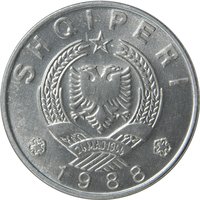
Obverse
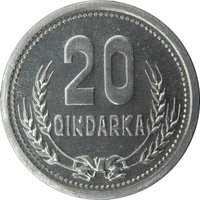
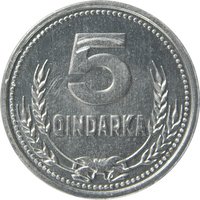
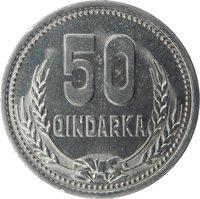
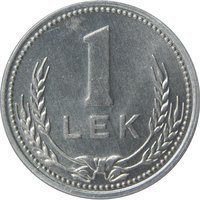
Reverse
Edge
Plain
Categories
| Animal> Bird |
| Symbols> Coat of Arms |
| Symbol> Double-headed eagle |
Mintings
| Year | Mint Mark | Mintage | Quality | Collection |
|---|---|---|---|---|
| 1988 | — | — |
Historical background
In 1988, Albania's currency situation was defined by its extreme isolation under Enver Hoxha's Stalinist regime, which had pursued a policy of total autarky. The national currency, the Albanian lek, was a non-convertible currency used almost exclusively for domestic transactions within the state-controlled economy. Its official exchange rate, set by the communist government, was purely nominal and bore no relation to its market value or purchasing power, as there was no legal foreign exchange market. The state maintained absolute control over all financial transactions, and possession of foreign currency by individuals was strictly illegal and punishable by law.
Economically, the country was in a state of severe stagnation, burdened by inefficient centralized planning and a crumbling industrial and agricultural base. While the official economy operated with the lek, a small black market for foreign currencies like the US dollar, Italian lira, and Greek drachma existed clandestinely, primarily fueled by remittances from the few Albanians living abroad or through illegal cross-border contacts. The black market rate for hard currency was vastly different from the official state rate, highlighting the lek's artificial valuation and the growing disconnect between the state's economic dictates and reality.
This rigid and isolated monetary system was a microcosm of the wider Albanian society, which was on the brink of profound change. The currency controls were a tool to enforce the regime's isolationist ideology, but by 1988, the system was becoming increasingly unsustainable. The death of Hoxha in 1985 had begun a very slow and cautious period of questioning, and the cracks in the economic model, mirrored in the dysfunctional currency situation, would contribute to the social upheaval and eventual collapse of the communist state in the early 1990s.
Economically, the country was in a state of severe stagnation, burdened by inefficient centralized planning and a crumbling industrial and agricultural base. While the official economy operated with the lek, a small black market for foreign currencies like the US dollar, Italian lira, and Greek drachma existed clandestinely, primarily fueled by remittances from the few Albanians living abroad or through illegal cross-border contacts. The black market rate for hard currency was vastly different from the official state rate, highlighting the lek's artificial valuation and the growing disconnect between the state's economic dictates and reality.
This rigid and isolated monetary system was a microcosm of the wider Albanian society, which was on the brink of profound change. The currency controls were a tool to enforce the regime's isolationist ideology, but by 1988, the system was becoming increasingly unsustainable. The death of Hoxha in 1985 had begun a very slow and cautious period of questioning, and the cracks in the economic model, mirrored in the dysfunctional currency situation, would contribute to the social upheaval and eventual collapse of the communist state in the early 1990s.
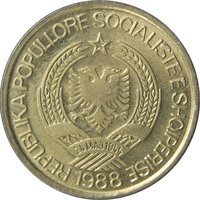
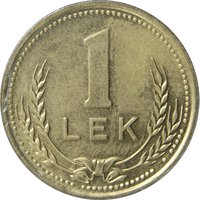
Series: 1988 Albania circulation coins
🌱 Common