

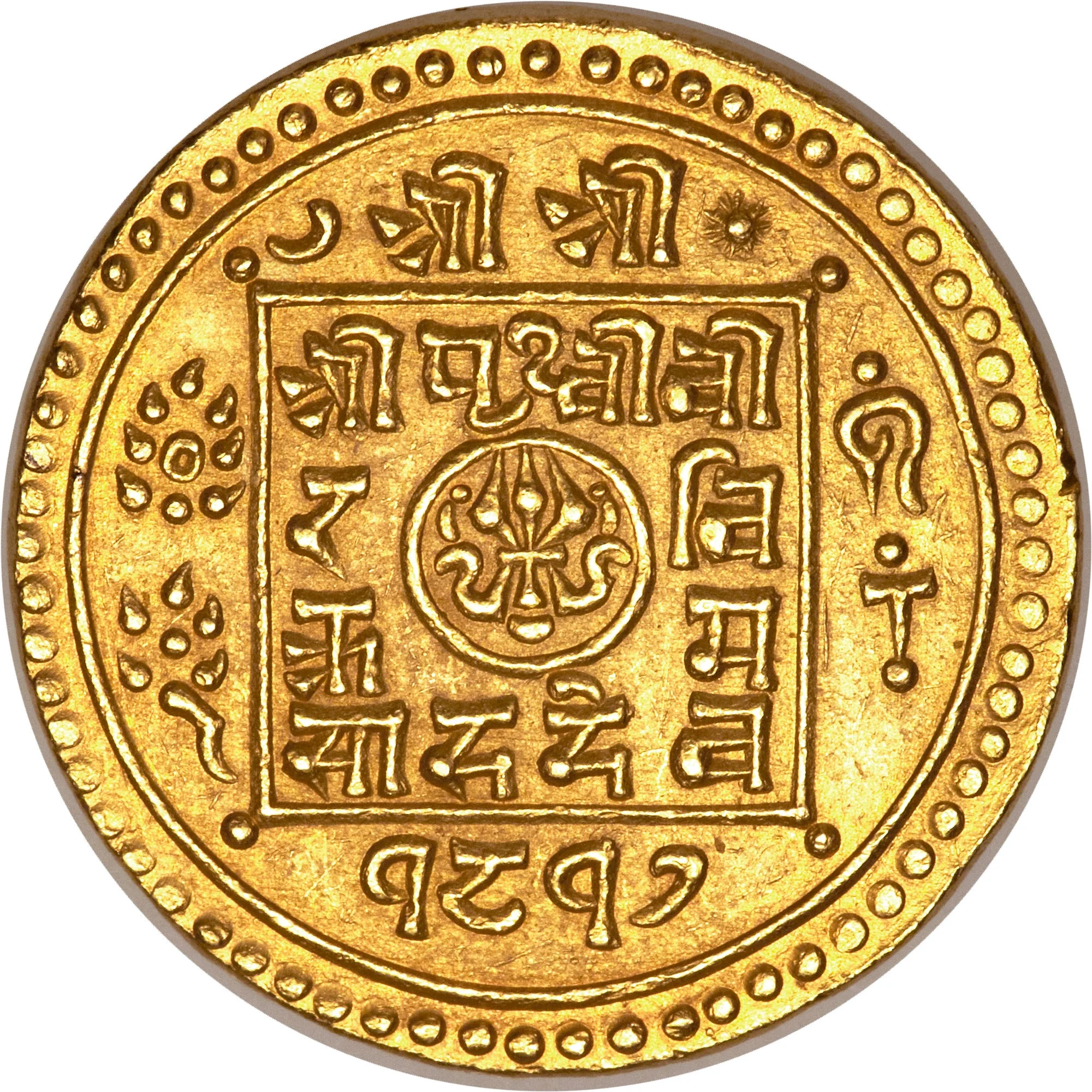
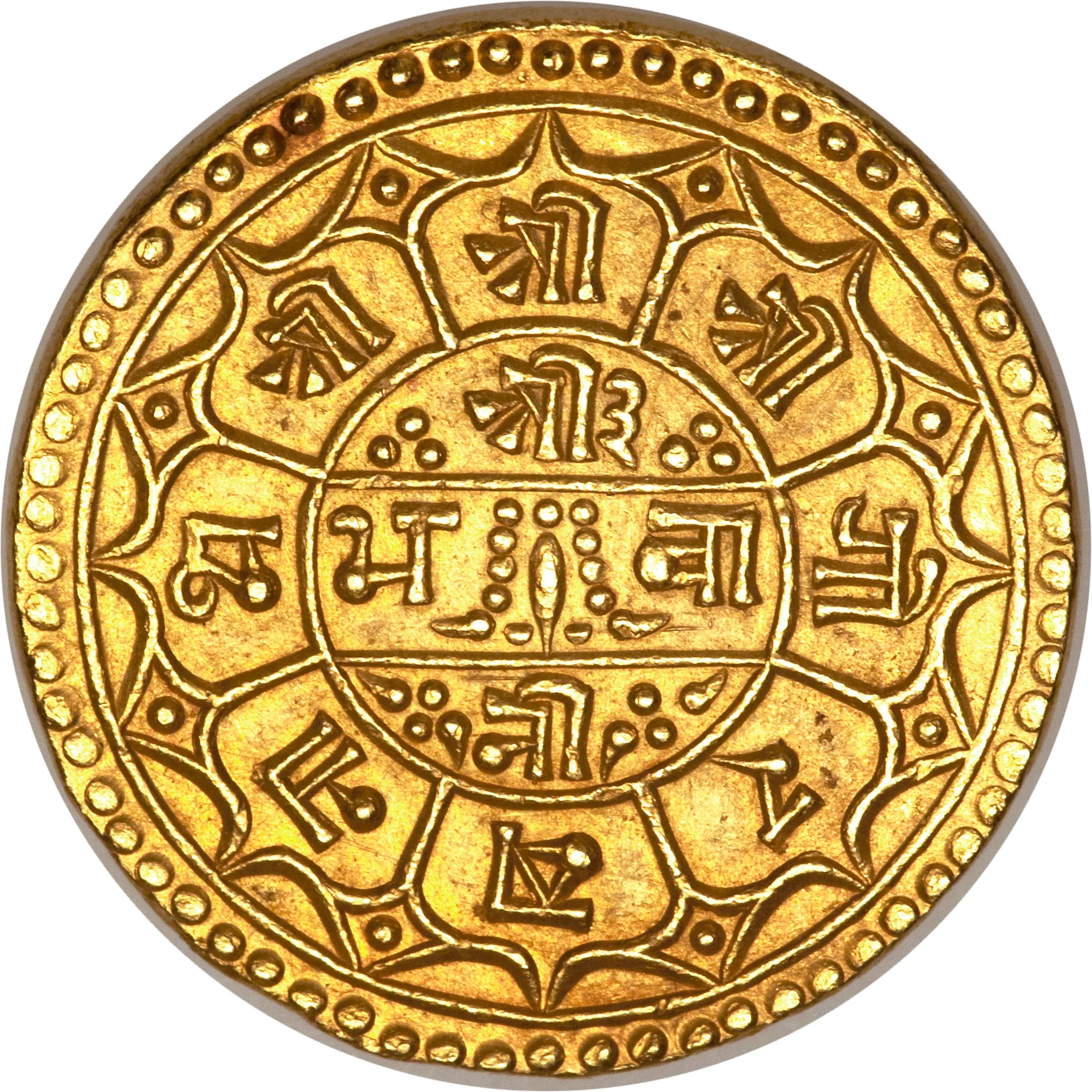
1 Asarphi – Nepal
Nepal
Context
Year: 1895
Nepal - Saka era Year: 1817
Issuer: Nepal 
Ruler: Prithvi Bir Bikram Shah
Currency:
(1546—1932)
Demonetized: Yes
Material
References
KM: #Click to copy to clipboard677
Numista: #66162
Value
Bullion value: $3882.31
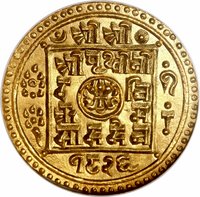
Obverse
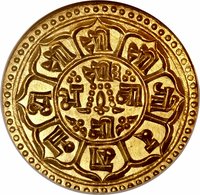
Reverse
Edge
Mintings
| Year | Mint Mark | Mintage | Quality | Collection |
|---|---|---|---|---|
| 1895 | — | — |
Historical background
In 1895, Nepal’s currency system was a complex and hybrid one, operating under the dual pressures of domestic tradition and powerful foreign economic influence. Officially, the country was on a silver standard, with the primary coin being the silver Mohar and its fractional units. However, the most dominant and influential currency in actual circulation was not Nepali but the Indian Rupee. Due to deeply entrenched trade links with British India, the Indian rupee circulated freely within Nepal, especially in the Tarai and major trade routes, and was often preferred for larger transactions. This created a de facto bimetallic system where the values of Nepali silver coins fluctuated against the Indian rupee, leading to periodic instability and confusion in exchange rates.
The Rana regime, under Prime Minister Bir Shumsher Jang Bahadur Rana, was acutely aware of the problems caused by this monetary duality, including revenue collection issues and the economic dominance of British India. In fact, the year 1895 fell within a period of significant monetary reform. Just three years earlier, in 1892, Bir Shumsher had attempted to unify the currency by issuing a new decimal system with the Nepali Rupee (called the Mohan Rupee) divided into 100 paisas, aiming to replace the old mohar system and better align with the Indian rupee. By 1895, these new coins were in circulation but faced public skepticism and hoarding, as the older, more familiar silver mohars remained in use alongside the Indian currency.
Thus, the background of Nepal’s currency situation in 1895 is one of transition and external dependency. The state was actively, though not yet successfully, attempting to assert greater monetary sovereignty and simplify its system. Yet, the economy remained overwhelmingly tied to British India, making the Indian rupee the unofficial benchmark. This period set the stage for further reforms in the early 20th century, which would eventually stabilize the Nepali rupee but would not fully break its fixed and subordinate linkage to the Indian currency for decades to come.
The Rana regime, under Prime Minister Bir Shumsher Jang Bahadur Rana, was acutely aware of the problems caused by this monetary duality, including revenue collection issues and the economic dominance of British India. In fact, the year 1895 fell within a period of significant monetary reform. Just three years earlier, in 1892, Bir Shumsher had attempted to unify the currency by issuing a new decimal system with the Nepali Rupee (called the Mohan Rupee) divided into 100 paisas, aiming to replace the old mohar system and better align with the Indian rupee. By 1895, these new coins were in circulation but faced public skepticism and hoarding, as the older, more familiar silver mohars remained in use alongside the Indian currency.
Thus, the background of Nepal’s currency situation in 1895 is one of transition and external dependency. The state was actively, though not yet successfully, attempting to assert greater monetary sovereignty and simplify its system. Yet, the economy remained overwhelmingly tied to British India, making the Indian rupee the unofficial benchmark. This period set the stage for further reforms in the early 20th century, which would eventually stabilize the Nepali rupee but would not fully break its fixed and subordinate linkage to the Indian currency for decades to come.
✨ Legendary