

Obverse
Description:
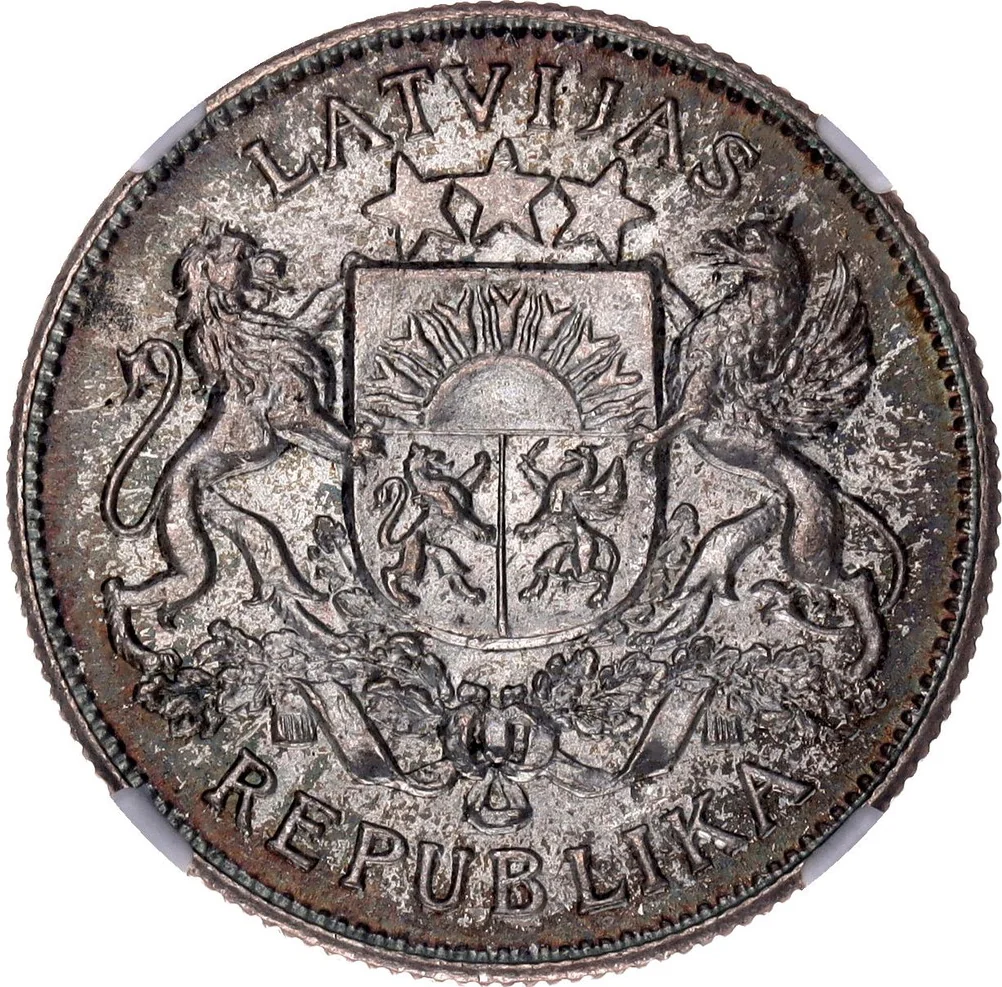
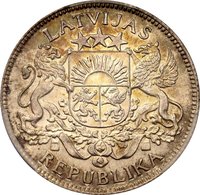
Latvian coat of arms: A shield with a rising sun, a red lion, and a silver griffin, topped with three stars and flanked by the same lion and griffin, on oak branches. Text reads "Latvijas" above and "Republika" below.
Inscription:
LATVIJAS
REPUBLIKA
REPUBLIKA
Translation:
REPUBLIC OF LATVIA
Script: Latin
Language: Latvian
Engraver: Jānis Tilbergs
Reverse
Description:
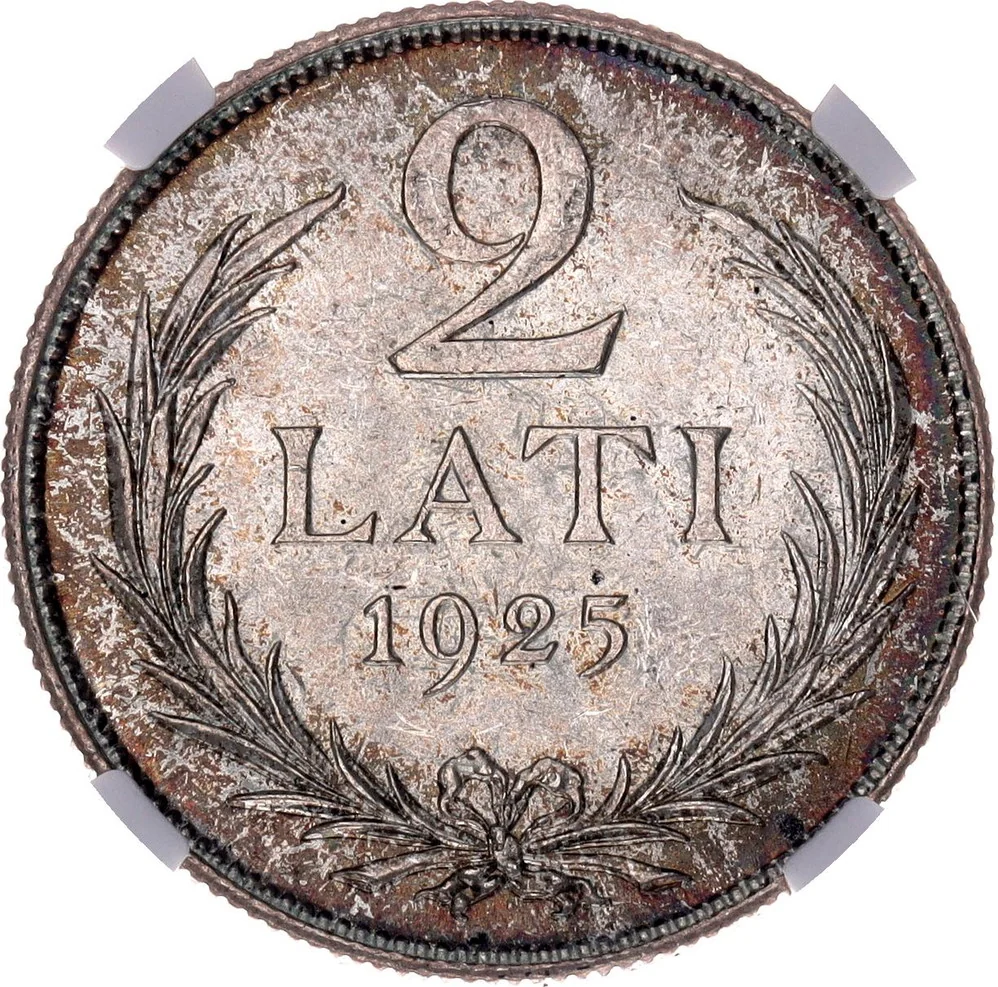
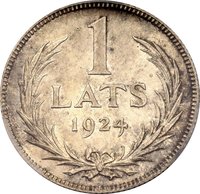
Value and date encircled
Inscription:
2
LATI
1925
LATI
1925
Script: Latin
Engraver: Jānis Tilbergs
Edge
Categories
| Symbols> Coat of Arms |
| Symbol> Wreath |
Mints
| Name | Mark |
|---|---|
| Royal Mint (Tower Hill) | — |
Mintings
| Year | Mint Mark | Mintage | Quality | Collection |
|---|---|---|---|---|
| 1925 | — | 6,385,531 | ||
| 1926 | — | 1,114,000 |
Historical background
In 1925, Latvia’s currency situation was defined by a period of hard-won stability following years of post-war chaos. After gaining independence in 1918, the country inherited a monetary landscape devastated by World War I and the Russian Revolution, characterized by a circulation of various tsarist, German Ostmark, and even local promissory notes, all suffering from severe depreciation. To establish sovereignty and economic order, the Latvian government introduced the Latvian ruble (Latvijas rublis) in 1922, but hyperinflation, mirroring that in Germany, quickly eroded its value, causing a profound crisis of confidence.
The pivotal reform came in 1924 with the introduction of a new, gold-backed national currency, the lats (divided into 100 santīmi), which became fully operational in 1925. The lats was established with a strict gold standard, pegged to both the British pound and gold reserves, which ensured its credibility and stability. This conservative monetary policy, championed by Finance Minister Ringolds Kalnings and the Bank of Latvia, was successful in halting inflation, attracting foreign investment, and integrating Latvia into the global economy. By 1925, the lats was recognized as one of the strongest and most stable currencies in Europe.
Consequently, the year 1925 represented a cornerstone of economic confidence and national identity. The successful currency reform provided the foundation for the prosperous "Golden Years" of the First Republic, enabling budget surpluses, infrastructure development, and growth in agriculture and industry. The stability of the lats became a point of national pride, symbolizing Latvia’s resilience and its firm place among the community of stable, sovereign European nations.
The pivotal reform came in 1924 with the introduction of a new, gold-backed national currency, the lats (divided into 100 santīmi), which became fully operational in 1925. The lats was established with a strict gold standard, pegged to both the British pound and gold reserves, which ensured its credibility and stability. This conservative monetary policy, championed by Finance Minister Ringolds Kalnings and the Bank of Latvia, was successful in halting inflation, attracting foreign investment, and integrating Latvia into the global economy. By 1925, the lats was recognized as one of the strongest and most stable currencies in Europe.
Consequently, the year 1925 represented a cornerstone of economic confidence and national identity. The successful currency reform provided the foundation for the prosperous "Golden Years" of the First Republic, enabling budget surpluses, infrastructure development, and growth in agriculture and industry. The stability of the lats became a point of national pride, symbolizing Latvia’s resilience and its firm place among the community of stable, sovereign European nations.
🌱 Very Common