


Obverse
Description:
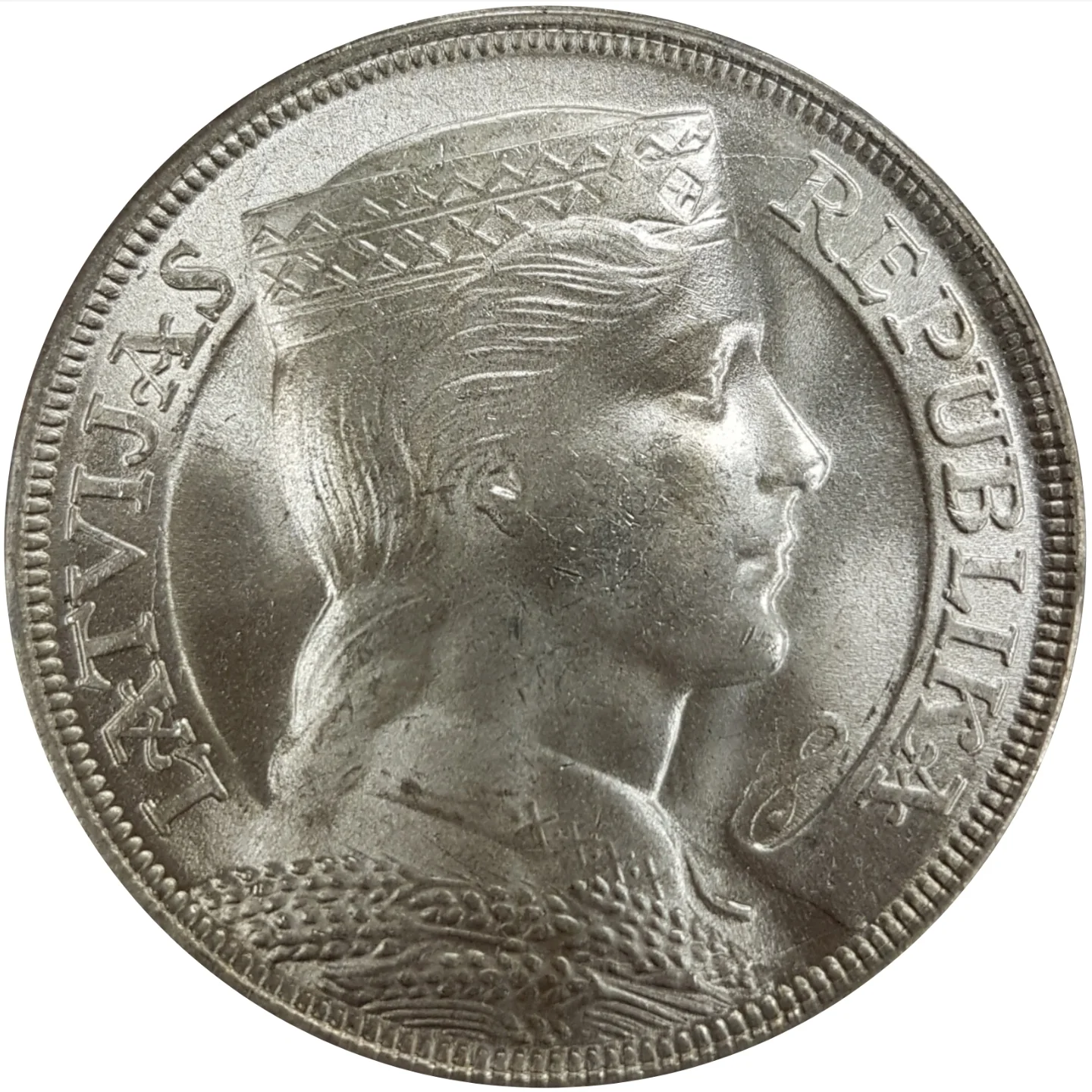
Stylized maiden in folk headdress, facing right, with grain over her shoulder.
Inscription:
LATVIJAS REPUBLIKA
Translation:
Republic of Latvia
Script: Latin
Language: Latvian
Engraver: Rihards Zariņš
Reverse
Description:
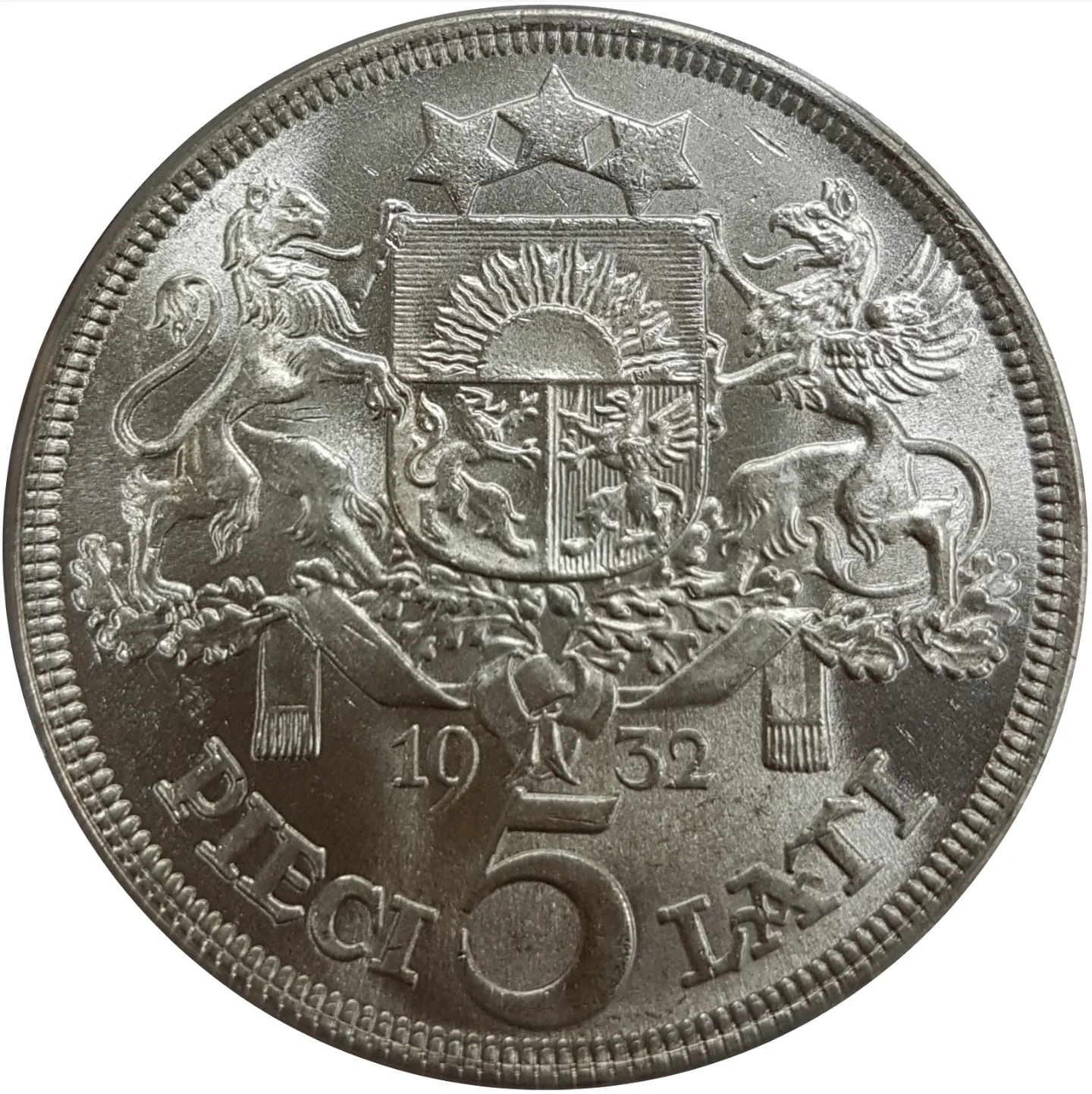
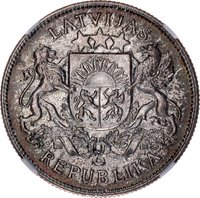
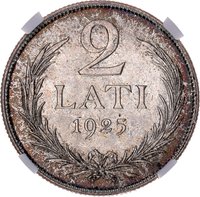
Latvian coat of arms with supporters flanking value and year.
Inscription:
19 32
PIECI 5 LATI
PIECI 5 LATI
Script: Latin
Engraver: Rihards Zariņš
Edge
Categories
| Symbols> Coat of Arms |
Mints
| Name | Mark |
|---|---|
| Royal Mint (Tower Hill) | — |
Mintings
| Year | Mint Mark | Mintage | Quality | Collection |
|---|---|---|---|---|
| 1929 | — | — | Proof | |
| 1929 | — | 1,000,000 | ||
| 1931 | — | — | Proof | |
| 1931 | — | 2,000,000 | ||
| 1932 | — | — | Proof | |
| 1932 | — | 600,000 |
Historical background
In 1929, Latvia’s currency, the lats, was a symbol of remarkable stability and national pride, having been successfully introduced just five years earlier in 1924. This stability was the result of a rigorous monetary reform led by Finance Minister Ringolds Kalnings, which replaced the hyperinflated German Ostmark and Latvian ruble with a new currency backed by gold and substantial foreign exchange reserves. By the end of the decade, the lats was famously known as "the little British soldier" for its strength and reliability, being one of the most stable currencies in Europe, pegged to gold at a fixed rate.
This financial solidity was underpinned by conservative fiscal policies, a balanced state budget, and growing agricultural exports, particularly butter and bacon, which earned valuable foreign currency. The Bank of Latvia, established in 1922, maintained a high cover ratio for the lats, often exceeding 100% of the money in circulation with gold and secure foreign assets. Consequently, Latvia enjoyed low inflation, attracted foreign investment, and experienced a period of economic growth and modernization known as the "Ulmanis era," named for Prime Minister Kārlis Ulmanis.
However, this picture of strength existed on the precipice of global turmoil. While domestically secure in 1929, Latvia's economy was fundamentally tied to agricultural exports and foreign capital. The Wall Street Crash in October 1929 and the ensuing Great Depression would soon trigger a catastrophic collapse in global agricultural prices and trade. By the early 1930s, this external shock would severely test the lats' stability, leading to deflation, a sharp economic downturn, and ultimately, the authoritarian shift of 1934 to manage the crisis. Thus, 1929 represents the calm before the storm—the peak of an independent, prosperous monetary system soon to be engulfed by international forces beyond its control.
This financial solidity was underpinned by conservative fiscal policies, a balanced state budget, and growing agricultural exports, particularly butter and bacon, which earned valuable foreign currency. The Bank of Latvia, established in 1922, maintained a high cover ratio for the lats, often exceeding 100% of the money in circulation with gold and secure foreign assets. Consequently, Latvia enjoyed low inflation, attracted foreign investment, and experienced a period of economic growth and modernization known as the "Ulmanis era," named for Prime Minister Kārlis Ulmanis.
However, this picture of strength existed on the precipice of global turmoil. While domestically secure in 1929, Latvia's economy was fundamentally tied to agricultural exports and foreign capital. The Wall Street Crash in October 1929 and the ensuing Great Depression would soon trigger a catastrophic collapse in global agricultural prices and trade. By the early 1930s, this external shock would severely test the lats' stability, leading to deflation, a sharp economic downturn, and ultimately, the authoritarian shift of 1934 to manage the crisis. Thus, 1929 represents the calm before the storm—the peak of an independent, prosperous monetary system soon to be engulfed by international forces beyond its control.
🌱 Very Common