

½ Gulden – Netherlands
Netherlands
Context
Years: 1921–1930
Issuer: Netherlands 
Ruler: Wilhelmina
Currency:
(1817—2001)
Demonetized: Yes
Total mintage: 49,240,000
Material
References
KM: #Click to copy to clipboard160
Numista: #6549
Value
Exchange value: ½ NLG
Bullion value: $10.44
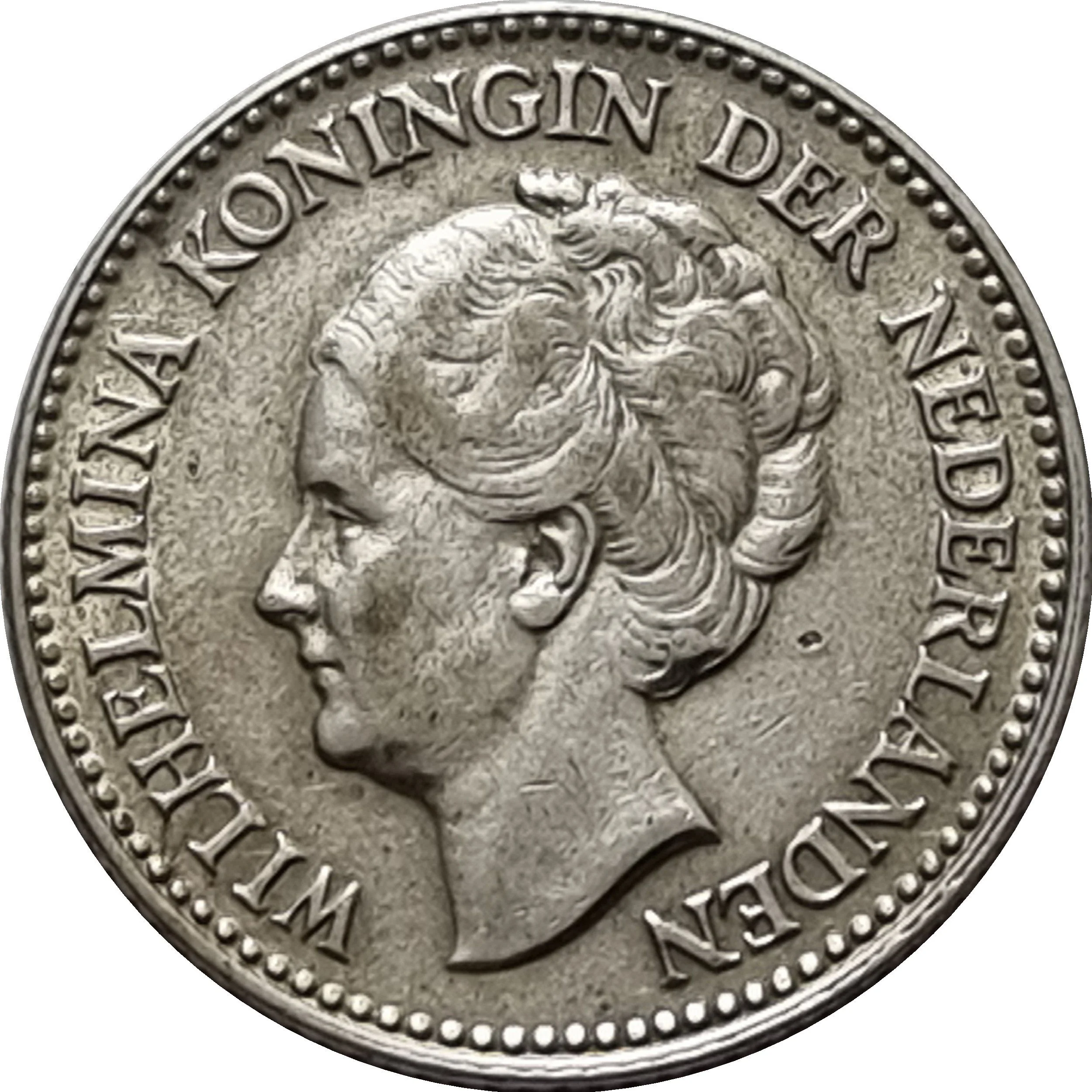
Obverse
Description:
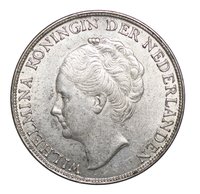
Queen Wilhelmina, facing left.
Inscription:
WILHELMINA KONINGIN DER NEDERLANDEN
Translation:
Wilhelmina Queen of the Netherlands
Script: Latin
Language: Dutch
Engraver: Johannes Cornelis Wienecke
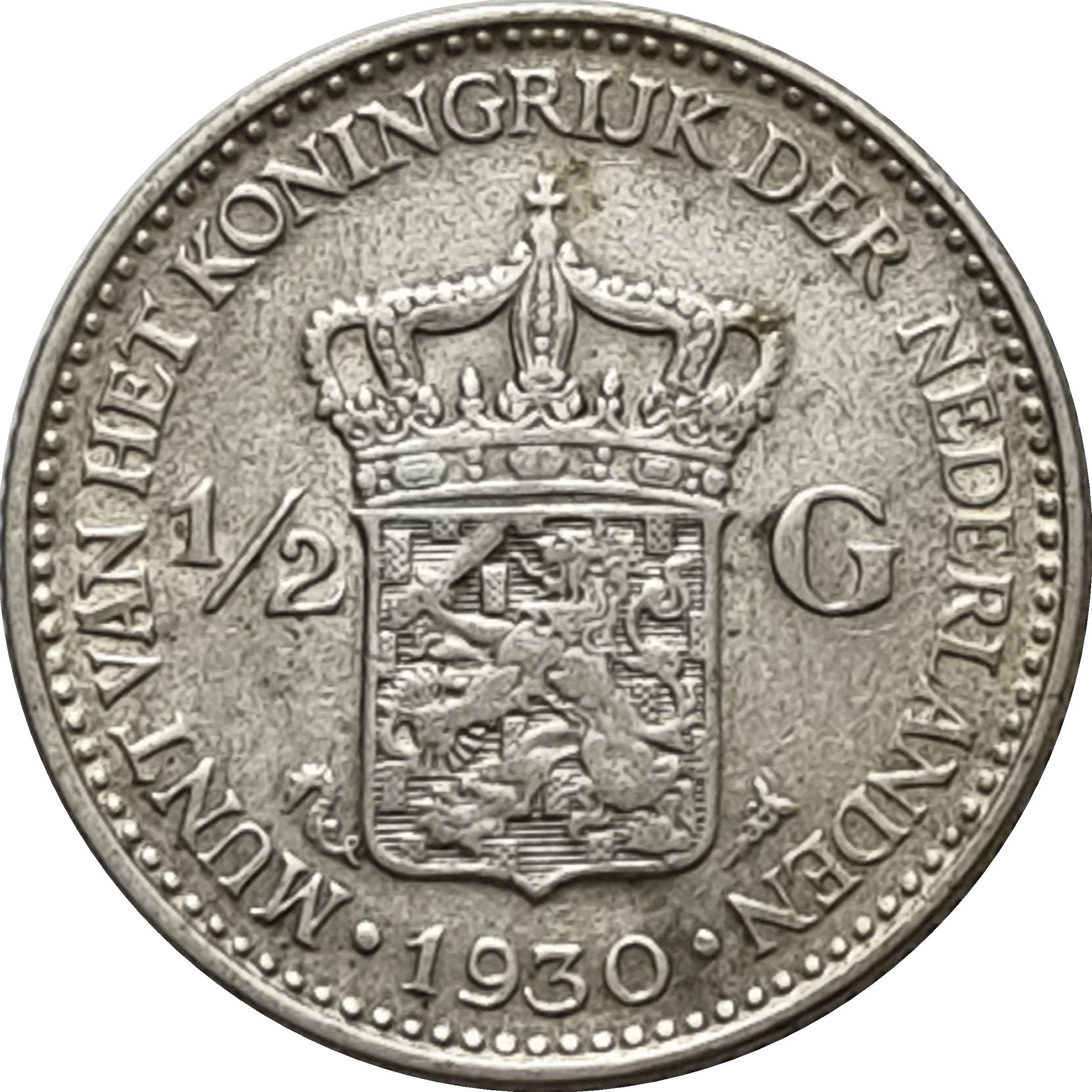
Reverse
Edge
Reeded
Categories
| Symbols> Coat of Arms |
| Symbol> Crown |
Mints
| Name | Mark |
|---|---|
| Royal Dutch Mint | — |
Mintings
| Year | Mint Mark | Mintage | Quality | Collection |
|---|---|---|---|---|
| 1921 | — | 5,000,000 | ||
| 1921 | — | — | Proof | |
| 1922 | — | 11,240,000 | ||
| 1928 | — | 5,000,000 | ||
| 1929 | — | 14,000,000 | ||
| 1930 | — | 14,000,000 |
Historical background
Following the devastation of the First World War, the Netherlands in 1921 found itself in a complex and precarious monetary situation, despite its official neutrality during the conflict. The core issue was the severe inflation of the Dutch guilder, which had lost approximately half of its pre-war purchasing power. This inflationary pressure was driven by the country's role as a vital supplier to warring nations, leading to large gold inflows and a credit boom. Furthermore, the collapse of the German mark and other European currencies created intense speculative pressures and exchange rate instability, challenging the Netherlands' traditional commitment to the gold standard.
Domestically, the government and the central bank, De Nederlandsche Bank, were deeply divided on the path to monetary stabilization. A fierce debate raged between those advocating for a return to the pre-war gold parity (a deflatiepolitiek) and those in favor of devaluing the guilder to a new, lower gold value to reflect the reality of inflation. The former course, championed by central bank president Dr. Gerard Vissering, promised to restore international confidence and the currency's prestige but would require brutal deflation, high interest rates, and severe economic contraction to force prices back down.
Consequently, 1921 was a year of painful transition and tightening policy. The central bank, aiming for the pre-war parity, raised interest rates and restricted credit to curb inflation and attract gold. This deliberate deflation began to bite hard, leading to rising unemployment and social unrest, setting the stage for a prolonged period of economic hardship. The decision to pursue this orthodox, hard-money policy would ultimately culminate in the official return to the gold standard at the pre-war parity in April 1925, a victory for financial orthodoxy but at a significant social and economic cost in the preceding years.
Domestically, the government and the central bank, De Nederlandsche Bank, were deeply divided on the path to monetary stabilization. A fierce debate raged between those advocating for a return to the pre-war gold parity (a deflatiepolitiek) and those in favor of devaluing the guilder to a new, lower gold value to reflect the reality of inflation. The former course, championed by central bank president Dr. Gerard Vissering, promised to restore international confidence and the currency's prestige but would require brutal deflation, high interest rates, and severe economic contraction to force prices back down.
Consequently, 1921 was a year of painful transition and tightening policy. The central bank, aiming for the pre-war parity, raised interest rates and restricted credit to curb inflation and attract gold. This deliberate deflation began to bite hard, leading to rising unemployment and social unrest, setting the stage for a prolonged period of economic hardship. The decision to pursue this orthodox, hard-money policy would ultimately culminate in the official return to the gold standard at the pre-war parity in April 1925, a victory for financial orthodoxy but at a significant social and economic cost in the preceding years.
🌱 Very Common