

2 euro (Barbara of Celje) – Slovenia
Add to wishlist
Circulating commemorative coins
Commemoration: 600th Anniversary of the Crowning of Barbara of Celje
Slovenia
Obverse
Description:
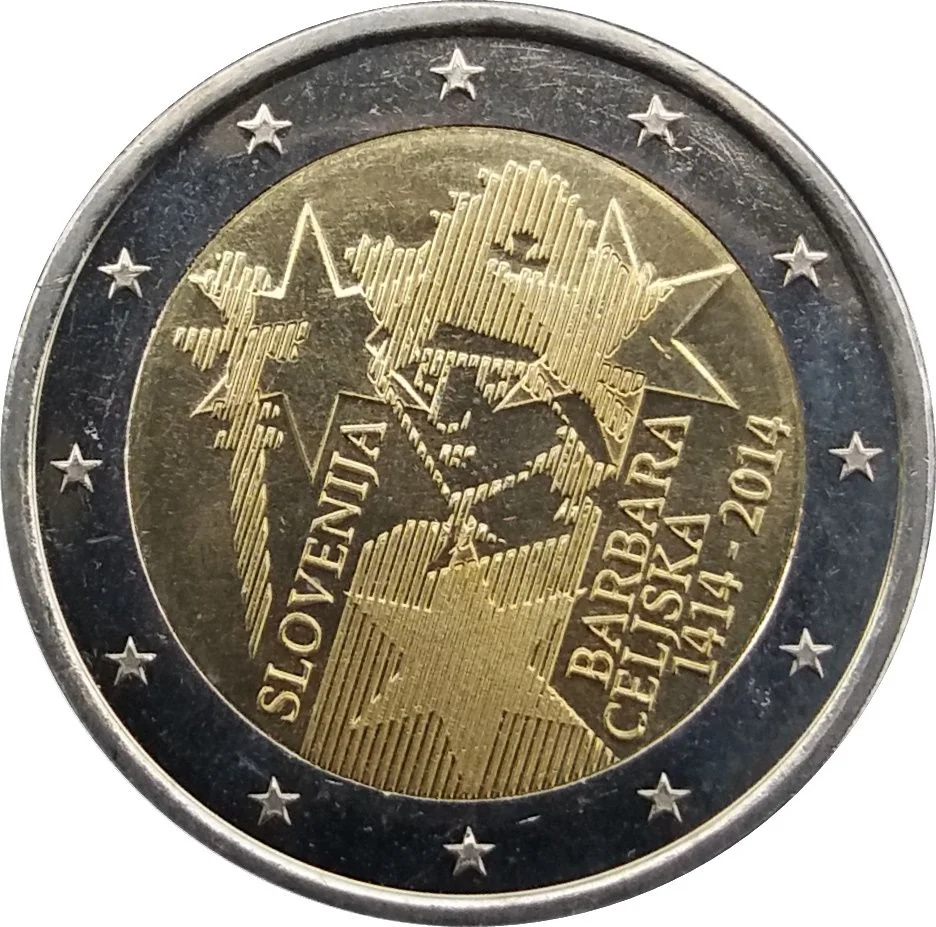
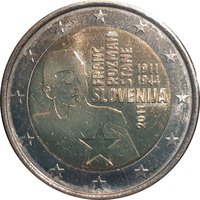
The coin features a lined portrait of Queen Barbara of Celje with a sceptre, three six-pointed stars, and the inscriptions "SLOVENIJA" and "BARBARA CELJSKA 1414-2014." The outer ring depicts the 12 stars of the European flag.
Inscription:
SLOVENIJA
BARBARA
CELJSKA
1414-2014
BARBARA
CELJSKA
1414-2014
Translation:
Slovenia
Barbara of Celje
1414-2014
Barbara of Celje
1414-2014
Script: Latin
Language: Slovenian
Engraver: Studiobotas
Reverse
Edge
Categories
| Map |
| Event> Coronation |
Mints
| Name | Mark |
|---|---|
| Royal Dutch Mint | — |
Mintings
| Year | Mint Mark | Mintage | Quality | Collection |
|---|---|---|---|---|
| 2014 | — | 6,500 | Proof | |
| 2014 | — | 978,500 | ||
| 2014 | — | 15,000 | BU |
Historical background
In 2014, Slovenia was in its third year of using the euro, having adopted the common currency in 2007. The immediate eurozone crisis period had passed its peak, but the country was grappling with a severe domestic banking crisis that had erupted in late 2012 and continued to dominate its economic landscape. While the currency itself was stable as a member of the Eurosystem, Slovenia's financial stability was under intense scrutiny from international investors and EU institutions. There were concerns about a potential need for an international bailout, which would have been managed within the eurozone framework, similar to programs in Greece or Ireland.
The currency situation was paradoxical: the euro provided macroeconomic stability and prevented a currency crisis, but it also removed key policy tools. Slovenia could not devalue its currency to regain competitiveness, nor could it set its own independent monetary policy to stimulate the economy through interest rates. This lack of monetary sovereignty forced the government to pursue a difficult path of internal devaluation—pushing through fiscal consolidation, structural reforms, and a major recapitalization of its state-owned banks using national funds. The European Central Bank's (ECB) accommodative policies, including low interest rates and preparations for quantitative easing, provided a supportive backdrop for the entire euro area, including Slovenia.
By the end of 2014, the situation had stabilized significantly. The government's aggressive bank rehabilitation, including the creation of a "bad bank" (the Bank Asset Management Company), successfully averted the need for a full Troika bailout. This restored confidence in Slovenia's commitment to the euro and its fiscal rules. The year concluded with the country exiting the European Commission's Excessive Deficit Procedure, marking a turning point. Thus, 2014 was a year where Slovenia, while fully integrated into the euro, confronted the constraints and disciplines of the currency union to resolve a homegrown financial crisis, ultimately reinforcing its place within the Eurozone.
The currency situation was paradoxical: the euro provided macroeconomic stability and prevented a currency crisis, but it also removed key policy tools. Slovenia could not devalue its currency to regain competitiveness, nor could it set its own independent monetary policy to stimulate the economy through interest rates. This lack of monetary sovereignty forced the government to pursue a difficult path of internal devaluation—pushing through fiscal consolidation, structural reforms, and a major recapitalization of its state-owned banks using national funds. The European Central Bank's (ECB) accommodative policies, including low interest rates and preparations for quantitative easing, provided a supportive backdrop for the entire euro area, including Slovenia.
By the end of 2014, the situation had stabilized significantly. The government's aggressive bank rehabilitation, including the creation of a "bad bank" (the Bank Asset Management Company), successfully averted the need for a full Troika bailout. This restored confidence in Slovenia's commitment to the euro and its fiscal rules. The year concluded with the country exiting the European Commission's Excessive Deficit Procedure, marking a turning point. Thus, 2014 was a year where Slovenia, while fully integrated into the euro, confronted the constraints and disciplines of the currency union to resolve a homegrown financial crisis, ultimately reinforcing its place within the Eurozone.
Series: Slovenia 2 euro commemoratives
🌱 Very Common