

Obverse
Description:
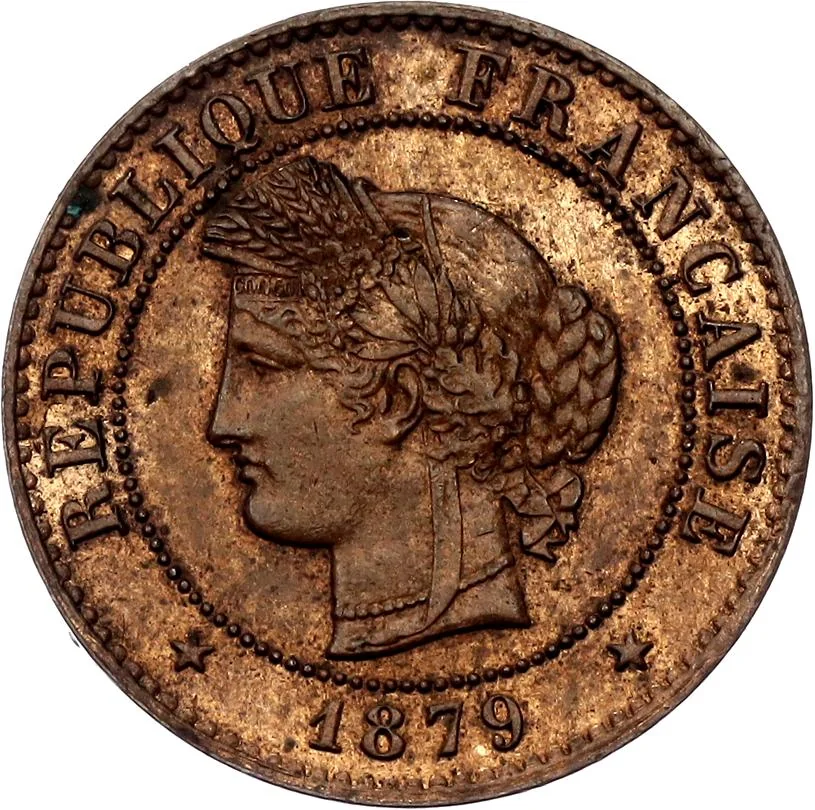
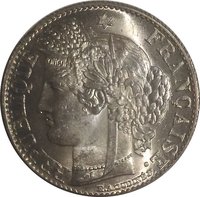
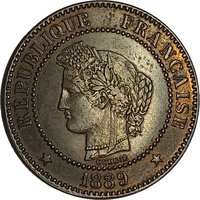
Laureate head left in beaded circle. Date between stars below.
Inscription:
RÉPUBLIQUE FRANÇAISE
* 1896 *
* 1896 *
Translation:
FRENCH REPUBLIC
* 1896 *
* 1896 *
Script: Latin
Language: French
Engraver: Eugène-André Oudiné
Reverse
Description:
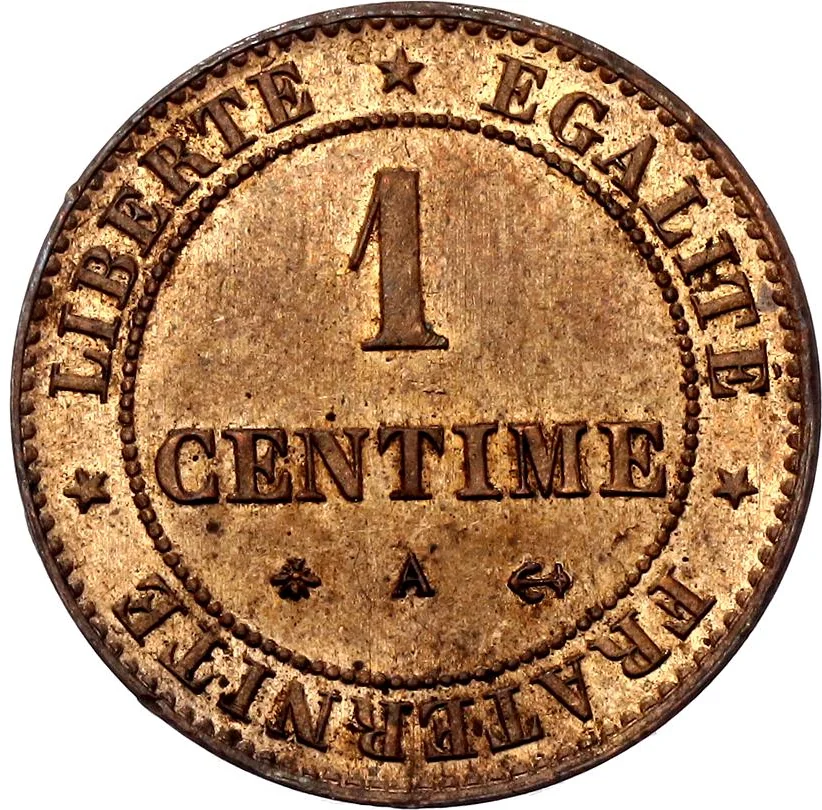
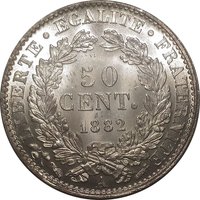
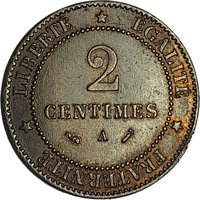
Mint letter below, within beaded circle.
Inscription:
LIBERTÉ ÉGALITÉ FRATERNITÉ
1
CENTIME
A
1
CENTIME
A
Translation:
Liberty Equality Fraternity
1
Centime
A
1
Centime
A
Script: Latin
Language: French
Engraver: Eugène-André Oudiné
Edge
Plain
Mints
| Name | Mark |
|---|---|
| Monnaie de Paris | (A) |
| Bordeaux | K |
Mintings
| Year | Mint Mark | Mintage | Quality | Collection |
|---|---|---|---|---|
| 1872 | A | 1,250,000 | ||
| 1872 | K | 750,000 | ||
| 1874 | A | 1,000,000 | ||
| 1875 | K | 2,000,000 | ||
| 1875 | A | 1,000,000 | ||
| 1877 | A | 1,000,000 | ||
| 1878 | A | 1,500,000 | ||
| 1878 | K | 288,950 | ||
| 1879 | A | 800,000 | ||
| 1882 | A | 419,000 | ||
| 1884 | A | 400,000 | ||
| 1885 | A | 400,000 | ||
| 1886 | A | 400,000 | ||
| 1887 | A | 400,000 | ||
| 1888 | A | 400,000 | ||
| 1889 | A | 400,000 | ||
| 1890 | A | 400,000 | ||
| 1891 | A | 1,400,000 | ||
| 1892 | A | 800,000 | ||
| 1893 | A | 300,000 | ||
| 1894 | A | 500,000 | ||
| 1895 | A | 3,000,000 | ||
| 1896 | A | 3,000,000 | ||
| 1897 | A | 2,000,000 |
Historical background
In 1872, France was navigating a complex and critical monetary transition in the wake of the Franco-Prussian War. The conflict had ended disastrously with the Treaty of Frankfurt in 1871, imposing a crushing war indemnity of five billion francs on the French Republic. To meet this obligation, the government was forced to borrow heavily, initially relying on the banknote issuance of the Banque de France, which remained convertible to gold. This period saw a tense coexistence of gold, silver, and paper currency, but the overwhelming financial pressure pushed the state toward a fundamental monetary reform.
The dominant economic thinking of the era, influenced by the Latin Monetary Union (established in 1865) and the success of the British gold standard, favored gold monometallism. Silver's value was becoming increasingly unstable due to large discoveries, making gold the preferred metal for international trade and stability. Consequently, the French government, led by Adolphe Thiers, began taking decisive steps to demonetize silver and officially adopt the gold standard. A pivotal law was passed in 1873 (prepared throughout 1872) that limited the free minting of silver coins, effectively beginning the process of shifting France from a bimetallic system to a gold-based one.
Thus, the currency situation in 1872 was one of deliberate movement toward consolidation and orthodoxy, driven by postwar necessity and contemporary economic doctrine. The government's actions aimed to stabilize the franc, restore international financial confidence, and manage the enormous debt. This policy shift, however, would have profound long-term consequences, contributing to the global "Crime of 1873" that demonetized silver and solidified the international gold standard, impacting economies worldwide for decades.
The dominant economic thinking of the era, influenced by the Latin Monetary Union (established in 1865) and the success of the British gold standard, favored gold monometallism. Silver's value was becoming increasingly unstable due to large discoveries, making gold the preferred metal for international trade and stability. Consequently, the French government, led by Adolphe Thiers, began taking decisive steps to demonetize silver and officially adopt the gold standard. A pivotal law was passed in 1873 (prepared throughout 1872) that limited the free minting of silver coins, effectively beginning the process of shifting France from a bimetallic system to a gold-based one.
Thus, the currency situation in 1872 was one of deliberate movement toward consolidation and orthodoxy, driven by postwar necessity and contemporary economic doctrine. The government's actions aimed to stabilize the franc, restore international financial confidence, and manage the enormous debt. This policy shift, however, would have profound long-term consequences, contributing to the global "Crime of 1873" that demonetized silver and solidified the international gold standard, impacting economies worldwide for decades.
🌱 Very Common