

2 centimes – France
Add to wishlist
France
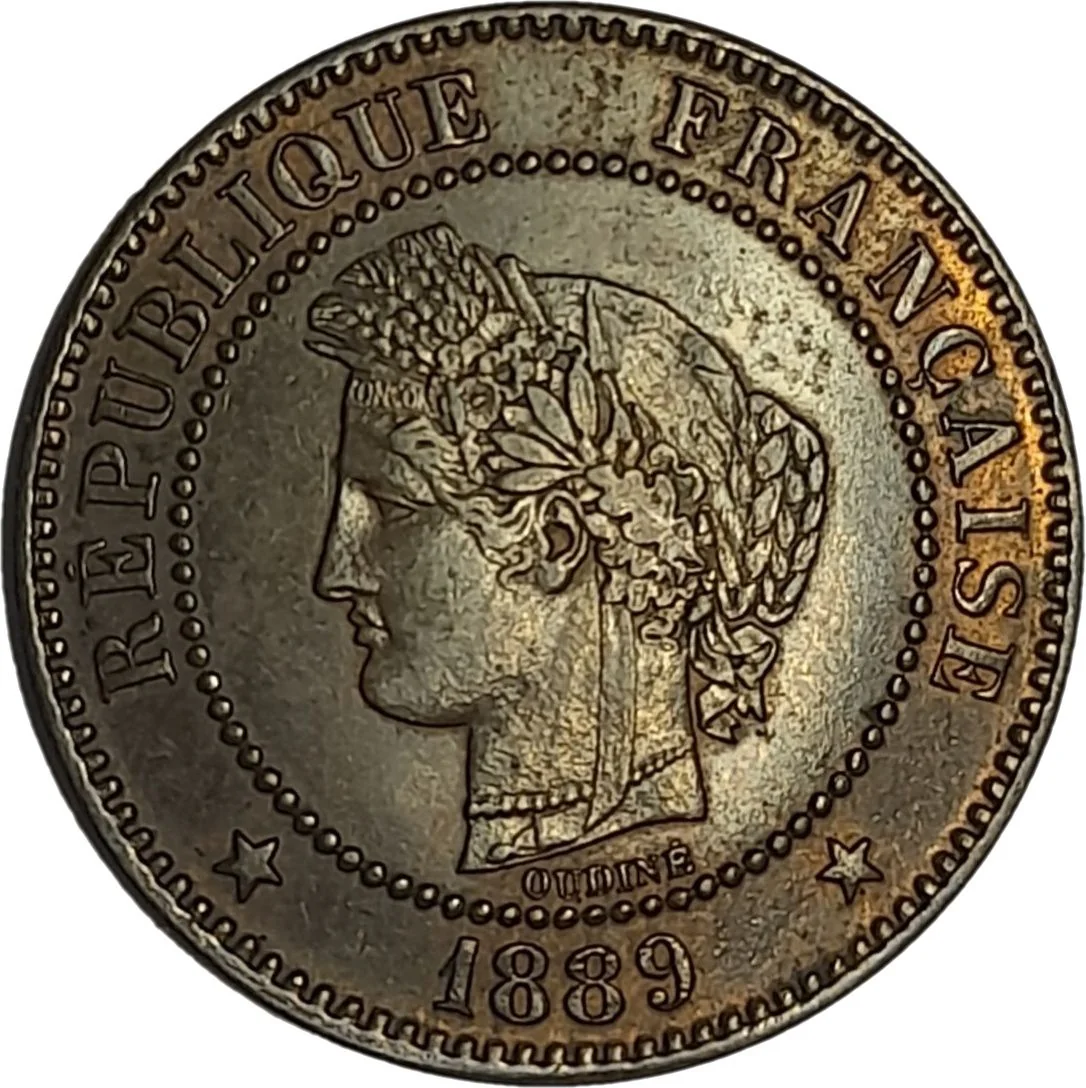
Obverse
Description:
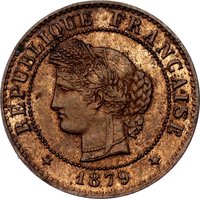
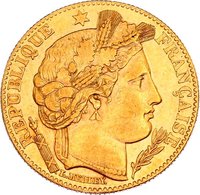
Ceres crowned with grain, headband inscribed CONCOR; signed OUDINE below.
Inscription:
RÉPUBLIQUE FRANÇAISE
OUDINÉ
1889
OUDINÉ
1889
Translation:
FRENCH REPUBLIC
OUDINÉ
1889
OUDINÉ
1889
Script: Latin
Language: French
Engraver: Eugène-André Oudiné
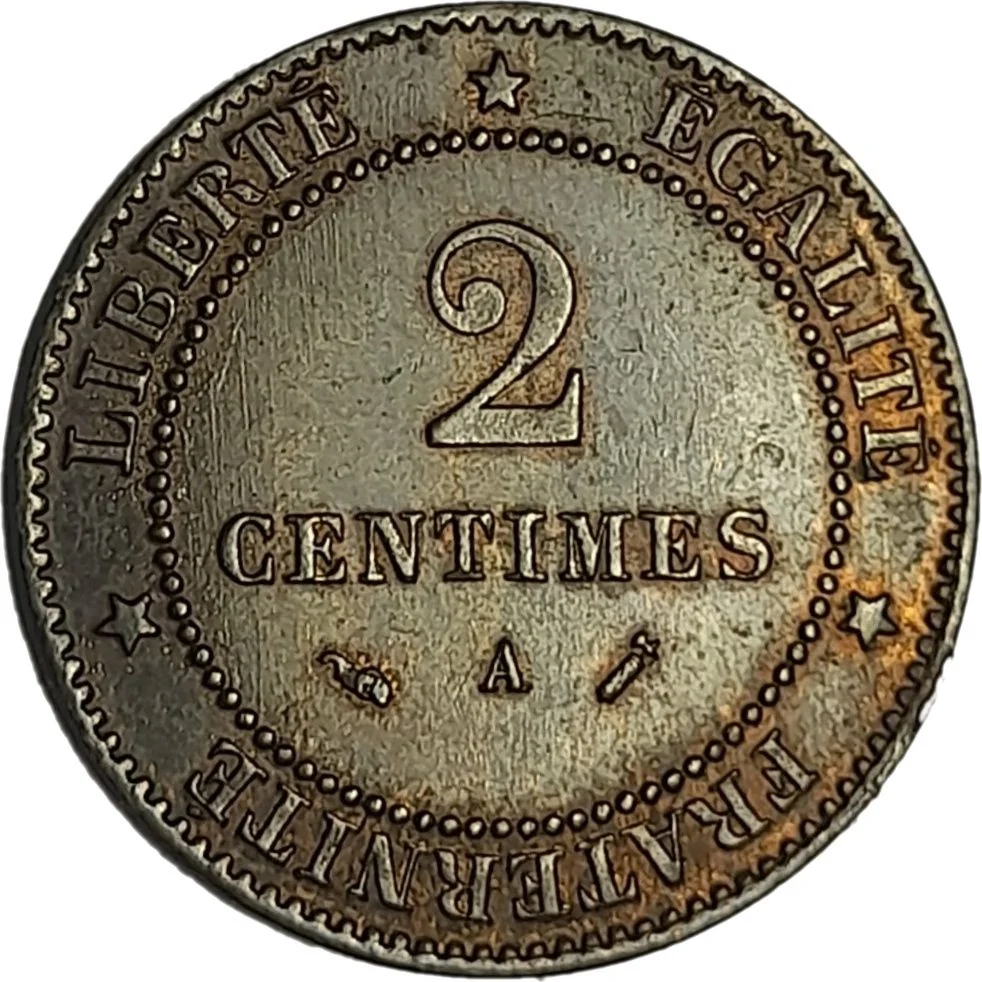
Reverse
Description:
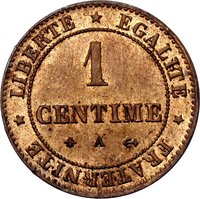
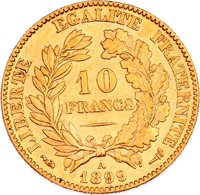
2 CENTIMES on a beaded cord.
Inscription:
LIBERTÉ ÉGALITÉ FRATERNITÉ
2
CENTIMES
A
2
CENTIMES
A
Translation:
LIBERTY EQUALITY FRATERNITY
2
CENTIMES
A
2
CENTIMES
A
Script: Latin
Language: French
Engraver: Eugène-André Oudiné
Edge
Plain
Mints
| Name | Mark |
|---|---|
| Monnaie de Paris | (A) |
| Bordeaux | K |
Mintings
| Year | Mint Mark | Mintage | Quality | Collection |
|---|---|---|---|---|
| 1877 | — | — | ||
| 1877 | A | 500,000 | ||
| 1878 | A | 750,000 | ||
| 1878 | K | 362,500 | ||
| 1879 | A | 600,000 | ||
| 1882 | A | 290,500 | ||
| 1883 | A | 500,000 | ||
| 1884 | A | 300,000 | ||
| 1885 | A | 300,000 | ||
| 1886 | A | 300,000 | ||
| 1887 | A | 300,000 | ||
| 1888 | A | 400,000 | ||
| 1889 | A | 600,000 | ||
| 1890 | A | 300,000 | ||
| 1891 | A | 300,000 | ||
| 1892 | A | 500,000 | ||
| 1893 | A | 250,000 | ||
| 1894 | A | 150,000 | ||
| 1895 | A | 1,000,000 | ||
| 1896 | A | 1,000,000 | ||
| 1897 | A | 1,250,000 |
Historical background
By 1877, France was firmly operating under the Latin Monetary Union (LMU), a multinational bimetallic system it had spearheaded in 1865. The framework fixed the values of gold and silver coins (like the 20-franc gold napoléon and 5-franc silver écu) at a set ratio, making them legal tender across member nations. However, the system was under severe strain due to the global demonetization of silver. Major powers like Germany had adopted the gold standard, dumping vast quantities of silver onto the market and depressing its value, which threatened the fixed LMU ratio and caused arbitrage issues.
Domestically, this created a tense monetary debate. "Monometallists," often conservative and liberal economists, argued for a full transition to the gold standard to ensure stability and align with international financial centers like London. Opposing them were "bimetallists," who included industrialists and agricultural interests, advocating for the maintenance of silver's role to ensure ample currency supply and avoid deflation. The political dimension was acute, as the monarchist-dominated National Assembly of 1877, in its ongoing power struggle with the Republican President MacMahon, was generally more inclined toward bimetallism, seeing it as a defense against the economic liberalism associated with their republican opponents.
Consequently, France in 1877 was in a state of de facto gold standard limbo. While legally bimetallic, the government had suspended the free minting of silver in 1876 to protect its gold reserves, a move that effectively halted the core mechanism of bimetallism. This left the country with a circulating medium of both metals but without a formal commitment to either system, navigating a precarious path between domestic political pressures, the failing LMU, and the inexorable global shift toward gold. This unresolved situation would persist until France formally abandoned bimetallism and joined the gold standard in the late 1870s.
Domestically, this created a tense monetary debate. "Monometallists," often conservative and liberal economists, argued for a full transition to the gold standard to ensure stability and align with international financial centers like London. Opposing them were "bimetallists," who included industrialists and agricultural interests, advocating for the maintenance of silver's role to ensure ample currency supply and avoid deflation. The political dimension was acute, as the monarchist-dominated National Assembly of 1877, in its ongoing power struggle with the Republican President MacMahon, was generally more inclined toward bimetallism, seeing it as a defense against the economic liberalism associated with their republican opponents.
Consequently, France in 1877 was in a state of de facto gold standard limbo. While legally bimetallic, the government had suspended the free minting of silver in 1876 to protect its gold reserves, a move that effectively halted the core mechanism of bimetallism. This left the country with a circulating medium of both metals but without a formal commitment to either system, navigating a precarious path between domestic political pressures, the failing LMU, and the inexorable global shift toward gold. This unresolved situation would persist until France formally abandoned bimetallism and joined the gold standard in the late 1870s.
🌱 Very Common