

50 centimes – France
Add to wishlist
France
Obverse
Description:
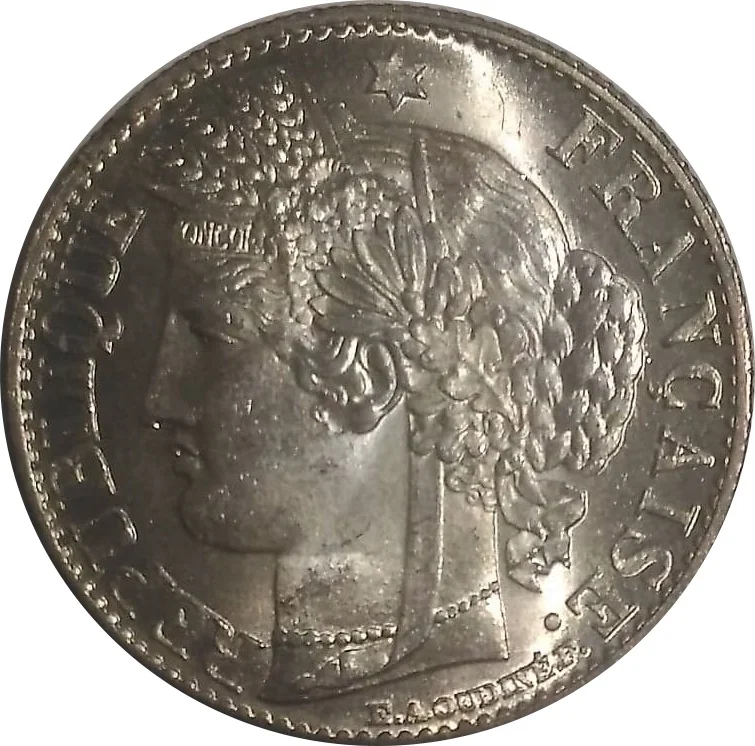
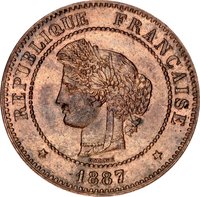
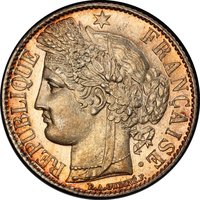
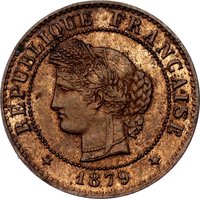
Left-facing Ceres as the Republic, wearing a pearl necklace, a double bun, and a crown of wheat, flowers, olive, and oak branches tied with a "CONCOR" ribbon. Below the neck, "EA OUDINÉ. F.."
Inscription:
REPUBLIQUE FRANÇAISE
E.A. OUDINÉ F.
E.A. OUDINÉ F.
Translation:
FRENCH REPUBLIC
E.A. Oudiné, engraver
E.A. Oudiné, engraver
Script: Latin
Language: French
Engraver: Eugène-André Oudiné
Reverse
Description:
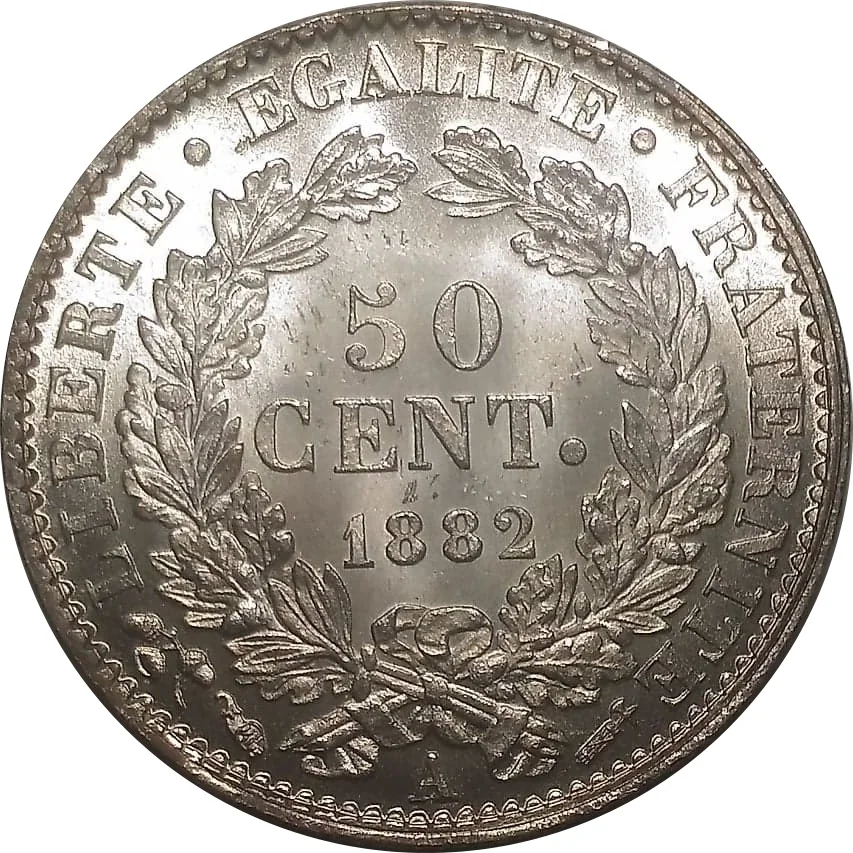
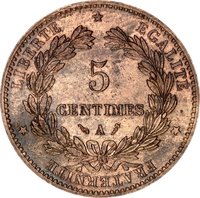
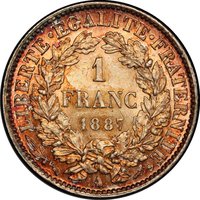
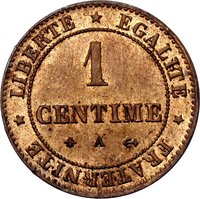
50 CENT. above the date in a wreath of oak and laurel branches tied below; workshop letter under the knot.
Inscription:
LIBERTE EGALITE FRATERNITE
50
CENT.
1882
A
50
CENT.
1882
A
Translation:
LIBERTY EQUALITY FRATERNITY
50
CENTS.
1882
A
50
CENTS.
1882
A
Script: Latin
Language: French
Engraver: Eugène-André Oudiné
Edge
Reeded
Mints
| Name | Mark |
|---|---|
| Monnaie de Paris | (A) |
| Bordeaux | K |
Mintings
Historical background
Following its defeat in the Franco-Prussian War, France in 1871 faced a profound monetary crisis rooted in the colossal indemnity imposed by the newly unified German Empire. The Treaty of Frankfurt obligated France to pay five billion gold francs within three years, a staggering sum that threatened to drain the nation's specie reserves. To meet this demand and fund the war itself, the government had heavily relied on the Bank of France, which suspended the convertibility of its banknotes into gold (the cours forcé) in August 1870. This meant the franc, while still used, was effectively a fiat currency backed by government decree rather than precious metal, leading to inflation and a loss of public confidence.
The political will to resolve the crisis was immense, as the conservative government of the Third Republic saw rapid repayment as a matter of national honor and a prerequisite for ending the German occupation of eastern France. Under the leadership of Minister of Finance Pierre Magne, France executed a remarkable financial feat. It successfully launched massive international loans, marketed patriotically to the public as the "Liberation Loans," which were oversubscribed both domestically and abroad. This influx of foreign capital, primarily in gold, allowed France to not only pay the indemnity ahead of schedule in September 1873 but also to begin rebuilding its gold reserves.
This successful effort directly paved the way for a return to the gold standard. The accumulation of bullion and the desire for monetary stability led to the law of August 1873, which formally demonetized silver and established gold as the sole metallic base for the franc. This move, completed by 1878, secured the franc's value and aligned France with the international monetary system of the era, but it also contributed to the global "Crime of 1873" by destabilizing the silver market. Thus, the currency situation of 1871 evolved from a crisis of defeat into a disciplined national project that restored France's financial standing.
The political will to resolve the crisis was immense, as the conservative government of the Third Republic saw rapid repayment as a matter of national honor and a prerequisite for ending the German occupation of eastern France. Under the leadership of Minister of Finance Pierre Magne, France executed a remarkable financial feat. It successfully launched massive international loans, marketed patriotically to the public as the "Liberation Loans," which were oversubscribed both domestically and abroad. This influx of foreign capital, primarily in gold, allowed France to not only pay the indemnity ahead of schedule in September 1873 but also to begin rebuilding its gold reserves.
This successful effort directly paved the way for a return to the gold standard. The accumulation of bullion and the desire for monetary stability led to the law of August 1873, which formally demonetized silver and established gold as the sole metallic base for the franc. This move, completed by 1878, secured the franc's value and aligned France with the international monetary system of the era, but it also contributed to the global "Crime of 1873" by destabilizing the silver market. Thus, the currency situation of 1871 evolved from a crisis of defeat into a disciplined national project that restored France's financial standing.
Series: 1871 France circulation coins
🌱 Very Common