

⅙ Riksdaler – Sweden
Sweden
Context
Years: 1819–1826
Issuer: Sweden 
Ruler: Charles XIV John
Currency:
(1798—1830)
Demonetized: Yes
Total mintage: 54,168
Material
References
KM: #Click to copy to clipboard598
Numista: #64143
Value
Bullion value: $12.24
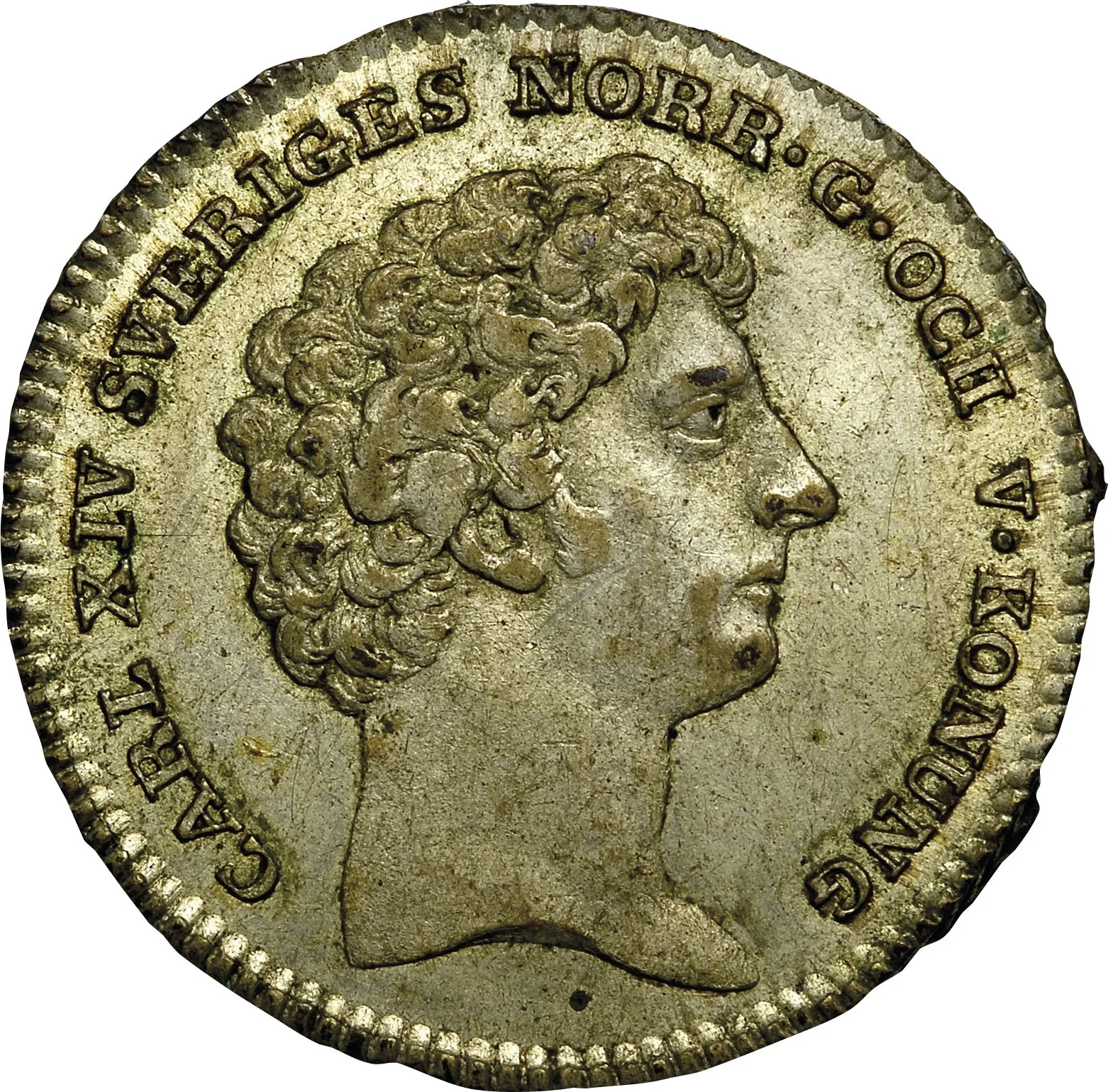
Obverse
Reverse
Description:
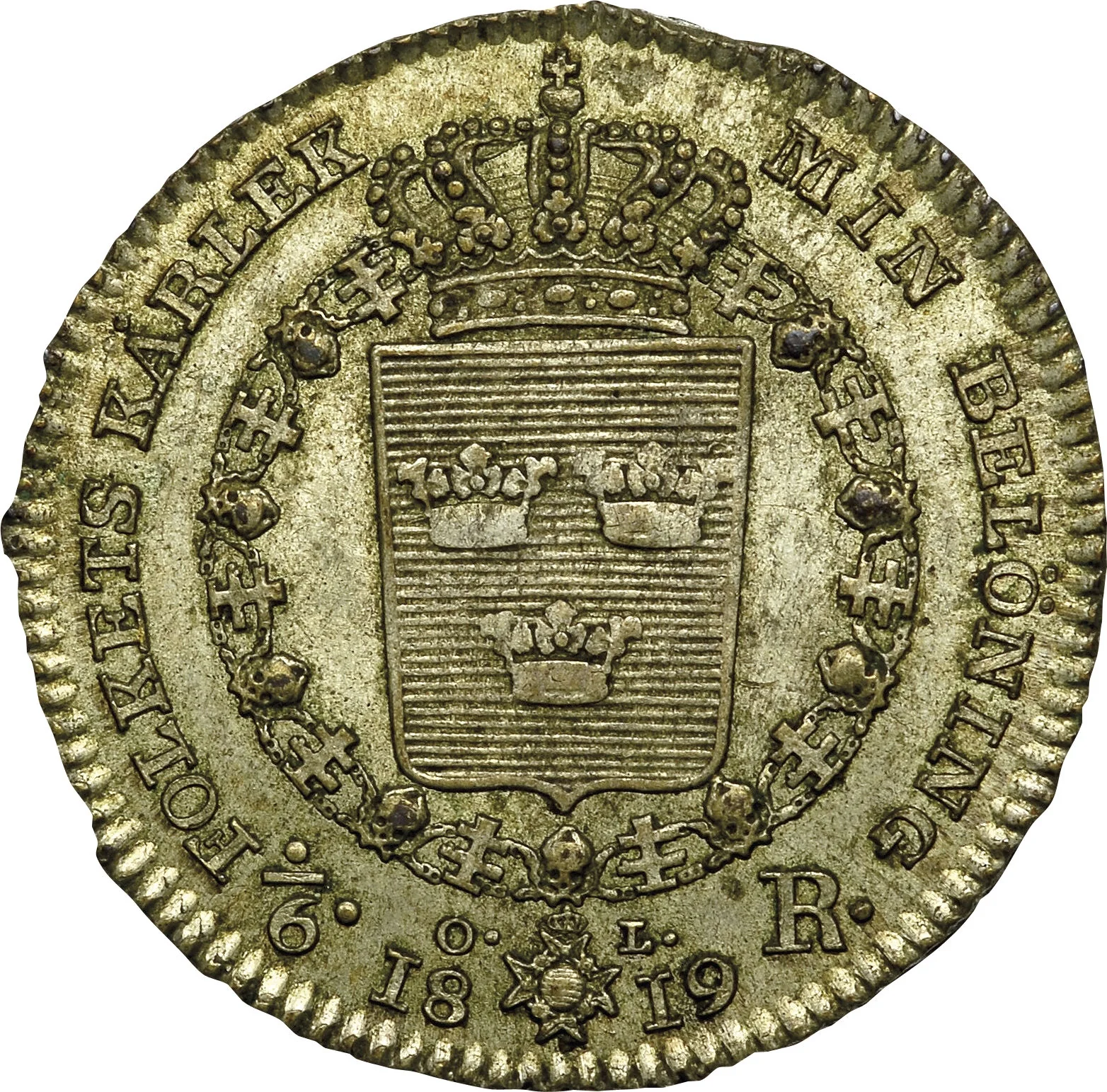
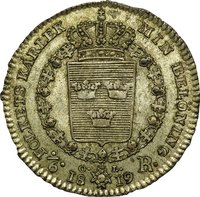
Shield with Three Crowns, encircled by the Seraphim Chain. The pendant divides the value, date, and mintmark. The king's motto surrounds the rim.
Inscription:
FOLKETS KÄRLEK MIN BELÖNING
./6. R.
O. L.
18 19
./6. R.
O. L.
18 19
Translation:
THE PEOPLE'S LOVE MY REWARD
Oscar I
18 19
Oscar I
18 19
Script: Latin
Language: Swedish
Edge
Categories
| Symbols> Coat of Arms |
Mintings
| Year | Mint Mark | Mintage | Quality | Collection |
|---|---|---|---|---|
| 1819 | OL | 52,194 | ||
| 1826 | CB | 1,974 |
Historical background
In 1819, Sweden was navigating a complex monetary landscape defined by the legacy of the Napoleonic Wars and the pursuit of financial stability. The nation operated on a bimetallic standard, but this system was under severe strain. Years of war financing had led to the issuance of excessive paper money by the Riksbank, causing significant inflation and a deep distrust in the bank's notes, which traded at a substantial discount against silver. The currency system was fragmented and unreliable, hindering both domestic commerce and international trade.
The pivotal response to this crisis was the Currency Act of 1834, whose foundational principles were established in 1819. Under the leadership of Finance Minister Johan August Gripenstedt, the Riksens Ständers Bank (the precursor to the modern Riksbank) was directed to resume specie payments. The critical decision, formalized in the 1819 committee work, was to abandon the bimetallic standard and adopt a silver standard. The riksdaler riksmynt was defined as a specific weight of pure silver, and the bank was obligated to exchange its notes for silver coin upon demand, aiming to restore public confidence in the paper currency.
Therefore, the situation in 1819 was one of deliberate transition from monetary disorder to disciplined reform. The decisions made that year set Sweden on a path toward the formal establishment of the silver standard in 1834, which successfully stabilized the currency, eliminated the paper money discount, and integrated Sweden into the international monetary system. This period marks the beginning of modern Swedish monetary policy, prioritizing convertibility and hard currency to ensure long-term economic credibility.
The pivotal response to this crisis was the Currency Act of 1834, whose foundational principles were established in 1819. Under the leadership of Finance Minister Johan August Gripenstedt, the Riksens Ständers Bank (the precursor to the modern Riksbank) was directed to resume specie payments. The critical decision, formalized in the 1819 committee work, was to abandon the bimetallic standard and adopt a silver standard. The riksdaler riksmynt was defined as a specific weight of pure silver, and the bank was obligated to exchange its notes for silver coin upon demand, aiming to restore public confidence in the paper currency.
Therefore, the situation in 1819 was one of deliberate transition from monetary disorder to disciplined reform. The decisions made that year set Sweden on a path toward the formal establishment of the silver standard in 1834, which successfully stabilized the currency, eliminated the paper money discount, and integrated Sweden into the international monetary system. This period marks the beginning of modern Swedish monetary policy, prioritizing convertibility and hard currency to ensure long-term economic credibility.
Series: 1819 Sweden circulation coins
✨ Legendary