

1⁄12 Skilling – Sweden
Sweden
Context

Material
References
KM: #Click to copy to clipboard616
Numista: #73602
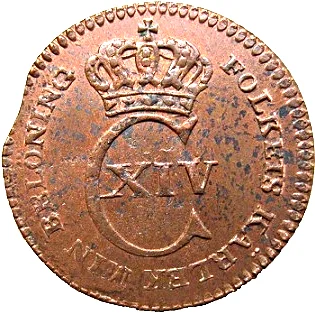
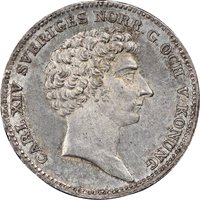
Obverse
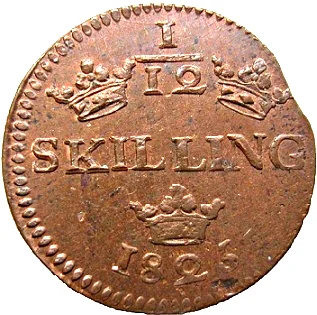
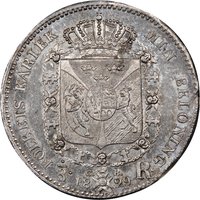
Reverse
Description:
Swedish three crowns flanking value and date.
Inscription:
1/12
SKILLING
1825
SKILLING
1825
Script: Latin
Edge
Mintings
| Year | Mint Mark | Mintage | Quality | Collection |
|---|---|---|---|---|
| 1825 | — | — |
Historical background
In 1825, Sweden operated under a complex and strained monetary system, a legacy of decades of war financing and economic turbulence. The official currency was the Riksdaler Riksmynt, but the economy still grappled with the aftermath of the earlier "paper money period" (1789-1803), when excessive note issuance by the Riksens Ständers Bank (precursor to the Riksbank) had caused severe inflation. While a silver standard had been restored in 1803, confidence remained fragile, and the money supply was a confusing mix of silver coins, government-issued paper notes, and a limited amount of older, more valuable Riksdaler Specie.
A critical issue was the chronic shortage of small, divisional coins for everyday transactions, which hampered commerce and led to the widespread use of private tokens (enskilt mynt) issued by merchants, factories, and even towns. This private coinage, while filling a practical void, created a chaotic and unreliable local currency landscape. Furthermore, the state's finances were burdened by debt from the Napoleonic Wars, including a large obligation to Russia from the loss of Finland in 1809, placing constant pressure on the monetary authority.
The year 1825 itself was not one of dramatic reform but of mounting pressure for change. The system was clearly dysfunctional, limiting economic growth and modernisation. These persistent problems set the stage for the significant monetary reform that would follow in 1830, when the government demonetised the private tokens and introduced a new, decimalised currency system based on the Riksdaler Riksmynt, aiming to create a unified and stable national currency.
A critical issue was the chronic shortage of small, divisional coins for everyday transactions, which hampered commerce and led to the widespread use of private tokens (enskilt mynt) issued by merchants, factories, and even towns. This private coinage, while filling a practical void, created a chaotic and unreliable local currency landscape. Furthermore, the state's finances were burdened by debt from the Napoleonic Wars, including a large obligation to Russia from the loss of Finland in 1809, placing constant pressure on the monetary authority.
The year 1825 itself was not one of dramatic reform but of mounting pressure for change. The system was clearly dysfunctional, limiting economic growth and modernisation. These persistent problems set the stage for the significant monetary reform that would follow in 1830, when the government demonetised the private tokens and introduced a new, decimalised currency system based on the Riksdaler Riksmynt, aiming to create a unified and stable national currency.
⭐ Rare