

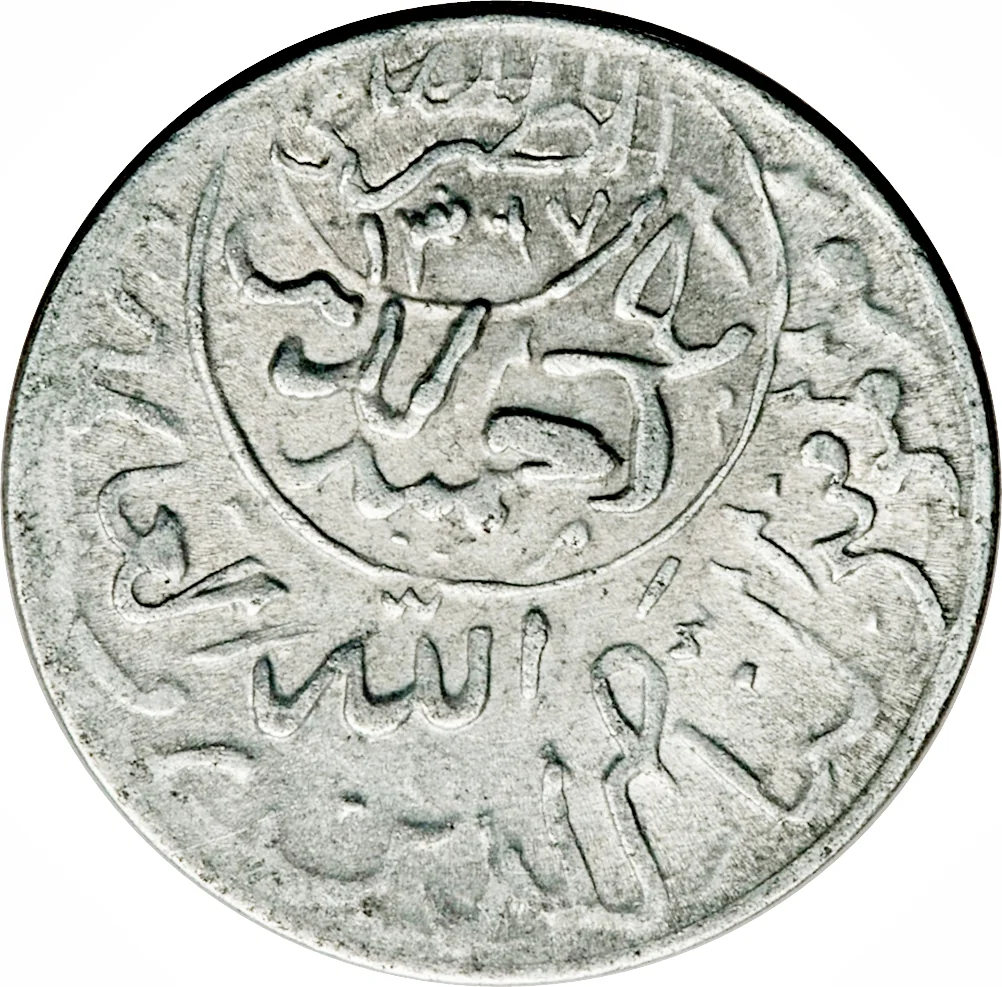
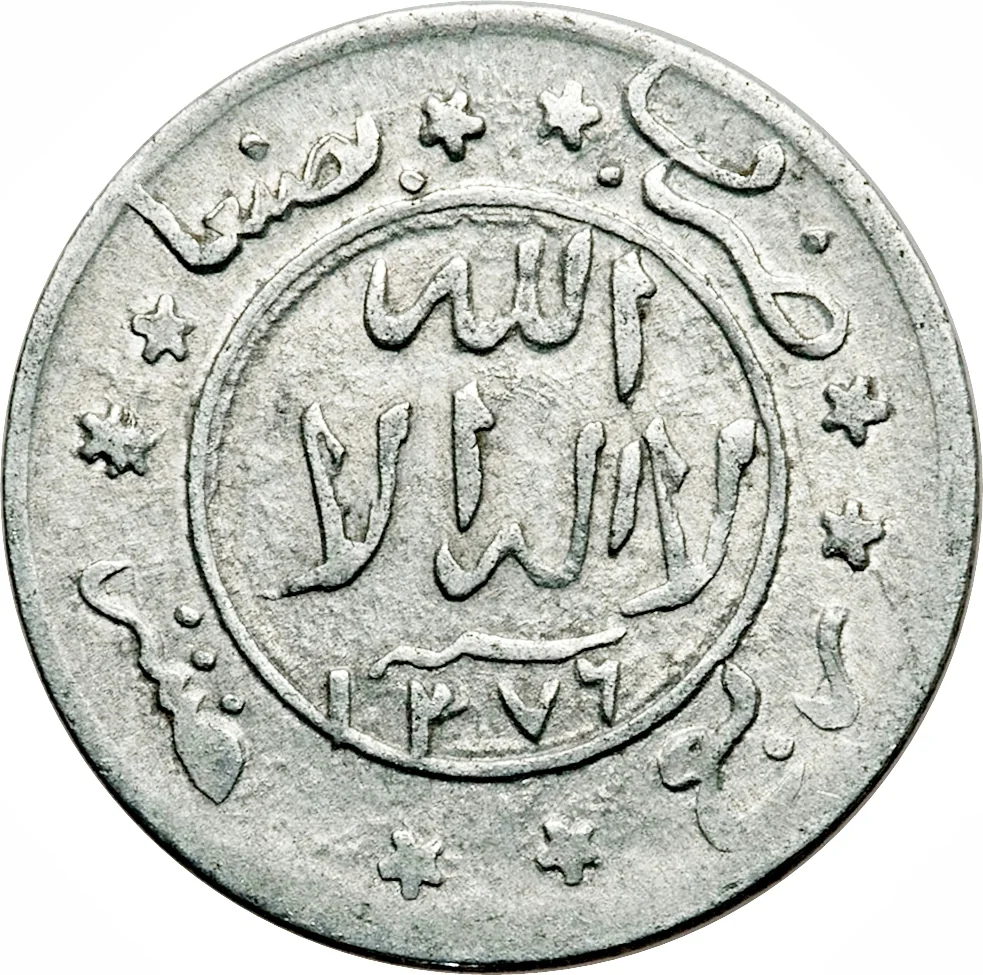
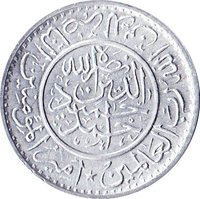
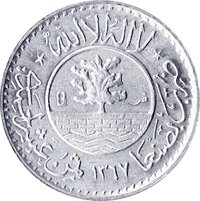
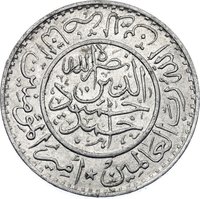
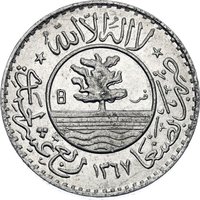
1⁄40 rial – Mutawakkilite Kingdom
Add to wishlist
Yemen
Context
Years: 1956–1958
Country: Yemen
Issuer: Mutawakkilite Kingdom
Ruler: Ahmad bin Yahya
Currency:
(1918—1974)
Demonetized: Yes
Material
References
Y: #
Numista: #11164
Mintings
| Year | Mint Mark | Mintage | Quality | Collection |
|---|---|---|---|---|
| 1956 | — | — | ||
| 1957 | — | — | ||
| 1958 | — | — |
Historical background
The currency situation in the Mutawakkilite Kingdom of Yemen in 1956 was defined by a complex and fragmented monetary system, reflecting the country's historical isolation and underdeveloped economy. The state, ruled by Imam Ahmad bin Yahya, lacked a unified national currency. Instead, the economy operated on a bimetallic system relying heavily on physical silver, primarily in the form of the Maria Theresa thaler (MT$). This large, iconic silver coin, minted in Austria but circulated for centuries, was the principal medium for large transactions and foreign trade. Alongside it, the Ottoman-era Yemeni imadi and riyal coins circulated for smaller transactions, creating a localized and inconsistent metallic base.
This system presented significant challenges. The fixed silver content of the MT$ made the kingdom's money supply vulnerable to volatile international silver prices, disrupting internal price stability. Furthermore, the lack of a central bank or modern minting capability meant the Imam's government had little control over the money supply or the quality of coins in circulation. Counterfeiting was a persistent problem, and the physical weight and bulk of silver made large commercial transactions cumbersome. Foreign trade, particularly with the British in Aden and emerging partners like the Soviet Bloc, often required dealing in foreign currencies, further complicating fiscal management.
By the mid-1950s, pressures for monetary reform were growing. The Imam's administration, seeking greater economic sovereignty and modern state functions, began to lay the groundwork for a centralized currency. This culminated in the establishment of the Yemen Currency Board in 1957, which would eventually issue the first official Yemeni banknotes and coins, aiming to replace the Maria Theresa thaler and unify the monetary system. Thus, 1956 represents the final year of an ancient, silver-based currency regime on the brink of being supplanted by a modern, state-issued paper currency.
This system presented significant challenges. The fixed silver content of the MT$ made the kingdom's money supply vulnerable to volatile international silver prices, disrupting internal price stability. Furthermore, the lack of a central bank or modern minting capability meant the Imam's government had little control over the money supply or the quality of coins in circulation. Counterfeiting was a persistent problem, and the physical weight and bulk of silver made large commercial transactions cumbersome. Foreign trade, particularly with the British in Aden and emerging partners like the Soviet Bloc, often required dealing in foreign currencies, further complicating fiscal management.
By the mid-1950s, pressures for monetary reform were growing. The Imam's administration, seeking greater economic sovereignty and modern state functions, began to lay the groundwork for a centralized currency. This culminated in the establishment of the Yemen Currency Board in 1957, which would eventually issue the first official Yemeni banknotes and coins, aiming to replace the Maria Theresa thaler and unify the monetary system. Thus, 1956 represents the final year of an ancient, silver-based currency regime on the brink of being supplanted by a modern, state-issued paper currency.
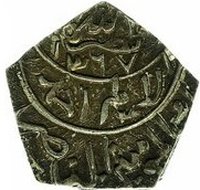
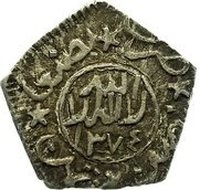
💎 Very Rare