

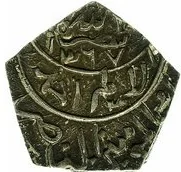
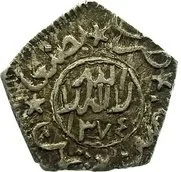
1⁄16 rial – Mutawakkilite Kingdom
Add to wishlist
Yemen
Context
Year: 1955
Islamic (Hijri) Year:: 1374
Country: Yemen
Issuer: Mutawakkilite Kingdom
Ruler: Ahmad bin Yahya
Currency:
(1918—1974)
Demonetized: Yes
Material
Shape: Pentagonal
Composition: Silver
Magnetic: No
Alignment: Medal alignment
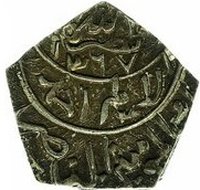
flip
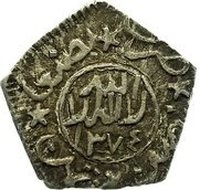
References
Y: #
Numista: #142789
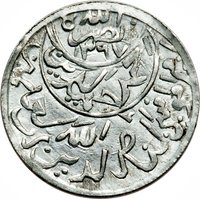
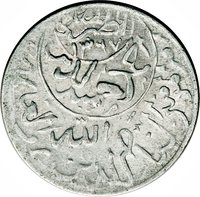
Obverse
Description:
Crescent below AH1367 accession date.
Script: Arabic
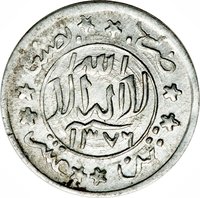
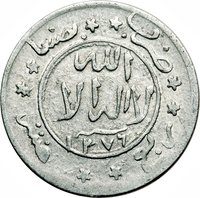
Reverse
Script: Arabic
Edge
Mintings
| Year | Mint Mark | Mintage | Quality | Collection |
|---|---|---|---|---|
| 1955 | — | — |
Historical background
In 1955, the Mutawakkilite Kingdom of Yemen operated under a complex and underdeveloped monetary system, characteristic of its isolated and traditional economy. The primary currency in circulation was the Yemeni Riyal, a silver coin first minted during the reign of Imam Yahya in the 1930s. However, the kingdom lacked a central bank or a unified paper currency. Instead, the economy relied heavily on a mix of foreign silver coins (like the Maria Theresa thaler), Indian rupees, and British sovereigns, reflecting centuries of trade through the port of Aden and the Red Sea. This created a fragmented system where exchange rates could vary significantly between regions and markets.
The monetary situation was further strained by the kingdom's deliberate isolation and conservative Islamic governance. Imam Ahmad bin Yahya, who succeeded his father in 1948, was wary of foreign influence and modern financial institutions. Consequently, there was no formal banking sector, and credit was extended through traditional merchant networks. The state's revenue, derived largely from taxes on agriculture and trade, was insufficient to fund modernization, leading to chronic budget deficits. These deficits were often addressed by debasing the silver coinage or by imposing arbitrary levies, which undermined confidence in the domestic currency.
This fragile financial environment left Yemen vulnerable to external economic pressures. The contrast with the booming British colony of Aden, with its sterling-based economy and modern banks, was stark. By the mid-1950s, the need for monetary reform was evident to a small cadre of modernists, but political will was lacking. The system's instability would become a growing point of tension, contributing to the economic grievances that fueled the eventual revolution of 1962. Thus, in 1955, Yemen's currency situation was a symbolic reflection of the kingdom itself: inwardly focused, resistant to change, and increasingly out of step with the modernizing world.
The monetary situation was further strained by the kingdom's deliberate isolation and conservative Islamic governance. Imam Ahmad bin Yahya, who succeeded his father in 1948, was wary of foreign influence and modern financial institutions. Consequently, there was no formal banking sector, and credit was extended through traditional merchant networks. The state's revenue, derived largely from taxes on agriculture and trade, was insufficient to fund modernization, leading to chronic budget deficits. These deficits were often addressed by debasing the silver coinage or by imposing arbitrary levies, which undermined confidence in the domestic currency.
This fragile financial environment left Yemen vulnerable to external economic pressures. The contrast with the booming British colony of Aden, with its sterling-based economy and modern banks, was stark. By the mid-1950s, the need for monetary reform was evident to a small cadre of modernists, but political will was lacking. The system's instability would become a growing point of tension, contributing to the economic grievances that fueled the eventual revolution of 1962. Thus, in 1955, Yemen's currency situation was a symbolic reflection of the kingdom itself: inwardly focused, resistant to change, and increasingly out of step with the modernizing world.
✨ Legendary