

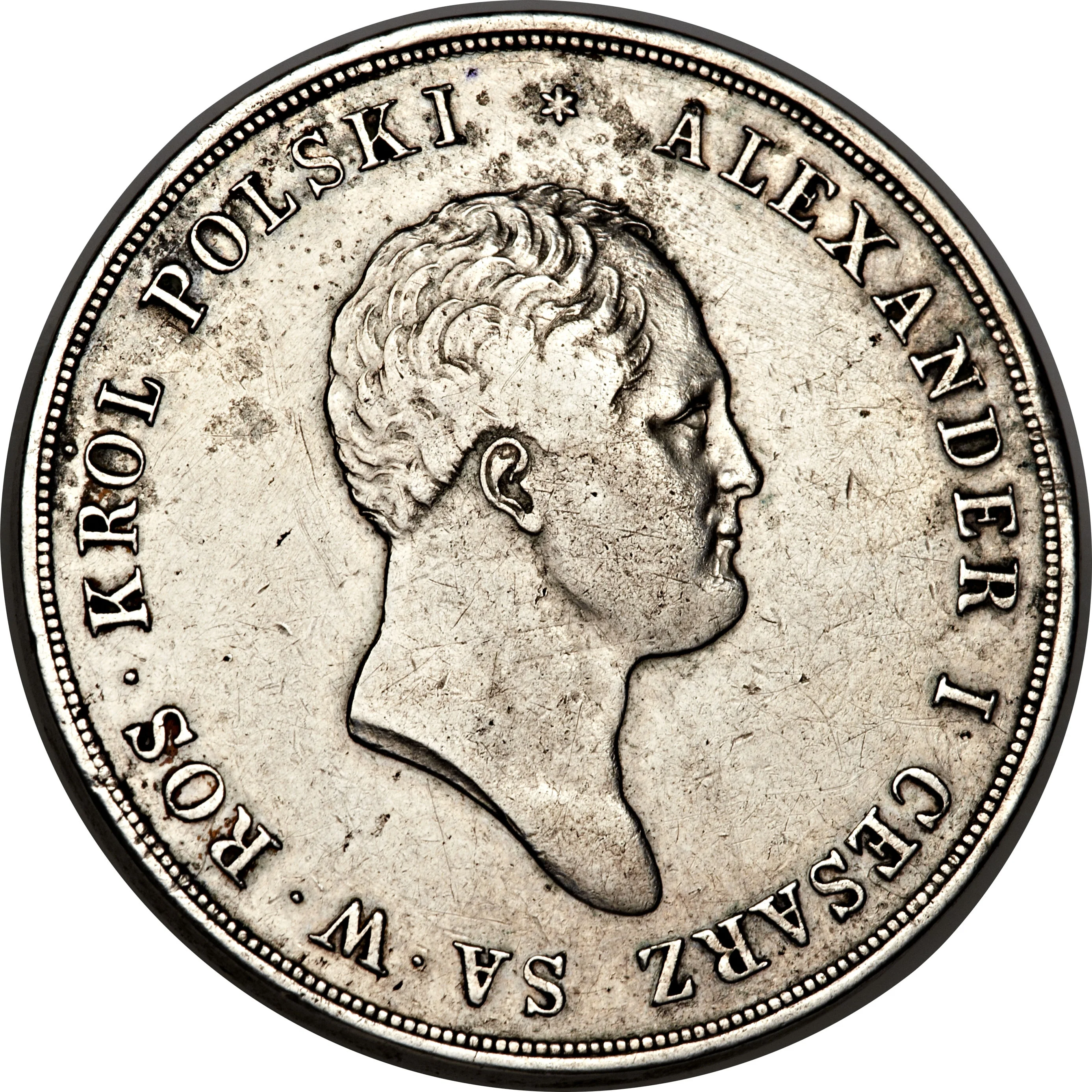
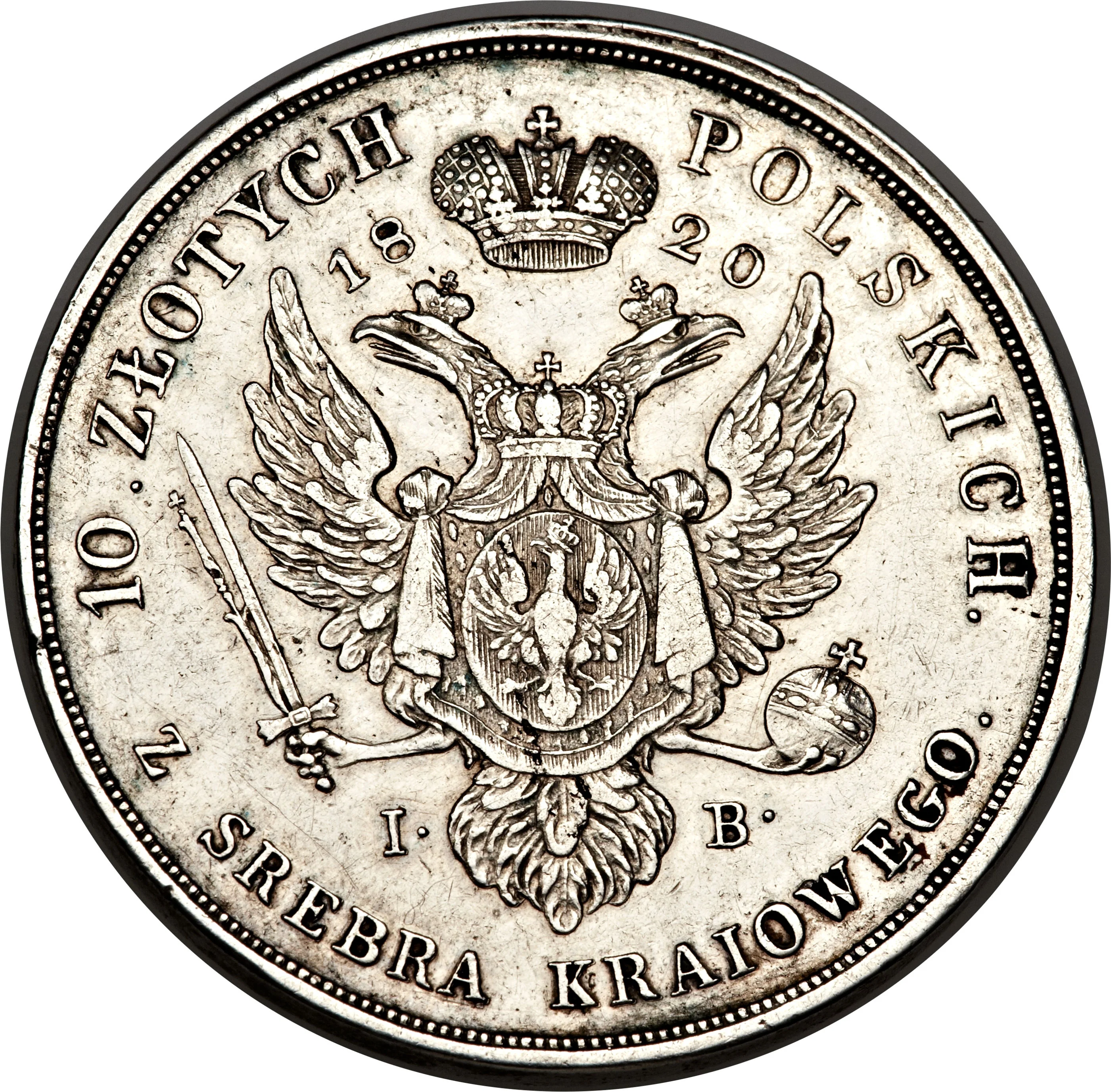
10 zlotys – Congress Kingdom of Poland
Add to wishlist
Poland
Context
Years: 1820–1825
Country: Poland
Issuer: Congress Kingdom of Poland
Ruler: Alexander I
Currency:
(1815—1841)
Demonetized: Yes
Total mintage: 3,608
Material
Diameter: 39 mm
Weight: 31.1 g
Silver Weight:: 26.99 g
Shape: Round
Composition: 86.8% Silver
Standard: Silver ounce
Magnetic: No
Technique: Milled
Alignment: Medal alignment
flip
References
Numista: #63675
Value
Bullion value: $69.07
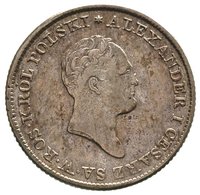
Obverse
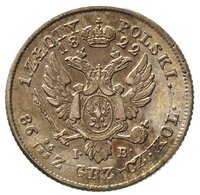
Reverse
Edge
Plain
Mintings
| Year | Mint Mark | Mintage | Quality | Collection |
|---|---|---|---|---|
| 1820 | IB | 543 | ||
| 1821 | IB | 1,195 | ||
| 1822 | IB | 233 | ||
| 1823 | IB | 1,124 | ||
| 1824 | IB | 513 | ||
| 1825 | IB | — |
Historical background
In 1820, the currency situation in the Congress Kingdom of Poland was characterized by a managed integration into the Russian monetary system, yet with distinct Polish features. Following the Kingdom's creation in 1815, its finances and currency were initially autonomous under the viceroyalty of Grand Duke Constantine and the ministrations of Finance Minister Ksawery Drucki-Lubecki. The official currency was the Polish złoty, established by the Bank of Poland, founded in 1828 but planned years earlier. However, this autonomy was carefully circumscribed within the political reality of Russian dominance.
The system operated on a bimetallic standard, with the złoty tied to both silver and gold. Crucially, the Polish złoty was pegged at a fixed parity to the Russian ruble (1 złoty = 15 kopeks, or 6 2/3 złotys to 1 ruble). This fixed exchange rate facilitated trade and fiscal relations with the Russian Empire but also subordinated Polish monetary policy to Russian economic interests. While Polish coinage (minted in Warsaw) bore the image of Tsar Alexander I as King of Poland and featured Polish inscriptions, its value was ultimately derivative of the Russian system.
This arrangement provided a decade of relative monetary stability, which Drucki-Lubecki leveraged to modernize the Kingdom's infrastructure and industry. However, it also meant the Kingdom's economy was vulnerable to shifts in Russian fiscal policy and the value of the ruble. The system symbolized the Kingdom's paradoxical status: a nominally autonomous state with its own bank and currency, yet one whose financial sovereignty was fundamentally constrained by its political bonds to the Russian Empire.
The system operated on a bimetallic standard, with the złoty tied to both silver and gold. Crucially, the Polish złoty was pegged at a fixed parity to the Russian ruble (1 złoty = 15 kopeks, or 6 2/3 złotys to 1 ruble). This fixed exchange rate facilitated trade and fiscal relations with the Russian Empire but also subordinated Polish monetary policy to Russian economic interests. While Polish coinage (minted in Warsaw) bore the image of Tsar Alexander I as King of Poland and featured Polish inscriptions, its value was ultimately derivative of the Russian system.
This arrangement provided a decade of relative monetary stability, which Drucki-Lubecki leveraged to modernize the Kingdom's infrastructure and industry. However, it also meant the Kingdom's economy was vulnerable to shifts in Russian fiscal policy and the value of the ruble. The system symbolized the Kingdom's paradoxical status: a nominally autonomous state with its own bank and currency, yet one whose financial sovereignty was fundamentally constrained by its political bonds to the Russian Empire.
✨ Legendary