

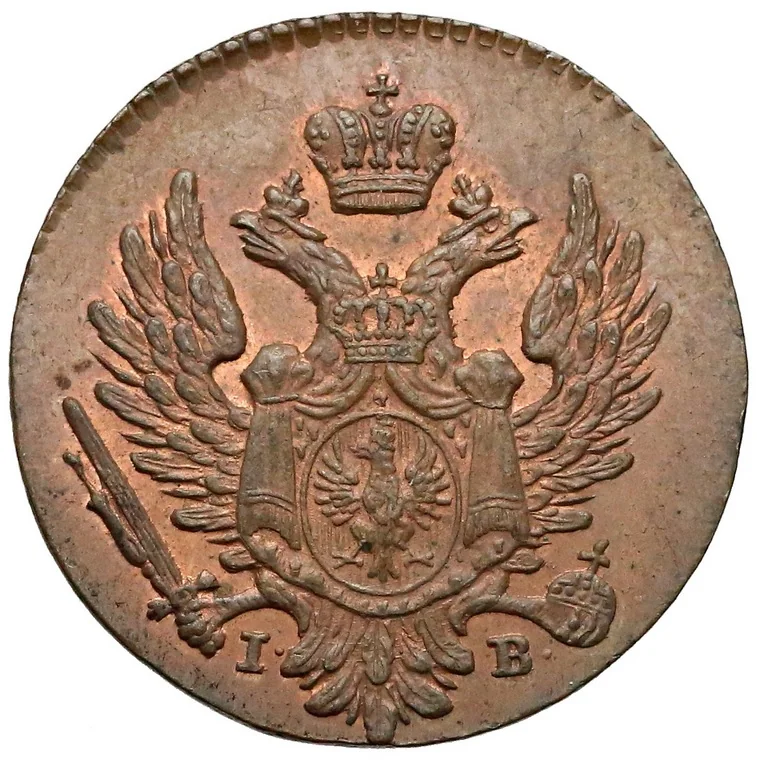
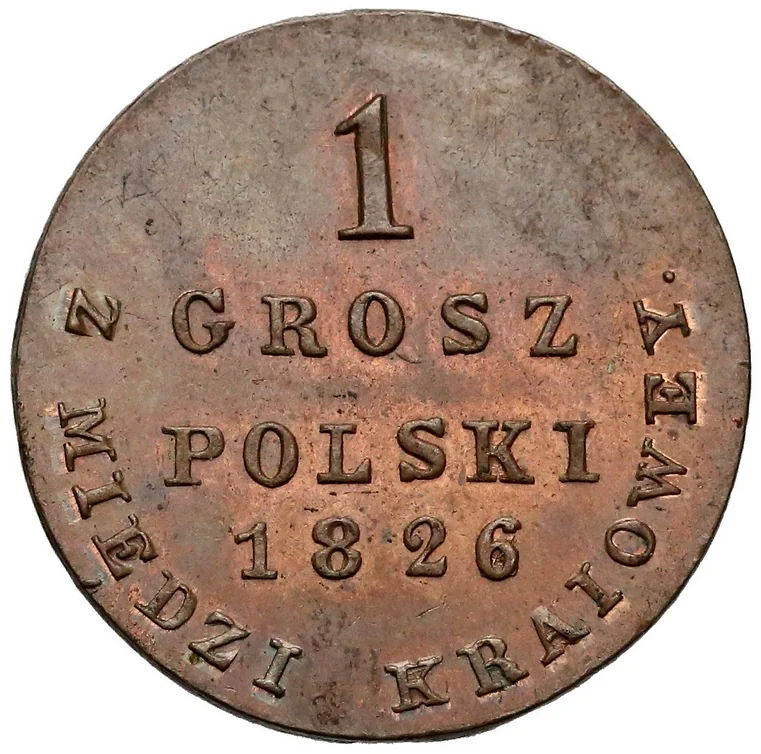
1 Grosz – Congress Kingdom of Poland
Poland
Context
Years: 1822–1826
Country: Poland 
Issuer: Congress Kingdom of Poland
Ruler: Alexander I
Currency:
(1815—1841)
Demonetized: Yes
Total mintage: 16,383,553
Material
References
Numista: #15132
Mintings
| Year | Mint Mark | Mintage | Quality | Collection |
|---|---|---|---|---|
| 1822 | lB | 2,720,702 | ||
| 1823 | lB | 5,046,096 | ||
| 1824 | lB | 5,412,794 | ||
| 1825 | lB | 2,107,961 | ||
| 1826 | lB | 1,096,000 |
Historical background
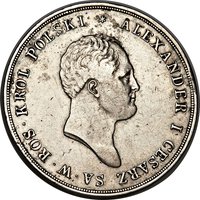
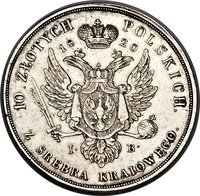
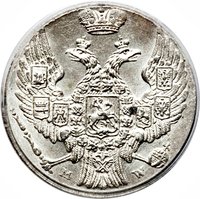
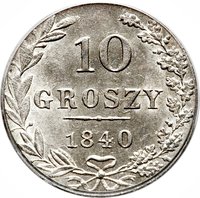
The currency situation in the Congress Kingdom of Poland in 1822 was defined by a period of transition and integration into the Russian monetary system. Following the Kingdom's creation in 1815, it initially operated with its own currency, the Polish złoty, established by the Bank of Poland in 1824. However, the groundwork for this system was laid in the preceding years, and by 1822, the Kingdom was moving away from the diverse legacy currencies of its partitioned past toward a unified, modern monetary standard under Russian oversight.
The key development was the imperial decree of 1815, which stipulated that the Russian ruble would be the official accounting unit, creating a bimetallic system. In practice, the Polish złoty (worth 15 kopecks of the Russian ruble) was introduced as the physical circulating coinage. By 1822, the minting of these distinct Polish coins—in silver and gold—was being prepared, with the złoty pegged firmly to the ruble. This arrangement was designed to facilitate trade and administrative cohesion within the Russian Empire while allowing the Kingdom a degree of nominal financial autonomy.
Consequently, the situation in 1822 was one of relative stability and deliberate design, marking the consolidation of a dual-currency regime. The system aimed to bind the Kingdom's economy closely to Russia's, ensuring political control through monetary policy. This orderly but imposed stability would characterize the Kingdom's finances until the upheavals of the November Uprising in 1830-31, after which all remnants of monetary autonomy were abolished in favor of the full imposition of the Russian ruble.
The key development was the imperial decree of 1815, which stipulated that the Russian ruble would be the official accounting unit, creating a bimetallic system. In practice, the Polish złoty (worth 15 kopecks of the Russian ruble) was introduced as the physical circulating coinage. By 1822, the minting of these distinct Polish coins—in silver and gold—was being prepared, with the złoty pegged firmly to the ruble. This arrangement was designed to facilitate trade and administrative cohesion within the Russian Empire while allowing the Kingdom a degree of nominal financial autonomy.
Consequently, the situation in 1822 was one of relative stability and deliberate design, marking the consolidation of a dual-currency regime. The system aimed to bind the Kingdom's economy closely to Russia's, ensuring political control through monetary policy. This orderly but imposed stability would characterize the Kingdom's finances until the upheavals of the November Uprising in 1830-31, after which all remnants of monetary autonomy were abolished in favor of the full imposition of the Russian ruble.
🌟 Limited