

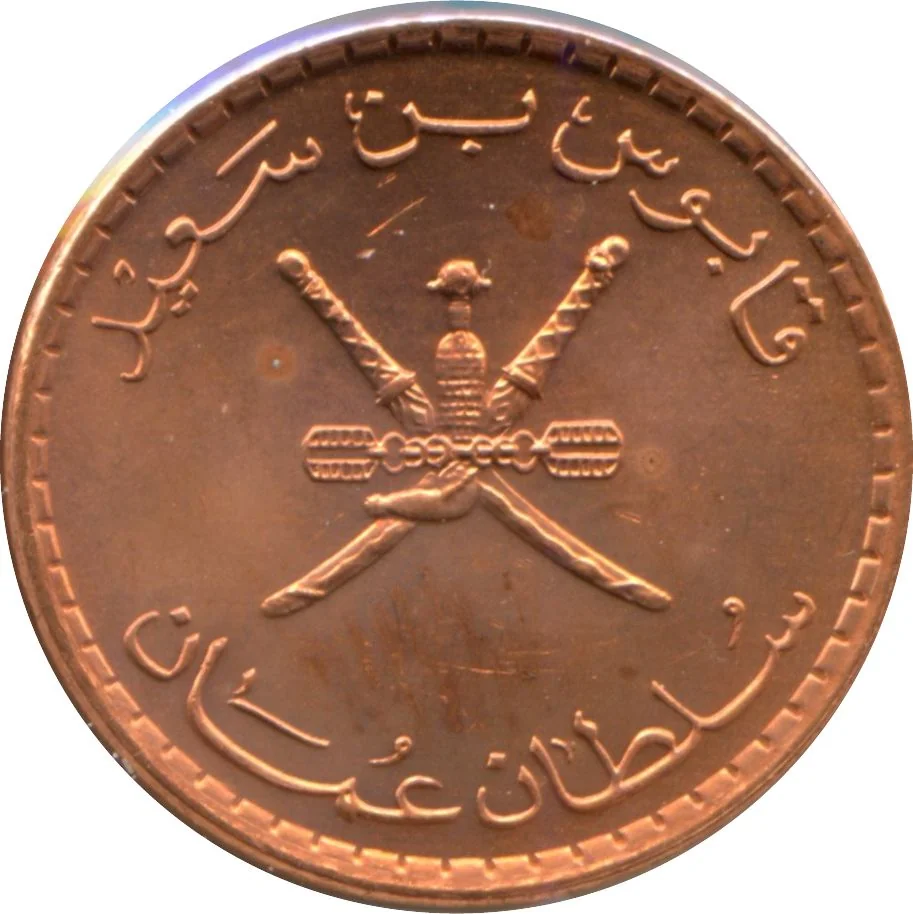
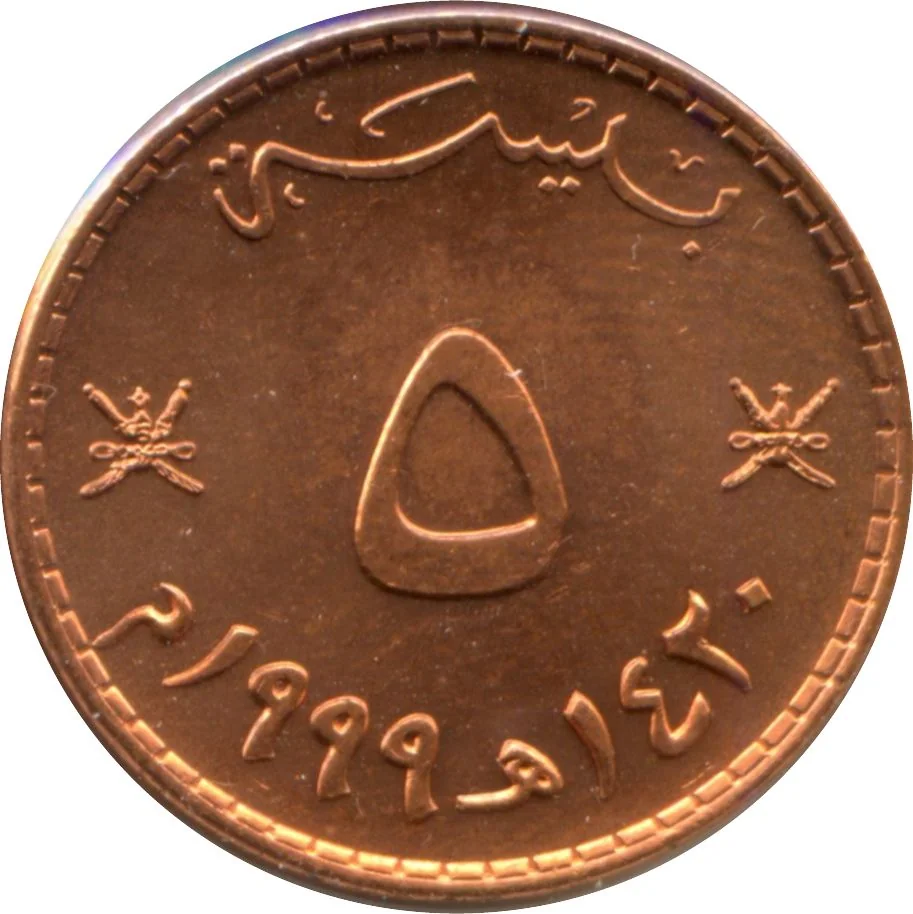
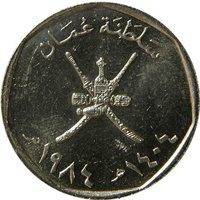
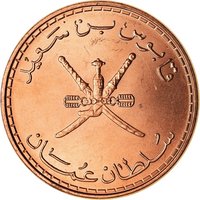
Obverse
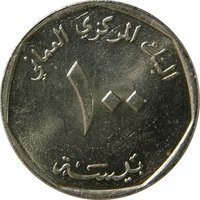
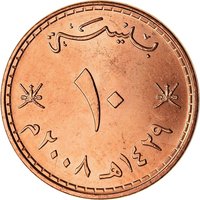
Reverse
Edge
Plain
Categories
| Symbols> Coat of Arms |
| Object> Cold weapons |
Mints
| Name | Mark |
|---|---|
| Royal Mint | — |
Mintings
| Year | Mint Mark | Mintage | Quality | Collection |
|---|---|---|---|---|
| 1998 | — | — | ||
| 1999 | — | — | ||
| 2008 | — | — | ||
| 2011 | — | — | ||
| 2013 | — | — |
Historical background
In 1998, Oman's currency situation was defined by its long-standing and unwavering peg to the US Dollar. The Omani Rial (OMR), divided into 1,000 baisa, had been formally fixed at a rate of 1 OMR = 2.6008 USD since 1986. This peg was a cornerstone of the Sultanate's economic policy, providing critical stability for an economy heavily dependent on hydrocarbon exports. By tethering the Rial to the dollar, Oman aimed to control inflation, attract foreign investment, and reduce exchange rate uncertainty for both government planning and international trade, particularly in oil, which is priced in USD.
The year 1998, however, presented a significant test of this peg's resilience. A sharp decline in global oil prices, triggered by the Asian financial crisis and increased production, placed substantial pressure on Oman's fiscal and external balances. Government revenues, overwhelmingly reliant on oil, fell considerably, leading to a budget deficit. This context raised implicit questions about the sustainability of the dollar peg, as lower oil incomes reduced US dollar inflows and put pressure on foreign exchange reserves needed to maintain the fixed rate.
Despite these pressures, the Omani government demonstrated a firm commitment to the peg, viewing it as a non-negotiable element of financial credibility. There was no devaluation or public consideration of a regime change. Instead, authorities managed the strain through fiscal adjustment, drawing upon reserves, and leveraging its historically prudent financial management. Consequently, 1998 underscored the peg's strength as a policy choice, maintained even through a volatile period for its primary export, reinforcing the Central Bank of Oman's role in ensuring monetary stability amid external commodity shocks.
The year 1998, however, presented a significant test of this peg's resilience. A sharp decline in global oil prices, triggered by the Asian financial crisis and increased production, placed substantial pressure on Oman's fiscal and external balances. Government revenues, overwhelmingly reliant on oil, fell considerably, leading to a budget deficit. This context raised implicit questions about the sustainability of the dollar peg, as lower oil incomes reduced US dollar inflows and put pressure on foreign exchange reserves needed to maintain the fixed rate.
Despite these pressures, the Omani government demonstrated a firm commitment to the peg, viewing it as a non-negotiable element of financial credibility. There was no devaluation or public consideration of a regime change. Instead, authorities managed the strain through fiscal adjustment, drawing upon reserves, and leveraging its historically prudent financial management. Consequently, 1998 underscored the peg's strength as a policy choice, maintained even through a volatile period for its primary export, reinforcing the Central Bank of Oman's role in ensuring monetary stability amid external commodity shocks.
🌱 Very Common