

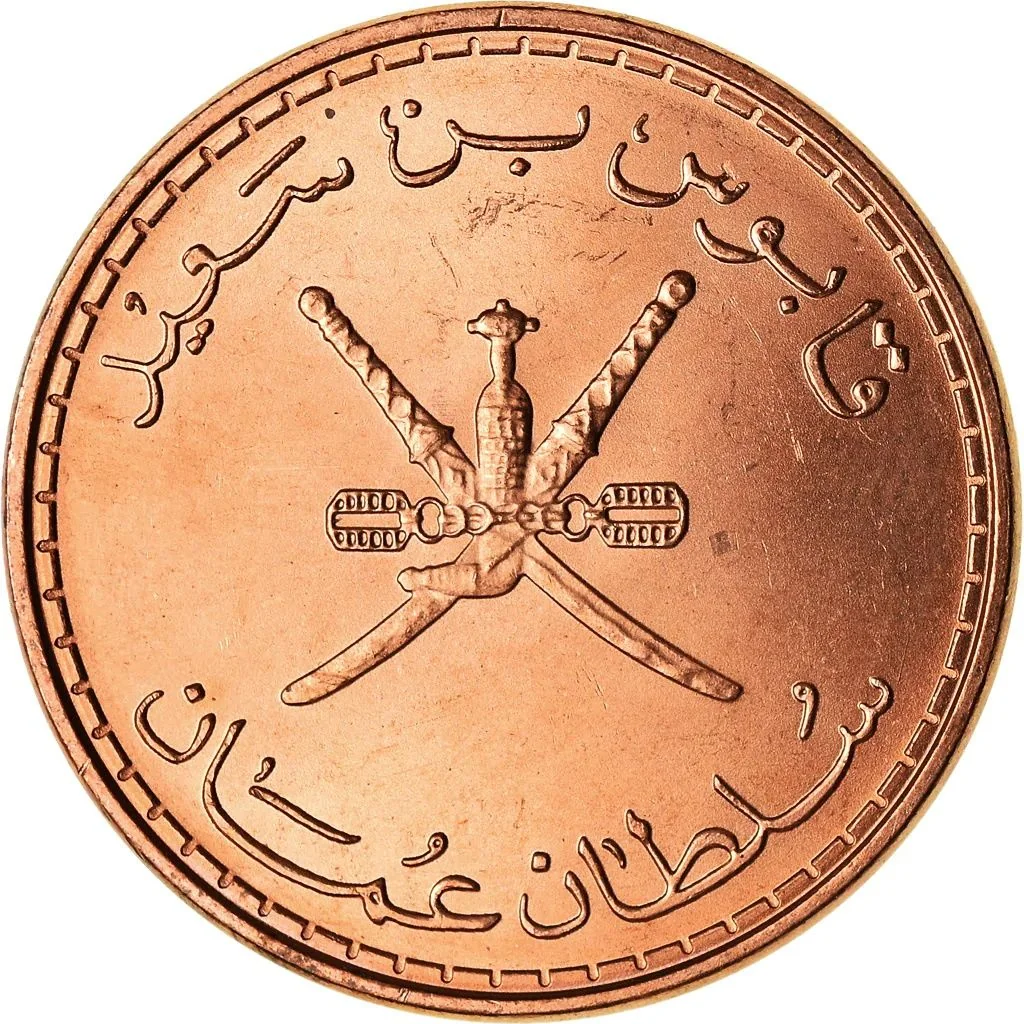
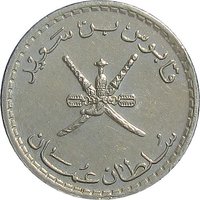
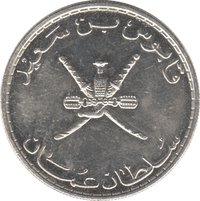
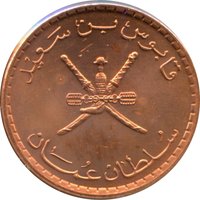
Obverse
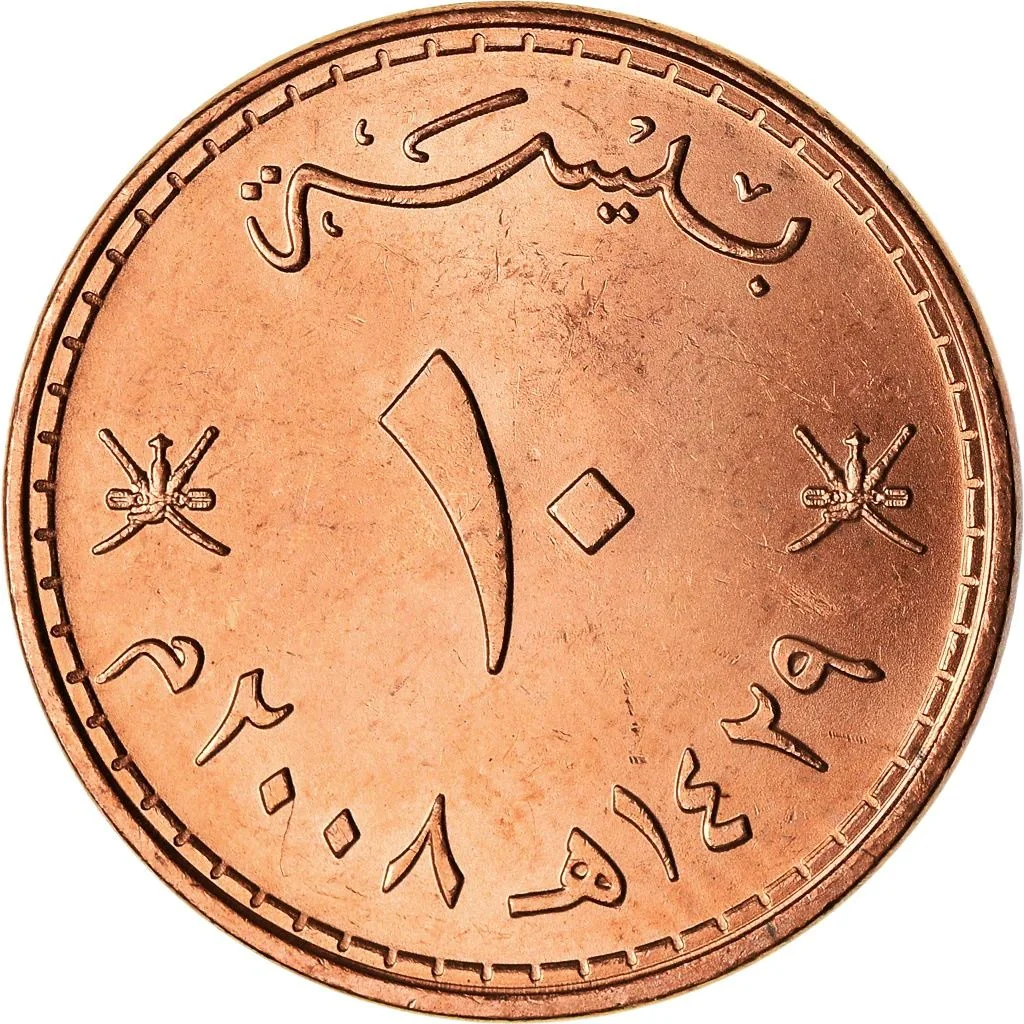
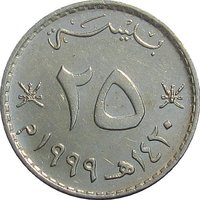
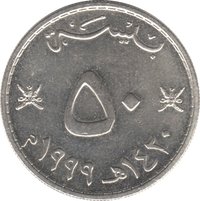
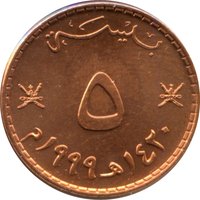
Reverse
Edge
Plain
Categories
| Symbols> Coat of Arms |
| Object> Cold weapons |
Mints
| Name | Mark |
|---|---|
| Royal Mint | — |
Mintings
| Year | Mint Mark | Mintage | Quality | Collection |
|---|---|---|---|---|
| 1999 | — | — | ||
| 2008 | — | — | ||
| 2011 | — | — | ||
| 2013 | — | — |
Historical background
In 1999, Oman's currency situation was defined by stability and a firm peg to the US Dollar. The Omani Rial (OMR), one of the highest-valued currency units in the world, was and remains pegged at a fixed rate of 1 OMR = 2.6008 USD. This long-standing peg, established in 1973, provided a crucial anchor for the economy, controlling inflation and ensuring predictability for trade and foreign investment, which were vital for the hydrocarbon-dependent nation.
The broader economic context in 1999 was one of cautious recovery from the oil price slump of 1998. While the currency peg remained unwavering, lower oil revenues strained the state budget and highlighted the economy's vulnerability to commodity price swings. Consequently, the government of Sultan Qaboos bin Said was actively pursuing its early stages of economic diversification, outlined in the first five-year plan (1996-2000), which aimed to develop natural gas, tourism, and light industry to reduce reliance on oil.
Therefore, the currency narrative in 1999 was not one of crisis or change, but of a stable monetary regime providing a foundation during a period of fiscal pressure and strategic economic transition. The Central Bank of Oman maintained strict control, holding ample foreign reserves to defend the peg, which enjoyed strong public and market confidence. This stability was seen as a prerequisite for attracting the foreign capital needed to fund the Sultanate's diversification ambitions.
The broader economic context in 1999 was one of cautious recovery from the oil price slump of 1998. While the currency peg remained unwavering, lower oil revenues strained the state budget and highlighted the economy's vulnerability to commodity price swings. Consequently, the government of Sultan Qaboos bin Said was actively pursuing its early stages of economic diversification, outlined in the first five-year plan (1996-2000), which aimed to develop natural gas, tourism, and light industry to reduce reliance on oil.
Therefore, the currency narrative in 1999 was not one of crisis or change, but of a stable monetary regime providing a foundation during a period of fiscal pressure and strategic economic transition. The Central Bank of Oman maintained strict control, holding ample foreign reserves to defend the peg, which enjoyed strong public and market confidence. This stability was seen as a prerequisite for attracting the foreign capital needed to fund the Sultanate's diversification ambitions.
🌱 Very Common