

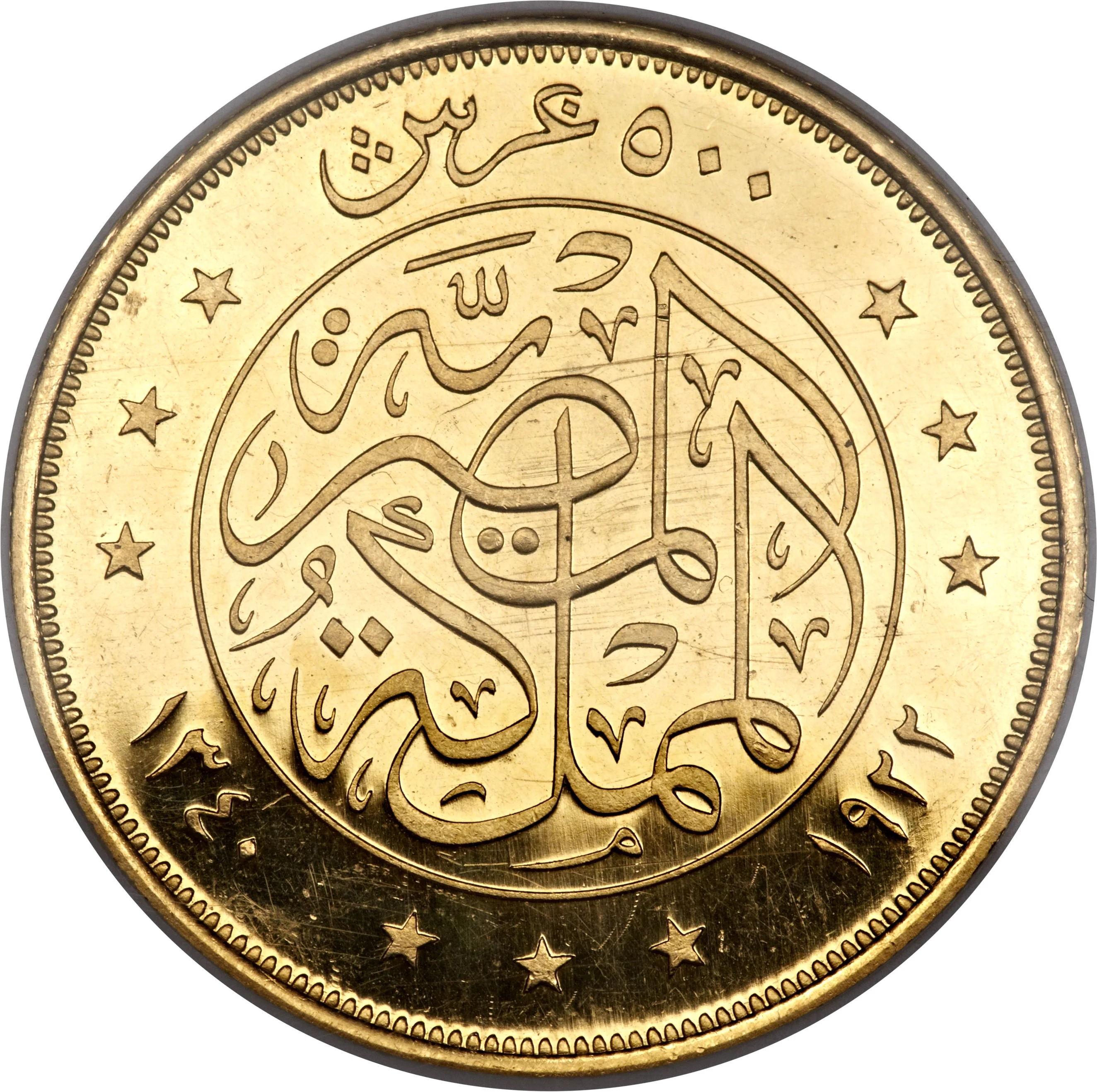
500 Piastres – Egypt
Egypt
Context
Year: 1922
Islamic (Hijri) Year: 1340
Issuer: Egypt 
Ruler: Ahmed Fuad I
Currency:
(since 1916)
Demonetized: Yes
Total mintage: 1,800
Material

References
KM: #Click to copy to clipboard342
Numista: #62814
Value
Exchange value: 5 EGP
Bullion value: $6203.87
Obverse
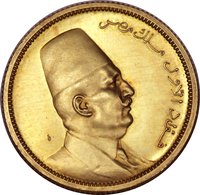
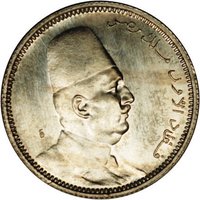
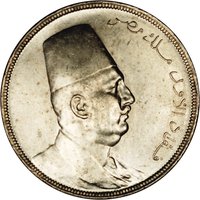
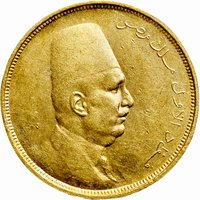
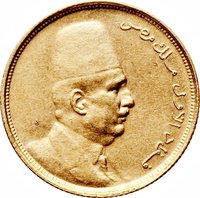
Description:
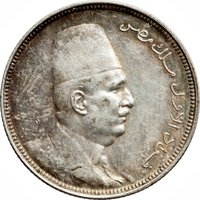
King Fuad I in civilian dress, bust right.
Inscription:
فؤاد الأول ملك مصر
Translation:
Fuad I, King of Egypt.
Script: Arabic (naskh)
Language: Arabic
Designer: Hamed Effendi Serri
Reverse
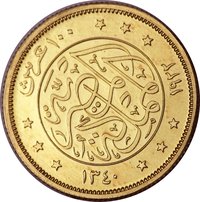
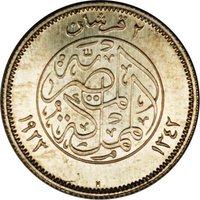
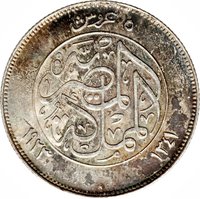
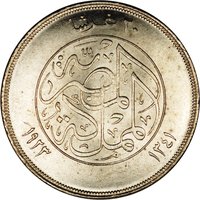
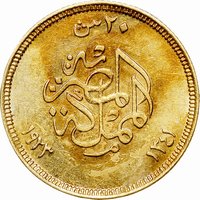
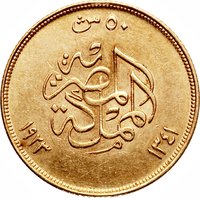
Description:
Denomination top, dates bottom.
Inscription:
٥٠٠ غرش
المملكة المصرية
١٩٢٣ ١٣٤٠
المملكة المصرية
١٩٢٣ ١٣٤٠
Translation:
500 Qirsh
The Egyptian Kingdom
1923 1340
The Egyptian Kingdom
1923 1340
Script: Arabic
Language: Arabic
Designer: Hamed Effendi Serri
Edge
Mints
| Name | Mark |
|---|---|
| Royal Mint (Tower Hill) | — |
Mintings
| Year | Mint Mark | Mintage | Quality | Collection |
|---|---|---|---|---|
| 1922 | — | 1,800 | ||
| 1922 | — | — | Proof |
Historical background
In 1922, Egypt's currency situation was a complex legacy of British colonial influence and the formal transition to nominal independence. The country operated under a Currency Board System, established in 1885, which tied the Egyptian pound (EE£) to the British pound sterling at a fixed parity of EE£1 = £1 0s 6d. This system required full gold backing for issued banknotes, ensuring stability but ceding monetary sovereignty. The National Bank of Egypt, a private institution with strong British ties, acted as the note-issuing authority, further embedding British financial control.
This monetary framework provided significant stability and facilitated international trade, but it was a symbol of Egypt's constrained sovereignty. While the country had been declared a sovereign kingdom in February 1922, ending the British protectorate, key reserves of power—including the protection of foreign interests and the Suez Canal—remained under British control. Consequently, the sterling peg and the British-dominated banking system persisted, meaning Egypt’s economy and currency remained yoked to British economic policy and the gold standard.
Thus, in 1922, Egypt possessed a stable and credible currency, but it was not a tool of national economic policy. The arrangement reflected the paradoxical reality of the early post-protectorate period: political independence was declared, yet economic and financial independence was deferred. The currency system would remain largely unchanged until the mid-20th century, when rising nationalism and changing global monetary conditions eventually led to the establishment of a central bank and a break from the sterling peg.
This monetary framework provided significant stability and facilitated international trade, but it was a symbol of Egypt's constrained sovereignty. While the country had been declared a sovereign kingdom in February 1922, ending the British protectorate, key reserves of power—including the protection of foreign interests and the Suez Canal—remained under British control. Consequently, the sterling peg and the British-dominated banking system persisted, meaning Egypt’s economy and currency remained yoked to British economic policy and the gold standard.
Thus, in 1922, Egypt possessed a stable and credible currency, but it was not a tool of national economic policy. The arrangement reflected the paradoxical reality of the early post-protectorate period: political independence was declared, yet economic and financial independence was deferred. The currency system would remain largely unchanged until the mid-20th century, when rising nationalism and changing global monetary conditions eventually led to the establishment of a central bank and a break from the sterling peg.
Series: King Fuad I (Civic Attire)

💎 Extremely Rare