

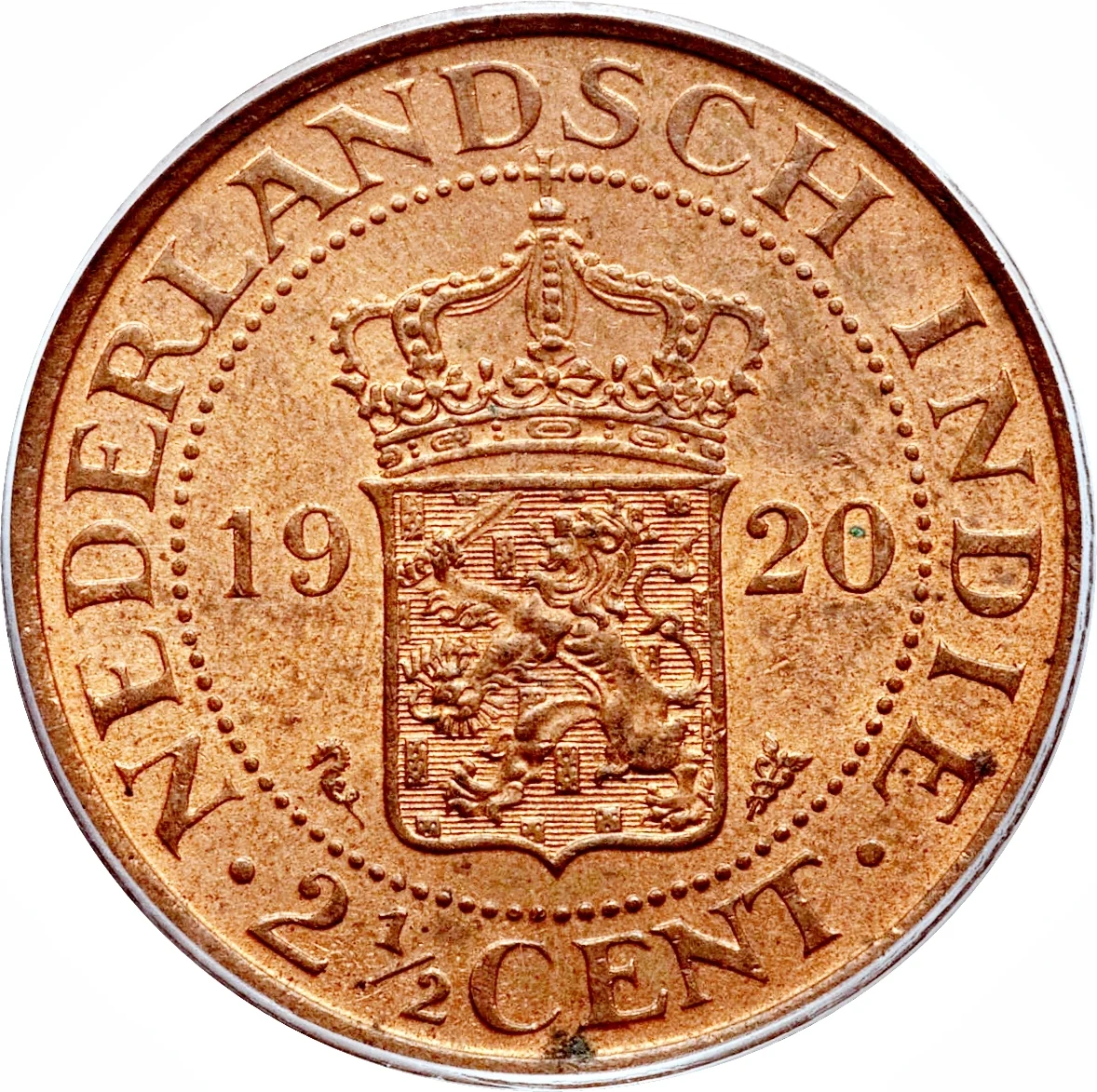
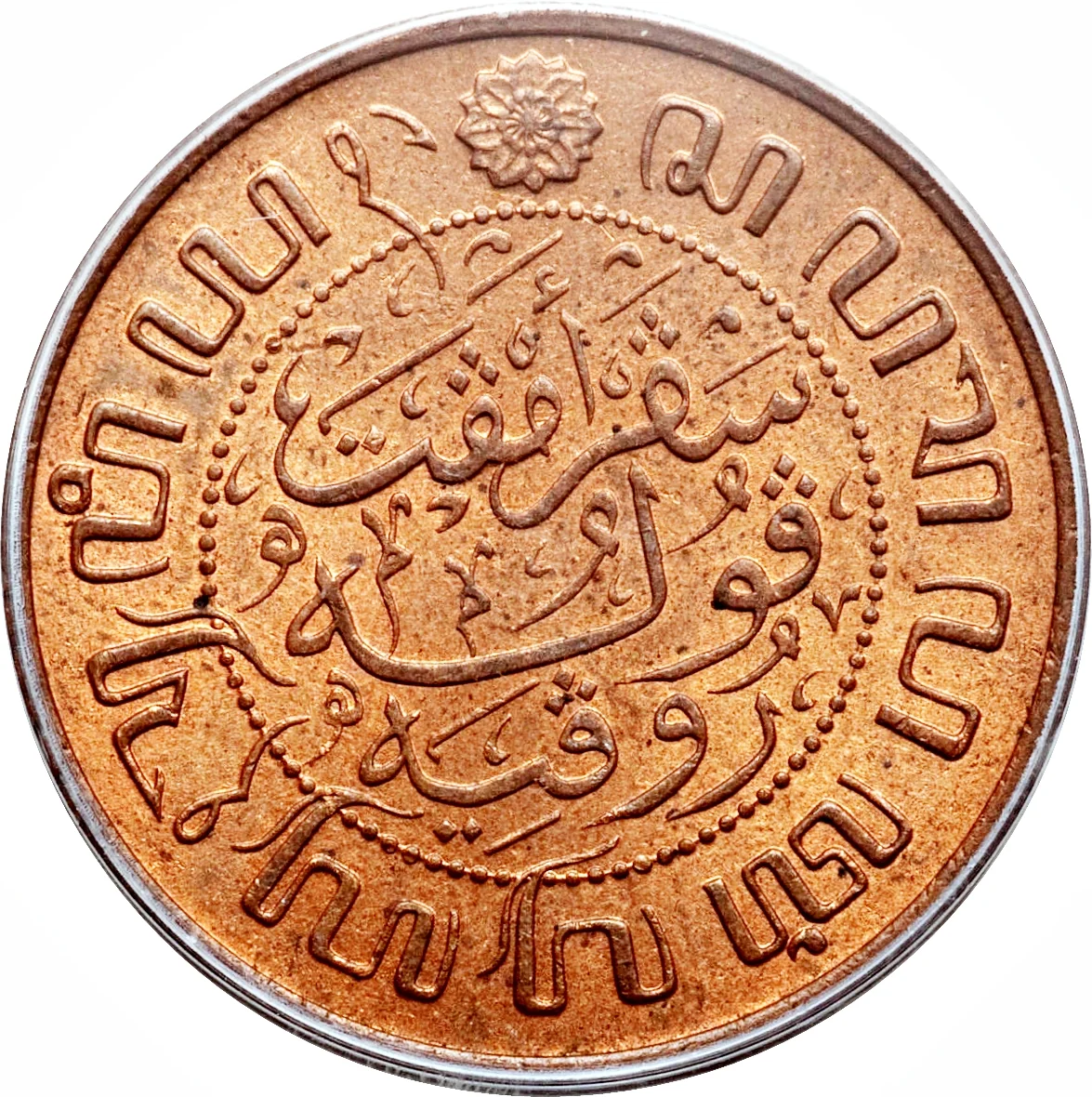
2½ Cents – Netherlands East Indies
Indonesia
Context
Years: 1914–1945
Country: Indonesia 
Issuer: Netherlands East Indies
Ruler: Wilhelmina
Currency:
(1854—1948)
Demonetized: Yes
Total mintage: 276,000,000
Material
References
KM: #Click to copy to clipboard316
Numista: #6243
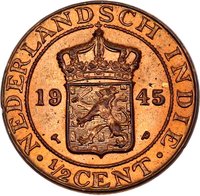
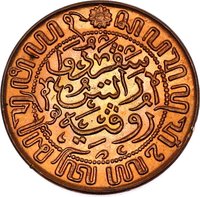
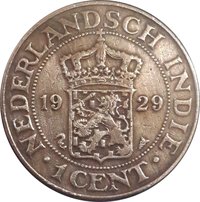
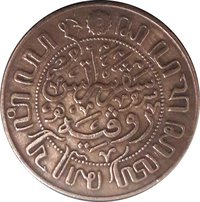
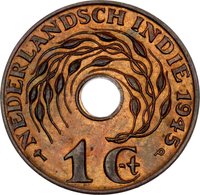
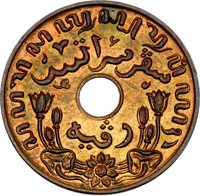
Obverse
Reverse
Edge
Plain
Categories
| Symbols> Coat of Arms |
Mints
| Name | Mark |
|---|---|
| Royal Dutch Mint | — |
| United States Mint of Philadelphia | P |
Mintings
| Year | Mint Mark | Mintage | Quality | Collection |
|---|---|---|---|---|
| 1914 | — | 22,000,000 | ||
| 1915 | — | 6,000,000 | ||
| 1920 | — | 48,000,000 | ||
| 1945 | P | 200,000,000 |
Historical background
By 1914, the currency system of the Netherlands East Indies (NEI) was a sophisticated and dual system, firmly anchored to the gold standard through the Dutch guilder. The primary currency was the silver Indische gulden, issued by the central Java Bank (De Javasche Bank), which operated as a currency board guaranteeing convertibility into gold at a fixed rate. This link provided stability for international trade, crucial for an export-oriented colonial economy based on commodities like rubber, tin, oil, and sugar. Alongside this official currency, however, a vast array of local copper and silver coinage remained in widespread circulation for everyday transactions, particularly in rural areas and outer islands, reflecting the archipelago's diverse economic layers.
The system's stability was directly tested with the outbreak of World War I in August 1914. Although the Netherlands remained neutral, the conflict caused immediate financial disruption. Fearing a run on gold, the NEI authorities, following the Dutch example, quickly suspended the gold standard. The Java Bank was relieved of its obligation to convert banknotes into gold, effectively placing the Indies guilder on a fiat basis. This emergency measure was intended to halt the export of gold reserves and prevent a monetary crisis.
Consequently, 1914 marked a pivotal transition from a rigid, commodity-backed system to a managed, fiduciary one. The immediate post-suspension period saw the authorities successfully maintain confidence in the paper gulden, avoiding severe inflation initially. However, this move set the stage for the financial challenges of the war years, including increasing money supply to finance government needs and manage trade imbalances, fundamentally altering the pre-war monetary orthodoxy that had characterized the colony's economy.
The system's stability was directly tested with the outbreak of World War I in August 1914. Although the Netherlands remained neutral, the conflict caused immediate financial disruption. Fearing a run on gold, the NEI authorities, following the Dutch example, quickly suspended the gold standard. The Java Bank was relieved of its obligation to convert banknotes into gold, effectively placing the Indies guilder on a fiat basis. This emergency measure was intended to halt the export of gold reserves and prevent a monetary crisis.
Consequently, 1914 marked a pivotal transition from a rigid, commodity-backed system to a managed, fiduciary one. The immediate post-suspension period saw the authorities successfully maintain confidence in the paper gulden, avoiding severe inflation initially. However, this move set the stage for the financial challenges of the war years, including increasing money supply to finance government needs and manage trade imbalances, fundamentally altering the pre-war monetary orthodoxy that had characterized the colony's economy.
🌱 Very Common