

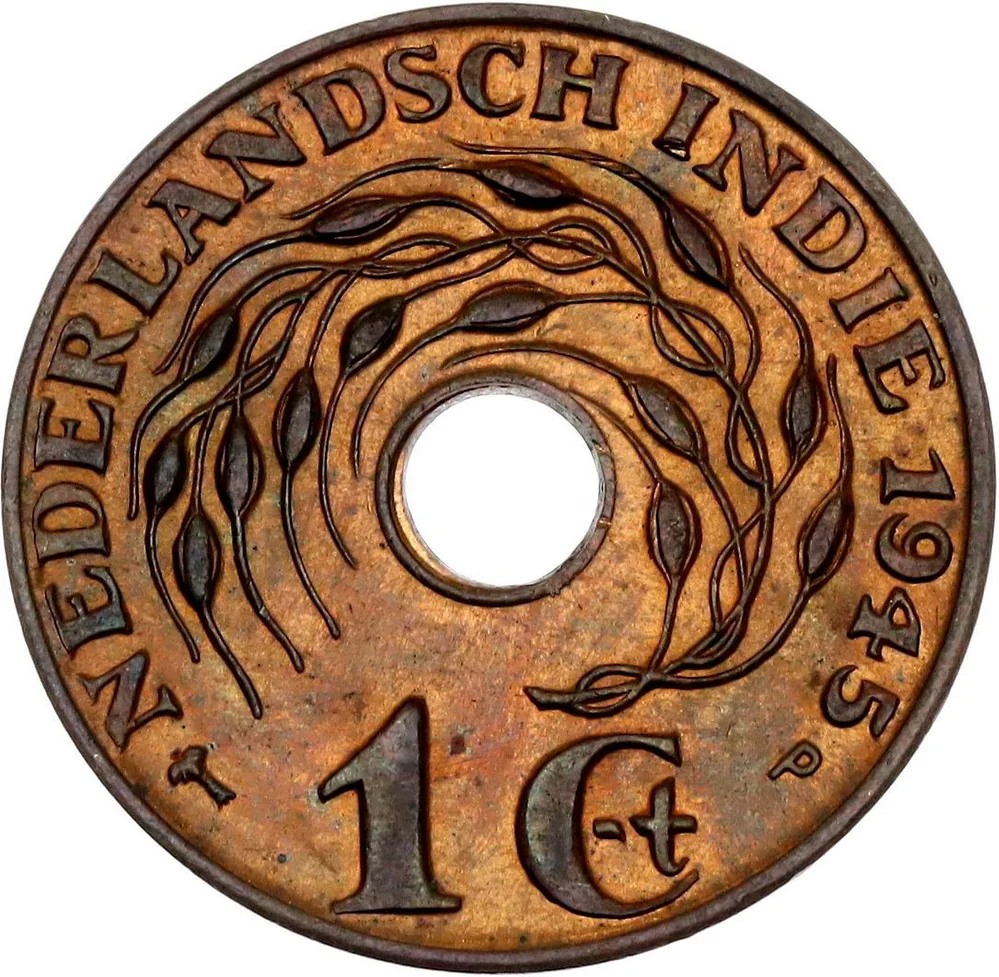
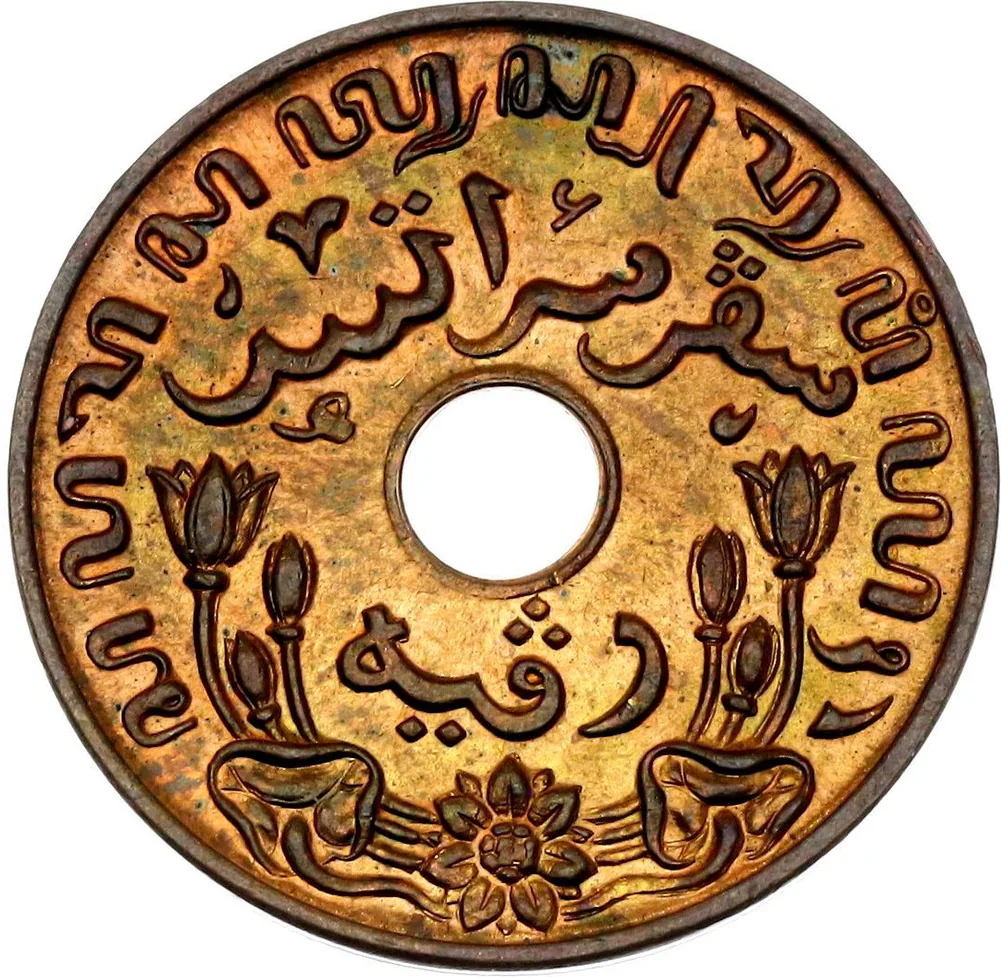
1 cent – Netherlands East Indies
Add to wishlist
Indonesia
Context
Years: 1936–1945
Country: Indonesia
Issuer: Netherlands East Indies
Ruler: Wilhelmina
Currency:
(1854—1948)
Demonetized: Yes
Total mintage: 1,075,168,000
Material
Diameter: 23.5 mm
Weight: 4 g
Thickness: 1.25 mm
Shape: Round with a round hole
Composition: Bronze
Magnetic: No
Technique: Milled
Alignment: Medal alignment
flip
References
KM: #
Numista: #5519
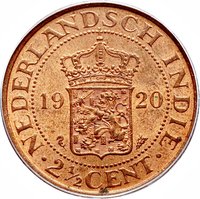
Obverse
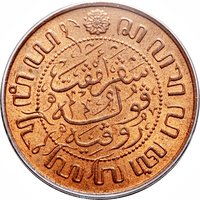
Reverse
Edge
Plain
Mints
| Name | Mark |
|---|---|
| Royal Dutch Mint | — |
| United States Mint of Denver | D |
| United States Mint of Philadelphia | P |
| United States Mint of San Francisco | S |
Mintings
Historical background
By 1936, the currency situation in the Netherlands East Indies (NEI) was defined by its managed integration into the global "gold bloc" and its complex relationship with the Dutch guilder. The colony operated on the Netherlands Indies guilder (gulden), which was officially pegged to gold at the same standard as the metropolitan Dutch guilder. This link provided a facade of stability and was crucial for maintaining international creditworthiness and facilitating the export of key commodities like rubber, oil, and tin to global markets, particularly amidst the lingering global economic depression.
However, this formal peg masked a more intricate reality. In practice, the NEI guilder was effectively managed by the Java Bank (De Javasche Bank), which acted as the colony's central bank. To protect its gold and foreign exchange reserves, the bank employed a system of "gold policy" involving strict exchange controls and licensing. This created a divergence between the official rate and a less favourable market rate for certain transactions, essentially operating a semi-detached monetary policy tailored to the colony's specific trade needs, distinct from the Netherlands itself.
This cautious and conservative monetary stance was a direct response to the economic turbulence of the early 1930s. While it successfully shielded the currency from speculative attacks and preserved vital reserves, it also drew criticism. Domestic exporters and businesses sometimes found the system restrictive, arguing that an overvalued currency hampered competitiveness against rivals in sterling or dollar-linked areas. Thus, in 1936, the currency regime was one of imposed stability, prioritising fiscal prudence and the protection of the colonial treasury over potentially riskier stimuli for the broader economy.
However, this formal peg masked a more intricate reality. In practice, the NEI guilder was effectively managed by the Java Bank (De Javasche Bank), which acted as the colony's central bank. To protect its gold and foreign exchange reserves, the bank employed a system of "gold policy" involving strict exchange controls and licensing. This created a divergence between the official rate and a less favourable market rate for certain transactions, essentially operating a semi-detached monetary policy tailored to the colony's specific trade needs, distinct from the Netherlands itself.
This cautious and conservative monetary stance was a direct response to the economic turbulence of the early 1930s. While it successfully shielded the currency from speculative attacks and preserved vital reserves, it also drew criticism. Domestic exporters and businesses sometimes found the system restrictive, arguing that an overvalued currency hampered competitiveness against rivals in sterling or dollar-linked areas. Thus, in 1936, the currency regime was one of imposed stability, prioritising fiscal prudence and the protection of the colonial treasury over potentially riskier stimuli for the broader economy.
🌱 Very Common