

50 tenge (Victory of WWII) – Kazakhstan
Add to wishlist
Kazakhstan
Context
Material
Diameter: 31 mm
Weight: 11.17 g
Shape: Round
Composition: Nickel silver
Technique: Milled
Alignment: Medal alignment
flip
References
KM: #
Numista: #6237
Value
Exchange value: 50 KZT
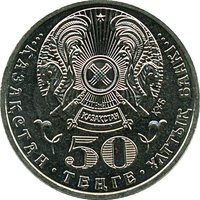
Obverse
Description:
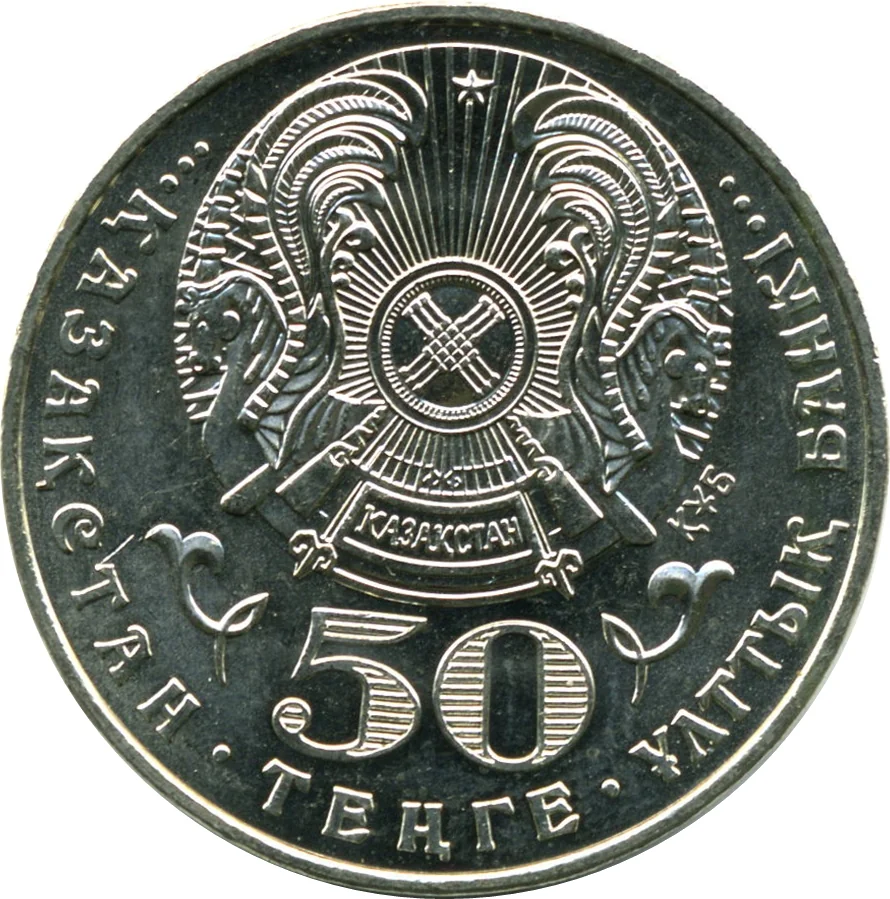
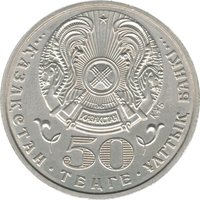
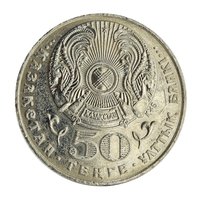
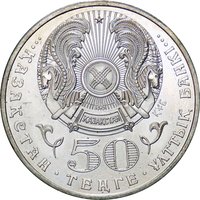
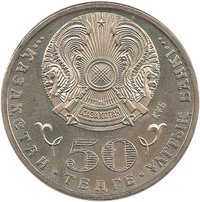
National Coat of Arms with denomination.
Inscription:
••• ҚАЗАҚСТАН • 50 ТЕҢГЕ • ҰЛТТЫҚ БАНКІ •••
ҚҰБ
ҚҰБ
Translation:
KAZAKHSTAN • 50 TENGE • NATIONAL BANK • KUB
Language: Kazakh
Reverse
Description:
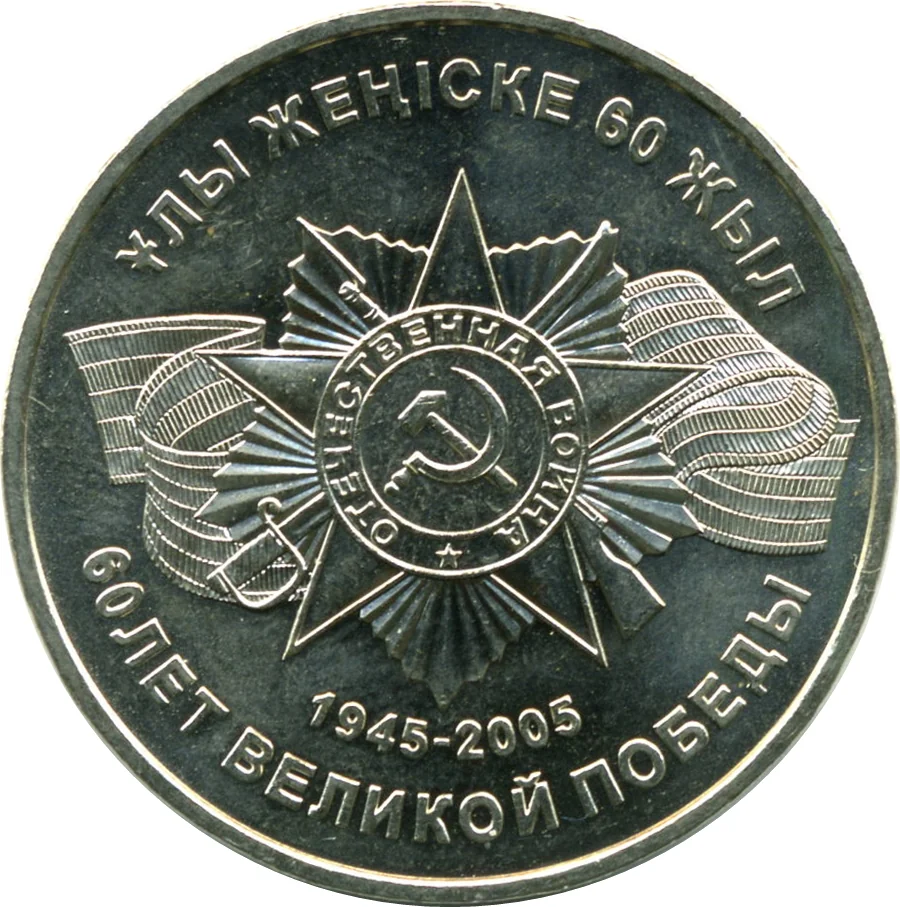
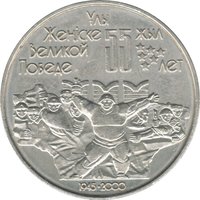
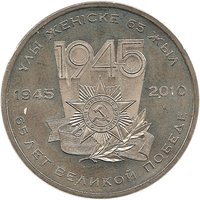
The Soviet coat of arms centered before a St. George ribbon, symbolizing WWII victory.
Inscription:
ҰЛЫ ЖЕҢІСКЕ ЖЫЛ
* ОТЕЧЕСТВЕННАЯ ВОЙНА
1945 - 2005
60 ЛЕТ ВЕЛИКОЙ ПОБЕДЫ
* ОТЕЧЕСТВЕННАЯ ВОЙНА
1945 - 2005
60 ЛЕТ ВЕЛИКОЙ ПОБЕДЫ
Translation:
TO THE GREAT VICTORY YEAR
* THE PATRIOTIC WAR
1945 - 2005
60 YEARS OF THE GREAT VICTORY
* THE PATRIOTIC WAR
1945 - 2005
60 YEARS OF THE GREAT VICTORY
Edge
Segmented reeding
Mints
| Name | Mark |
|---|---|
| Kazakhstan Mint | (ҚҰБ) |
Mintings
| Year | Mint Mark | Mintage | Quality | Collection |
|---|---|---|---|---|
| 2005 | ҚҰБ | 50,000 |
Historical background
In 2005, Kazakhstan's currency situation was characterized by a period of remarkable stability and strength for the tenge, a stark contrast to the volatility of previous years. This stability was underpinned by a managed float exchange rate regime overseen by the National Bank of Kazakhstan (NBK). The primary driver was a sustained boom in global oil prices, which fueled massive foreign direct investment into the country's energy sector. This influx generated substantial dollar revenues, leading to significant foreign exchange reserves and a strong balance of payments, which the NBK actively managed to prevent excessive tenge appreciation that could harm non-oil exports.
The central bank's policy focused on maintaining a competitive and predictable exchange rate to support economic diversification and control inflation. It routinely intervened in the foreign exchange market, buying surplus US dollars to moderate the tenge's rise. This strategy successfully built reserves to record levels while keeping tenge/dollar movements within a narrow band. Consequently, annual inflation, though still a concern, was managed at a moderate level (approximately 7.5% in 2005), and the tenge experienced only a gradual nominal appreciation against the dollar throughout the year.
This stable environment was widely seen as a key achievement and a foundation for robust economic growth, which exceeded 9% in 2005. However, it also exposed underlying vulnerabilities. The economy's growing dependence on hydrocarbon revenues created a "Dutch Disease" dynamic, where the strong tenge made other sectors less competitive. Furthermore, the managed regime required continuous intervention, masking the true market pressure for appreciation and storing potential imbalances. The situation of 2005, therefore, represented a calm before future challenges, setting the stage for the difficult policy decisions that would follow during the 2007-2008 global financial crisis and the eventual shift to a free float in 2015.
The central bank's policy focused on maintaining a competitive and predictable exchange rate to support economic diversification and control inflation. It routinely intervened in the foreign exchange market, buying surplus US dollars to moderate the tenge's rise. This strategy successfully built reserves to record levels while keeping tenge/dollar movements within a narrow band. Consequently, annual inflation, though still a concern, was managed at a moderate level (approximately 7.5% in 2005), and the tenge experienced only a gradual nominal appreciation against the dollar throughout the year.
This stable environment was widely seen as a key achievement and a foundation for robust economic growth, which exceeded 9% in 2005. However, it also exposed underlying vulnerabilities. The economy's growing dependence on hydrocarbon revenues created a "Dutch Disease" dynamic, where the strong tenge made other sectors less competitive. Furthermore, the managed regime required continuous intervention, masking the true market pressure for appreciation and storing potential imbalances. The situation of 2005, therefore, represented a calm before future challenges, setting the stage for the difficult policy decisions that would follow during the 2007-2008 global financial crisis and the eventual shift to a free float in 2015.
Series: Events

🌟 Limited