

1 schilling – Austria
Add to wishlist
Austria
Obverse
Description:
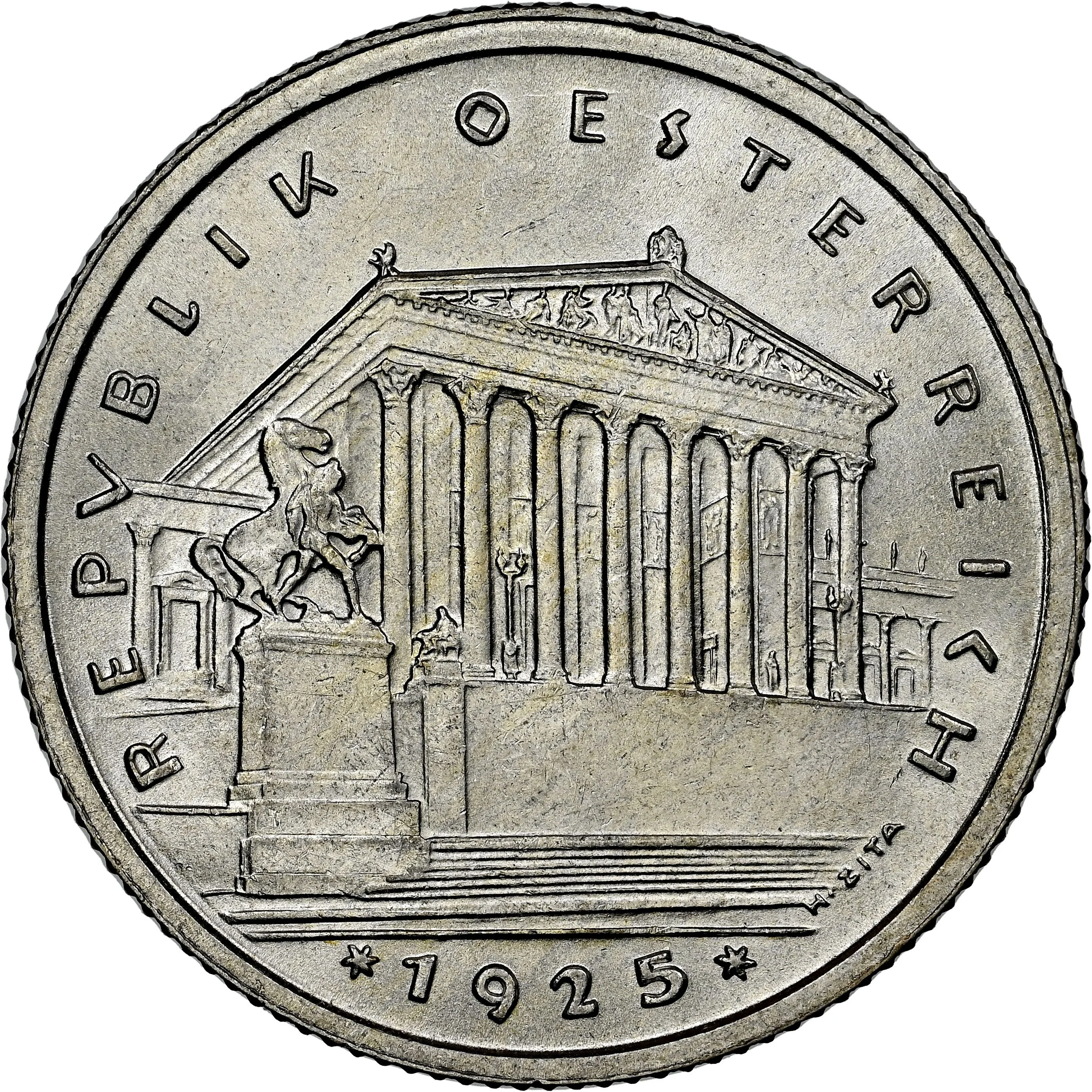
Vienna's parliament building.
Inscription:
REPVBLIK OESTERREICH
·1925·
·1925·
Translation:
REPUBLIC AUSTRIA
·1925·
·1925·
Script: Latin
Language: German
Engraver: Heinrich Zita
Reverse
Inscription:
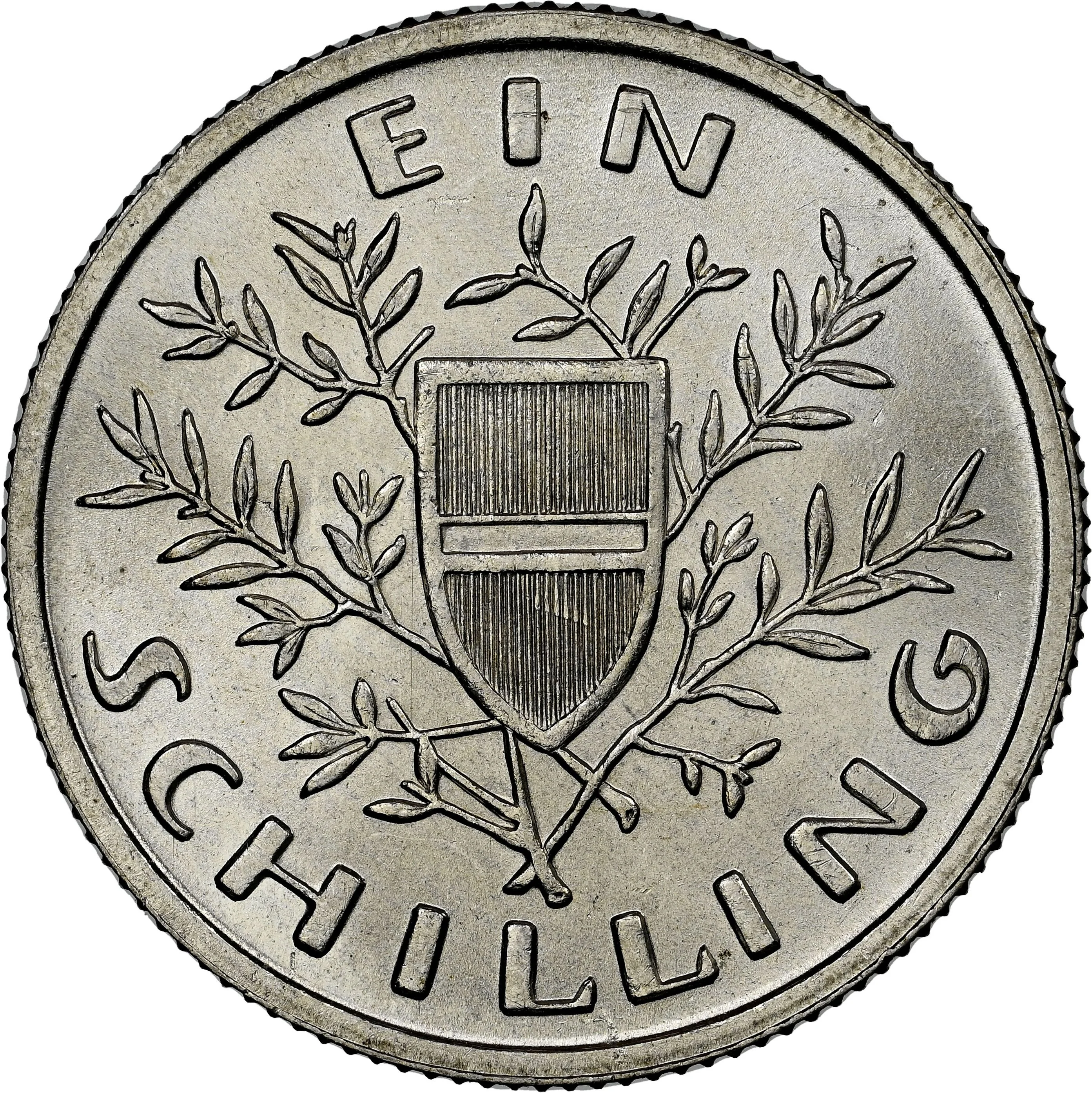
EIN
SCHILLING
SCHILLING
Translation:
One Shilling
Script: Latin
Language: German
Engraver: Heinrich Zita
Edge
Milled
Categories
| Building> Governmental building |
Mints
| Name | Mark |
|---|---|
| Münze Österreich | — |
Mintings
| Year | Mint Mark | Mintage | Quality | Collection |
|---|---|---|---|---|
| 1925 | — | 38,209,000 | ||
| 1926 | — | 20,157,000 | ||
| 1932 | — | 700,000 |
Historical background
In 1925, Austria was in the early stages of stabilization following the catastrophic hyperinflation of the early 1920s, which had utterly destroyed the value of the old Austro-Hungarian Krone. The pivotal reform occurred in late 1924 with the introduction of the new Austrian Schilling (officially the Altschilling), which replaced the old Krone at a rate of 10,000:1. This new currency was established by the Schillingrechnungsgesetz (Schilling Conversion Act) and was backed by a substantial foreign loan organized by the League of Nations, a condition of which was strict fiscal austerity and international oversight of the Austrian central bank.
The currency situation in 1925 was one of fragile confidence. The new Schilling was successfully pegged to gold and the US dollar, providing much-needed stability for prices and wages after years of chaos. However, the economy remained under severe strain. The government's commitment to balancing the budget and the supervision by a League of Nations commissioner, Dutchman Dr. Alfred Zimmermann, were essential in maintaining international credibility for the currency. This external control, while resented by some, was crucial for attracting the foreign capital needed for the currency's backing.
Consequently, 1925 marked a year of transition where the immediate threat of inflation had been quelled, but the underlying economic weaknesses persisted. The success of the hard-won currency stability was entirely dependent on continued fiscal discipline and the painful restructuring of the Austrian state and its industries. The Schilling held firm, becoming a symbol of the First Republic's recovery, yet the nation's economic prosperity remained precarious and deeply intertwined with foreign political and financial support.
The currency situation in 1925 was one of fragile confidence. The new Schilling was successfully pegged to gold and the US dollar, providing much-needed stability for prices and wages after years of chaos. However, the economy remained under severe strain. The government's commitment to balancing the budget and the supervision by a League of Nations commissioner, Dutchman Dr. Alfred Zimmermann, were essential in maintaining international credibility for the currency. This external control, while resented by some, was crucial for attracting the foreign capital needed for the currency's backing.
Consequently, 1925 marked a year of transition where the immediate threat of inflation had been quelled, but the underlying economic weaknesses persisted. The success of the hard-won currency stability was entirely dependent on continued fiscal discipline and the painful restructuring of the Austrian state and its industries. The Schilling held firm, becoming a symbol of the First Republic's recovery, yet the nation's economic prosperity remained precarious and deeply intertwined with foreign political and financial support.
Series: 1925 Austria circulation coins
🌱 Very Common