

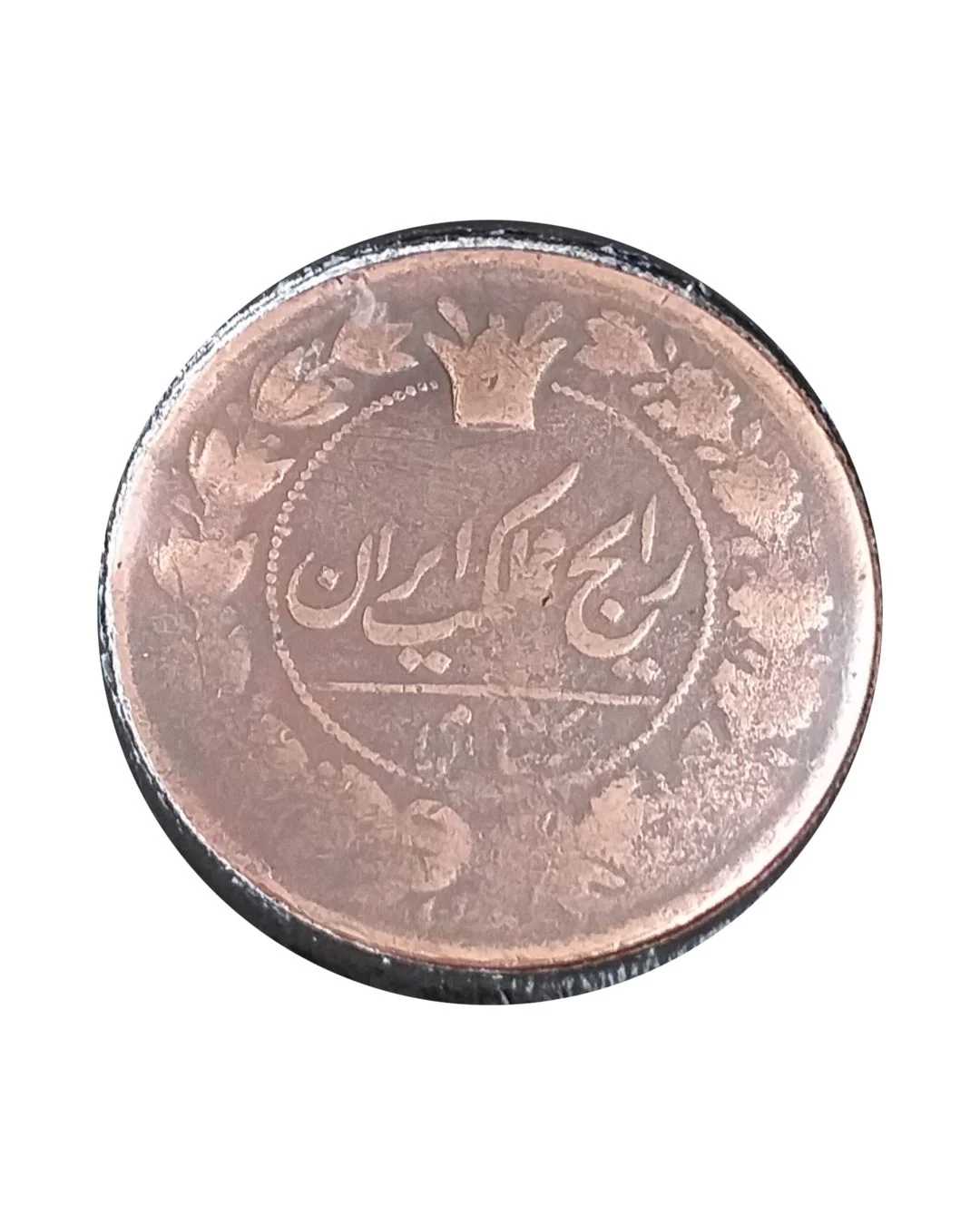
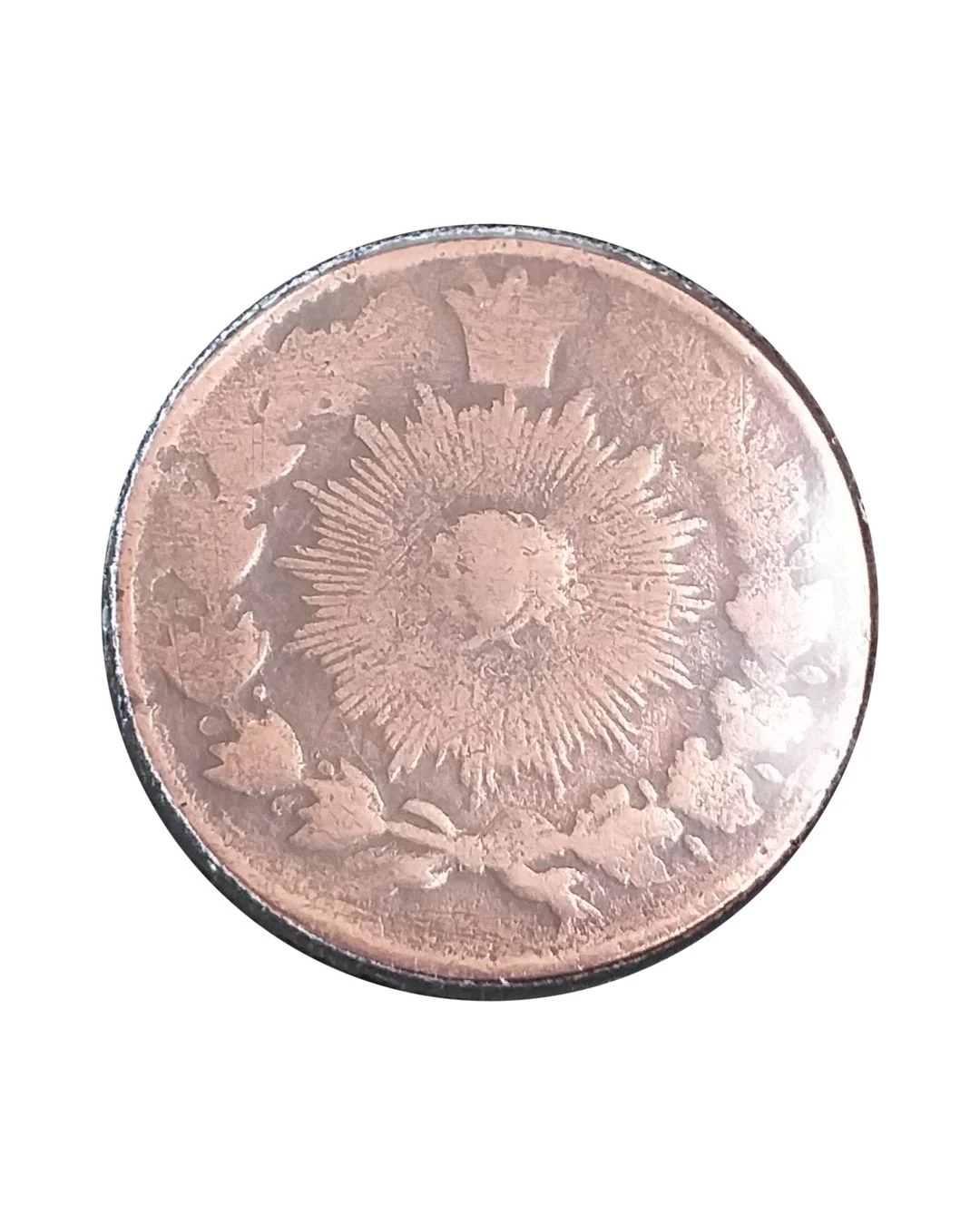
1 Shahi – Iran
Iran
Context
Year: 1888
Islamic (Hijri) Year: 1305
Issuer: Iran 
Ruler: Naser al-Din Shah
Currency:
(1825—1932)
Demonetized: Yes
Material
References
KM: #Click to copy to clipboard884
Numista: #62083
Obverse
Description:
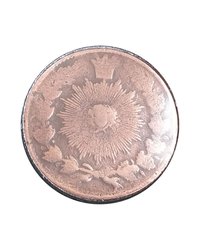
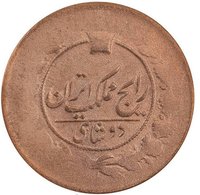
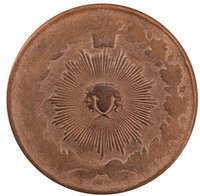
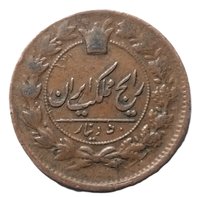
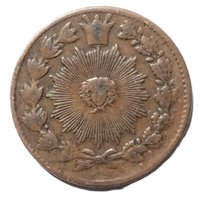
Inscription within crowned wreath.
Script: Persian (nastaliq)
Reverse
Description:
Crowned wreath, radiant design.
Edge
Mintings
| Year | Mint Mark | Mintage | Quality | Collection |
|---|---|---|---|---|
| 1888 | — | — |
Historical background
In 1888, Iran’s currency system was in a state of profound disarray, a legacy of centuries of debasement and weak central control. The monetary landscape was a complex patchwork of domestic and foreign coins circulating simultaneously. The primary unit was the silver qiran (also spelled kran), but its silver content and weight had been steadily reduced by the Qajar rulers to finance state expenses, leading to severe inflation and a loss of public trust. Alongside these debased silver coins, copper shahis and dinars were used for small transactions, while gold tomans (worth 10 qirans) were used for large-scale trade and state accounting, creating a confusing multi-metallic system with fluctuating exchange rates.
This instability was exacerbated by the massive influx of foreign currencies, particularly the Russian silver ruble and the British gold sovereign and Indian rupee, which circulated freely, especially in the northern and southern spheres of influence respectively. These foreign coins, often of more reliable fineness, were preferred in foreign trade and by many merchants, further undermining the domestic currency. The government’s inability to control the money supply or prevent the export of silver bullion led to chronic shortages of sound coinage, causing frequent and disruptive liquidity crises in the bazaars.
The situation reached a critical point in the late 1880s, prompting nascent modernization efforts. In 1888, the government, under Naser al-Din Shah, was actively seeking solutions, which would culminate in the establishment of the Dar al-Zarb (Imperial Mint) in Tehran the following year. This was an early, though initially inadequate, attempt to centralize coin production and standardize the currency. Thus, 1888 represents a pivotal moment of recognized crisis, setting the stage for the failed monetary reforms of the 1890s and the eventual, more consequential establishment of the Imperial Bank of Persia, which would introduce paper money and further entangle Iran’s economy with foreign financial interests.
This instability was exacerbated by the massive influx of foreign currencies, particularly the Russian silver ruble and the British gold sovereign and Indian rupee, which circulated freely, especially in the northern and southern spheres of influence respectively. These foreign coins, often of more reliable fineness, were preferred in foreign trade and by many merchants, further undermining the domestic currency. The government’s inability to control the money supply or prevent the export of silver bullion led to chronic shortages of sound coinage, causing frequent and disruptive liquidity crises in the bazaars.
The situation reached a critical point in the late 1880s, prompting nascent modernization efforts. In 1888, the government, under Naser al-Din Shah, was actively seeking solutions, which would culminate in the establishment of the Dar al-Zarb (Imperial Mint) in Tehran the following year. This was an early, though initially inadequate, attempt to centralize coin production and standardize the currency. Thus, 1888 represents a pivotal moment of recognized crisis, setting the stage for the failed monetary reforms of the 1890s and the eventual, more consequential establishment of the Imperial Bank of Persia, which would introduce paper money and further entangle Iran’s economy with foreign financial interests.
💎 Extremely Rare