

25 Toman – Iran
Iran
Context
Year: 1884
Islamic (Hijri) Year: 1301
Issuer: Iran 
Ruler: Naser al-Din Shah
Currency:
(1825—1932)
Demonetized: Yes
Material
References
KM: #Click to copy to clipboard951
Numista: #57364
Value
Bullion value: $10733.78
Obverse
Description:
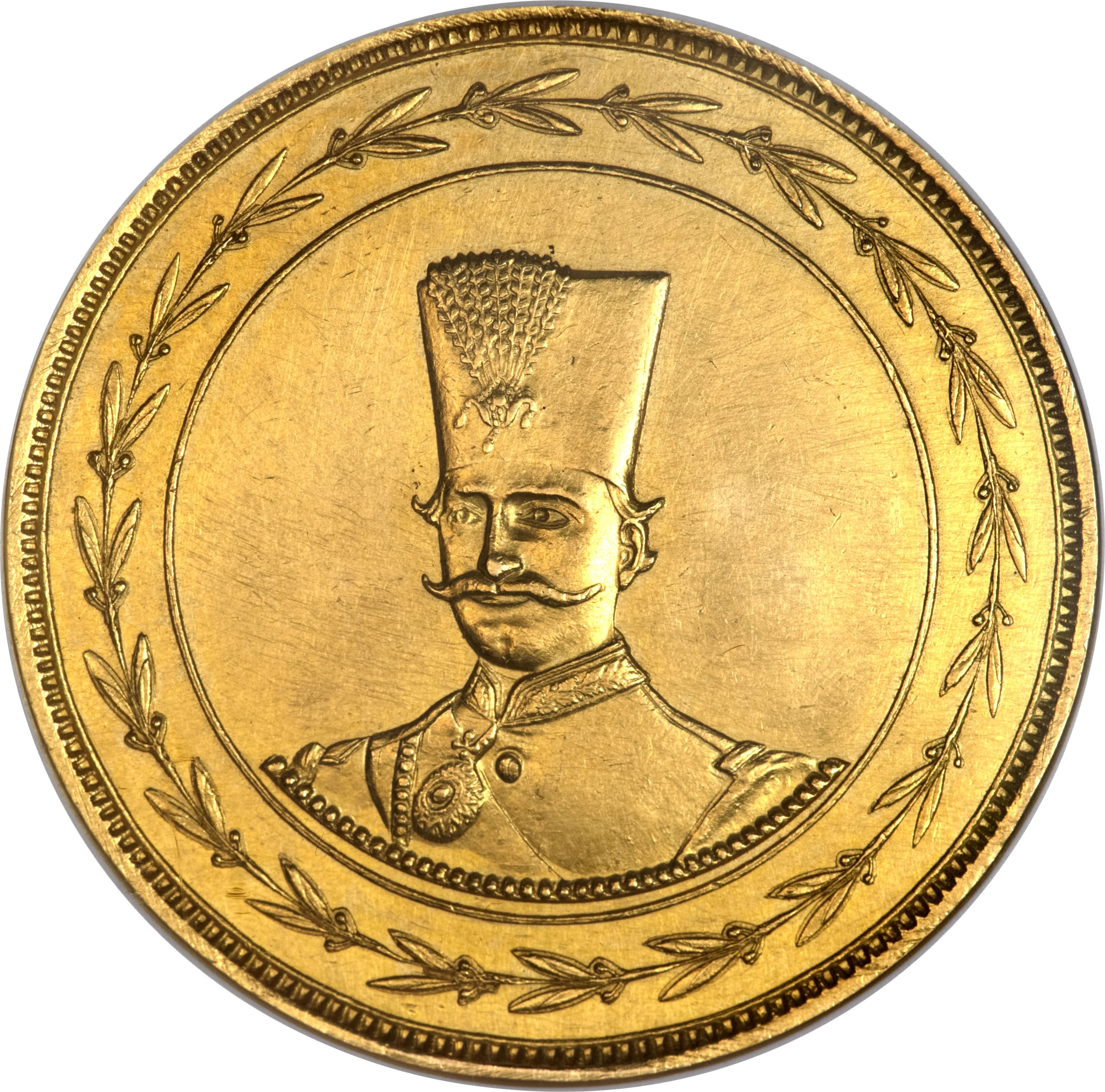
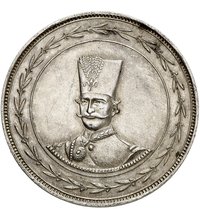
Uniform bust of Nasir al-Din Shah facing left, encircled by an olive wreath.
Reverse
Description:
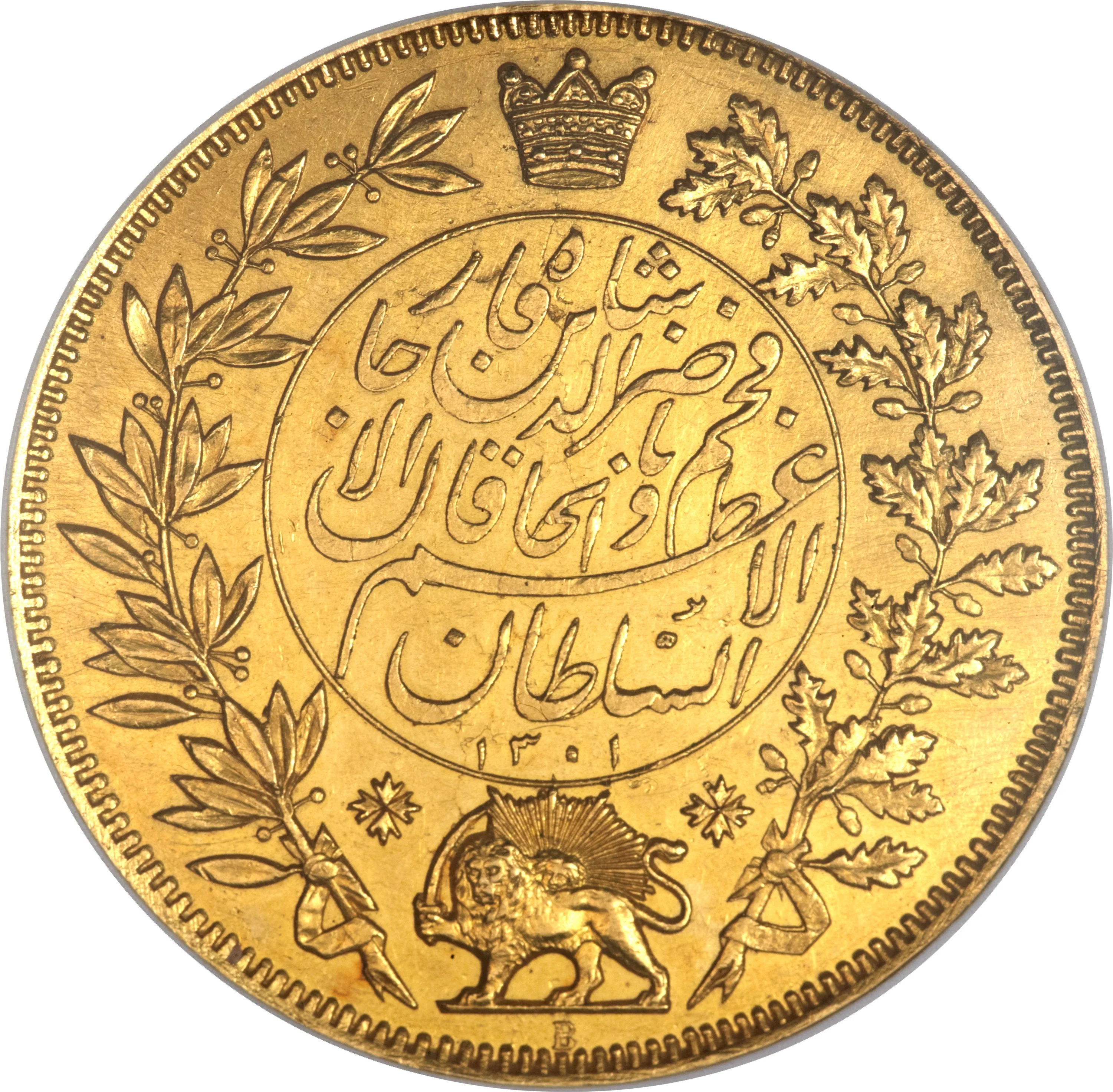
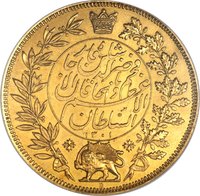
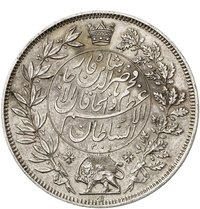
Crowned lion with sabre and sun within circle, flanked by olive and oak branches, with floral symbols above mintmark.
Inscription:
السُّلطان الاعظـــــم والخاقان الافخم ناصرالدین شاه قاجار
۱۳۰۱
B
۱۳۰۱
B
Translation:
The Most Great Sultan and Most Noble Khagan, Nasir al-Din Shah Qajar
1301
1301
Script: Persian (nastaliq)
Edge
Reeded
Mints
| Name | Mark |
|---|---|
| Birmingham | B |
Mintings
| Year | Mint Mark | Mintage | Quality | Collection |
|---|---|---|---|---|
| 1884 | — | — |
Historical background
In 1884, Iran’s monetary system was in a state of profound disarray, characterized by a chaotic multiplicity of coins and severe depreciation. The country operated on a bimetallic standard, but the primary circulating currency was the silver qiran (also spelled kran), with copper puls for small change and gold tomans used for large transactions and accounting. However, the coinage was highly irregular, with various provinces and even private mints issuing their own coins of differing weights and purity. This lack of standardization, combined with the widespread practice of clipping coins, eroded public trust and crippled domestic commerce.
The root of this instability lay in both internal mismanagement and external economic pressure. The Qajar government, facing chronic budget deficits, frequently debased the silver coinage to finance its expenditures, flooding the market with inferior money. Simultaneously, the global fall in the price of silver in the late 19th century caused the value of Iran’s silver-based currency to plummet against the gold-based currencies of Europe, particularly the British pound and Russian ruble. This exchange rate collapse dramatically increased the cost of Iran’s imports and foreign debt payments, leading to a drain of gold from the country and further inflationary pressure.
This monetary chaos had severe consequences, hindering foreign investment and making Iran vulnerable to imperial rivalry. European powers, especially Russia and Britain, exploited the situation by introducing their own silver coins (like the Russian ruble and Maria Theresa thaler) which often circulated more reliably than domestic currency, undermining Iranian sovereignty. The crisis would eventually prompt some early, albeit ineffective, reform attempts, but in 1884, the system remained a significant obstacle to economic modernization and a symbol of the Qajar state’s weakening fiscal control.
The root of this instability lay in both internal mismanagement and external economic pressure. The Qajar government, facing chronic budget deficits, frequently debased the silver coinage to finance its expenditures, flooding the market with inferior money. Simultaneously, the global fall in the price of silver in the late 19th century caused the value of Iran’s silver-based currency to plummet against the gold-based currencies of Europe, particularly the British pound and Russian ruble. This exchange rate collapse dramatically increased the cost of Iran’s imports and foreign debt payments, leading to a drain of gold from the country and further inflationary pressure.
This monetary chaos had severe consequences, hindering foreign investment and making Iran vulnerable to imperial rivalry. European powers, especially Russia and Britain, exploited the situation by introducing their own silver coins (like the Russian ruble and Maria Theresa thaler) which often circulated more reliably than domestic currency, undermining Iranian sovereignty. The crisis would eventually prompt some early, albeit ineffective, reform attempts, but in 1884, the system remained a significant obstacle to economic modernization and a symbol of the Qajar state’s weakening fiscal control.
✨ Legendary