

Iran
Context
Year: 1800
Islamic (Hijri) Year: 1214
Issuer: Iran 
Ruler: Fath-Ali Shah
Currency:
(1798—1825)
Demonetized: Yes
Material
References
KM: #Click to copy to clipboard739.8
Numista: #61986
Value
Bullion value: $1023.49
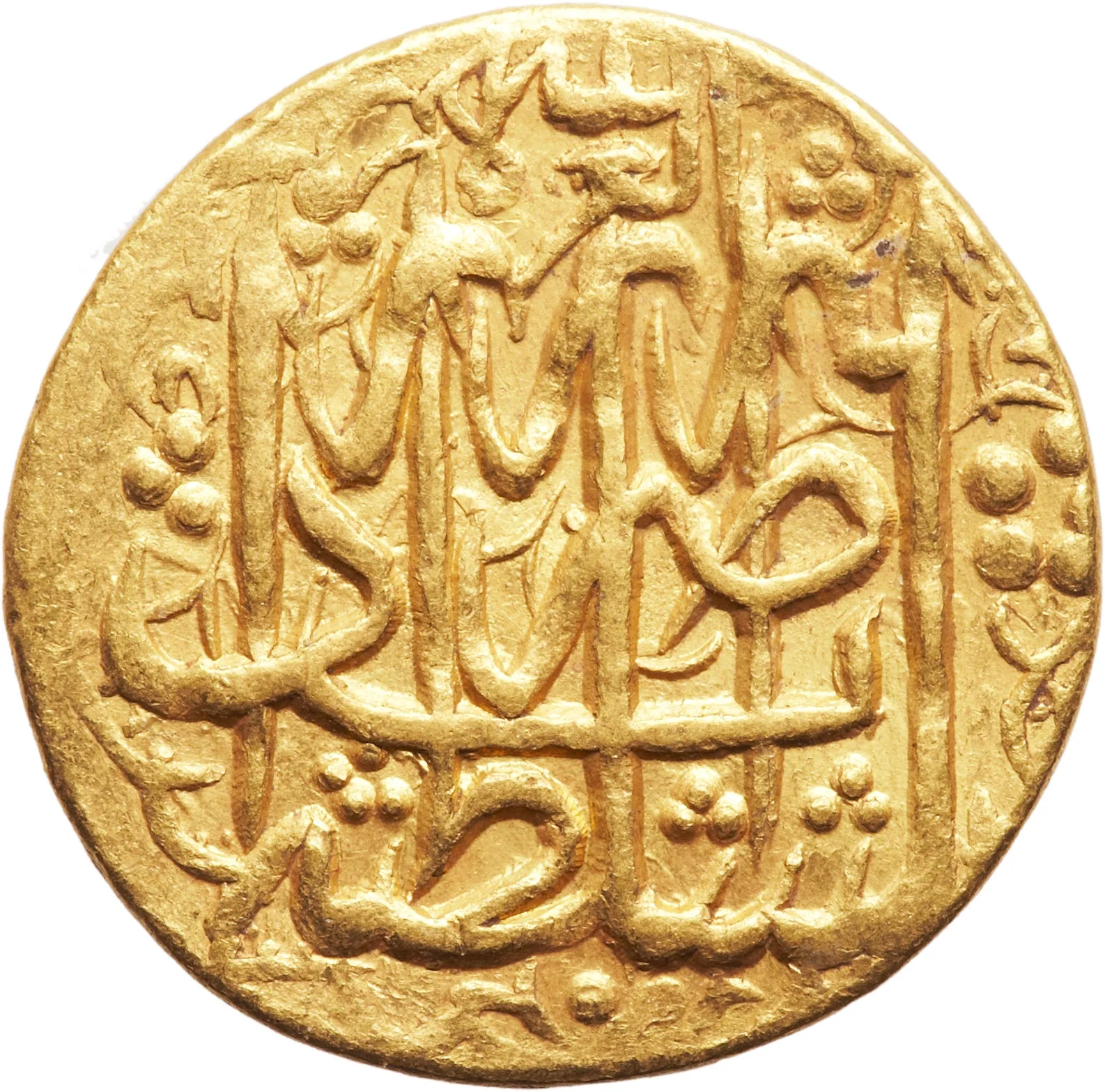
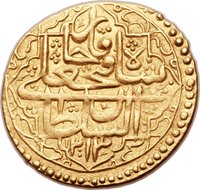
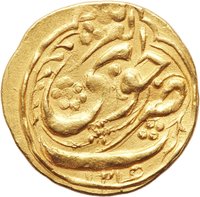
Obverse
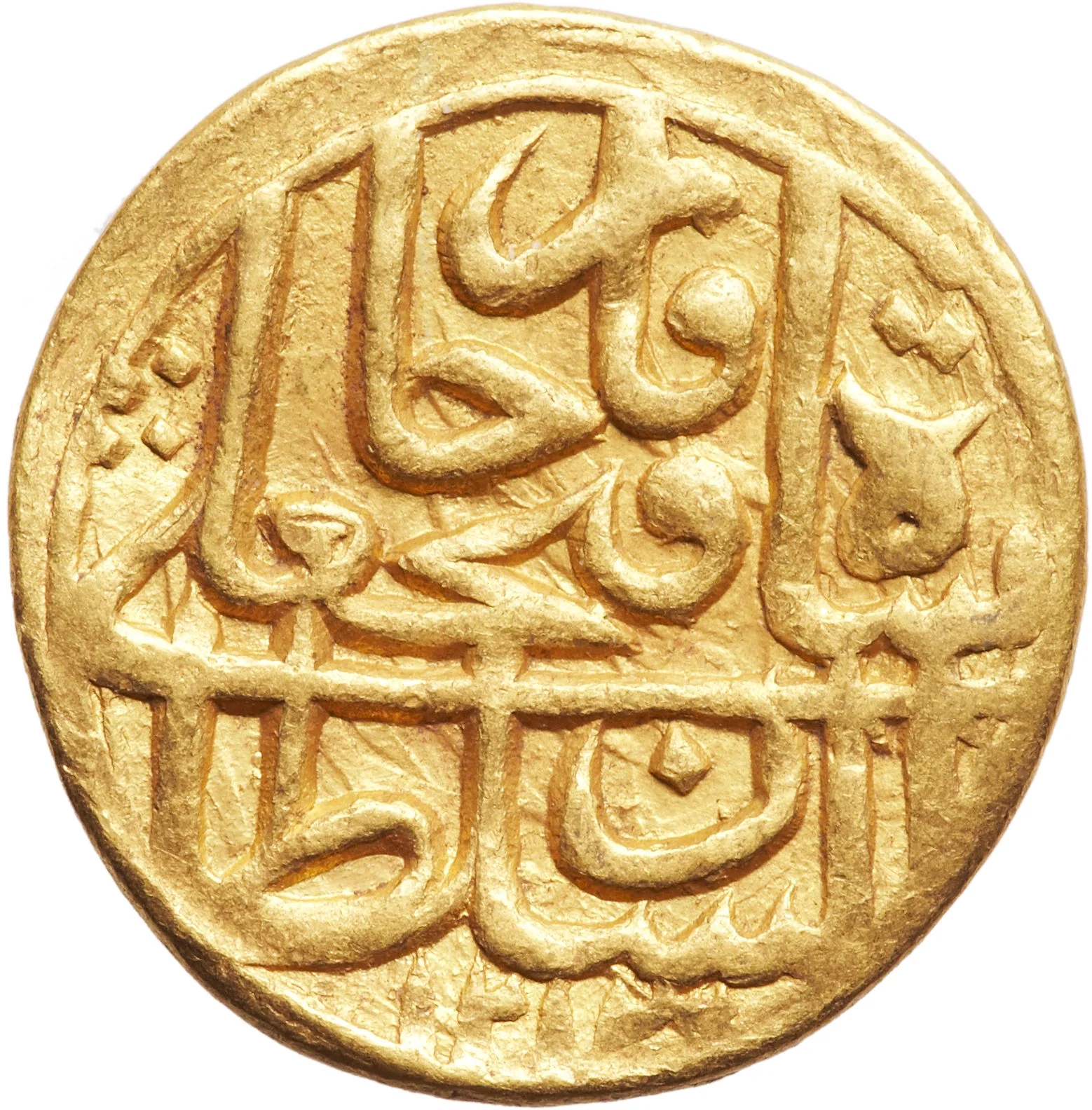
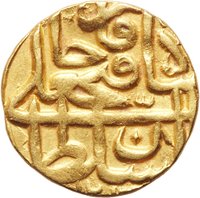
Reverse
Inscription:
العزه لله
ضرب دارالسلطنه تبریز
ضرب دارالسلطنه تبریز
Translation:
Might belongs to God
Struck in the capital Tabriz
Struck in the capital Tabriz
Language: Arabic
Edge
Plain
Mints
| Name | Mark |
|---|---|
| Tebriz | — |
Mintings
| Year | Mint Mark | Mintage | Quality | Collection |
|---|---|---|---|---|
| 1800 | — | — |
Historical background
In 1800, Iran’s monetary system was a complex and fragmented reflection of its political and economic instability. The Qajar dynasty, under Fath-Ali Shah (r. 1797–1834), was consolidating power after a period of civil war, but central control over the provinces remained weak. The state treasury was chronically depleted due to military campaigns, a costly court, and the loss of traditional revenue from the Caucasus following wars with Russia. This financial strain directly impacted the currency, as the government lacked the bullion reserves to maintain a strong, unified coinage.
The currency in circulation was primarily silver, in the form of hand-struck coins. The principal unit was the rial, but the more commonly used accounting unit was the toman (equal to 10 rials). Coins were minted in various cities—including Tehran, Tabriz, and Isfahan—with inconsistent weight and purity, leading to significant regional variations in value. Alongside these, a bewildering array of foreign coins, particularly Austrian Maria Theresa thalers and Russian rubles, circulated widely due to their reliable silver content, further complicating trade and taxation.
This decentralized and debased currency system created severe economic problems. Internal trade was hampered by the need for constant money-changing and valuation disputes, while external trade was hindered by a lack of international confidence in Iranian coinage. The government’s occasional attempts to debase the coinage to cover its deficits led to inflation, eroding public trust. Consequently, in 1800, Iran’s monetary situation was not one of a modern, standardized system, but rather a fragile and chaotic patchwork that mirrored the country’s struggle for internal cohesion and economic sovereignty in a challenging geopolitical landscape.
The currency in circulation was primarily silver, in the form of hand-struck coins. The principal unit was the rial, but the more commonly used accounting unit was the toman (equal to 10 rials). Coins were minted in various cities—including Tehran, Tabriz, and Isfahan—with inconsistent weight and purity, leading to significant regional variations in value. Alongside these, a bewildering array of foreign coins, particularly Austrian Maria Theresa thalers and Russian rubles, circulated widely due to their reliable silver content, further complicating trade and taxation.
This decentralized and debased currency system created severe economic problems. Internal trade was hampered by the need for constant money-changing and valuation disputes, while external trade was hindered by a lack of international confidence in Iranian coinage. The government’s occasional attempts to debase the coinage to cover its deficits led to inflation, eroding public trust. Consequently, in 1800, Iran’s monetary situation was not one of a modern, standardized system, but rather a fragile and chaotic patchwork that mirrored the country’s struggle for internal cohesion and economic sovereignty in a challenging geopolitical landscape.
✨ Legendary