

2 kronor – Sweden
Add to wishlist
Sweden
Context
Years: 1952–1966
Issuer: Sweden
Ruler: Gustaf VI Adolf
Currency:
(since 1873)
Demonetization: 30 June 2017
Total mintage: 14,241,547
Material
References
KM: #
Numista: #6193
Value
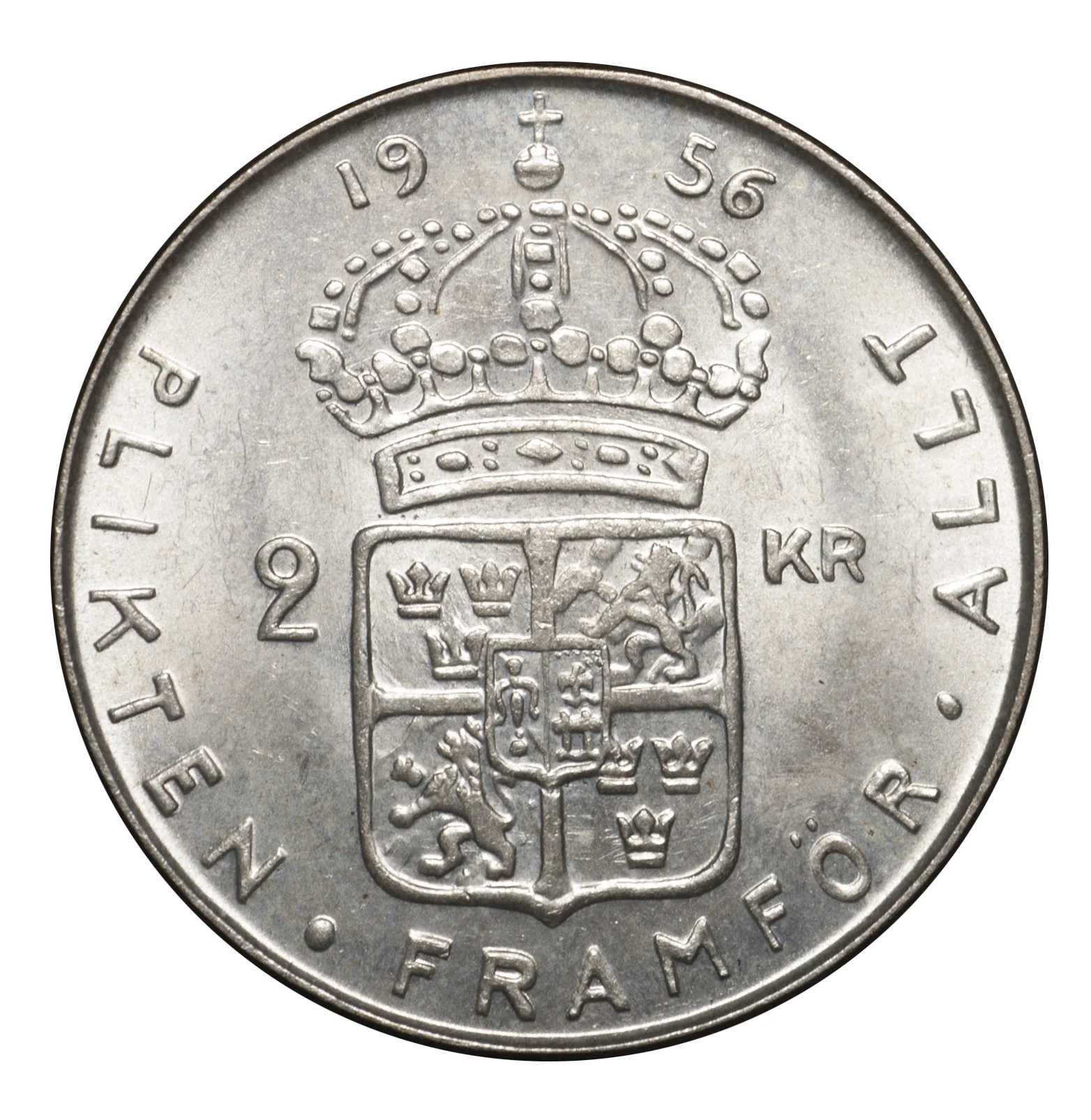
Exchange value: 2 SEK
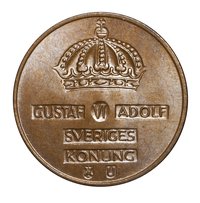
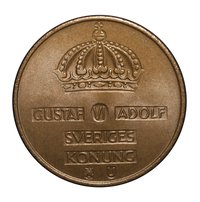
Obverse
Description:
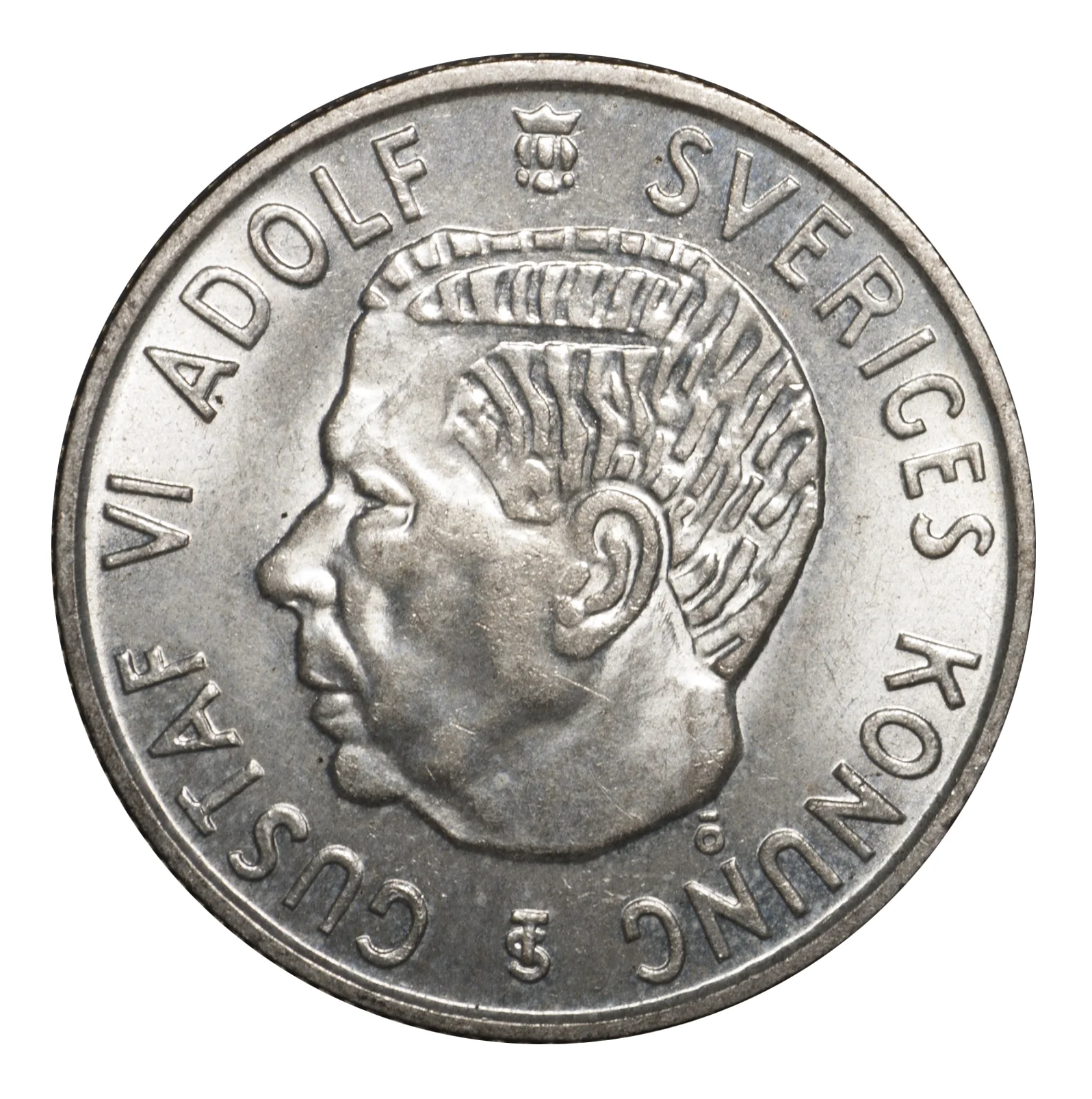
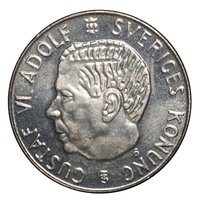
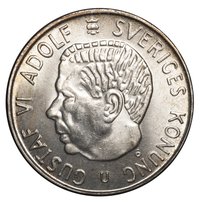
Stylized left-facing king portrait with surrounding inscription.
Inscription:
GUSTAF VI ADOLF SVERIGES KONUNG
ö
U
ö
U
Translation:
GUSTAF VI ADOLF SWEDEN'S KING
ö
U
ö
U
Script: Latin
Language: Swedish
Engraver: Edvin Öhrström
Reverse
Edge
Reeded
Mints
| Name | Mark |
|---|---|
| Kungliga Myntet | — |
Mintings
| Year | Mint Mark | Mintage | Quality | Collection |
|---|---|---|---|---|
| 1952 | — | 315,325 | ||
| 1953 | — | 1,009,380 | ||
| 1954 | — | 2,300,835 | ||
| 1955 | — | 1,137,734 | ||
| 1956 | — | 1,709,468 | ||
| 1957 | — | 688,900 | ||
| 1958 | — | 1,104,555 | ||
| 1959 | — | 581,330 | ||
| 1961 | — | 533,770 | ||
| 1963 | — | 1,468,750 | ||
| 1964 | — | 1,212,750 | ||
| 1965 | — | 1,189,500 | ||
| 1966 | — | 989,250 |
Historical background
In 1952, Sweden operated under a strict system of foreign exchange controls, a legacy of World War II and a reflection of the broader European post-war economic landscape. The Swedish krona was not a freely convertible currency on the international market. Instead, its exchange rate was fixed and managed by the Riksbank, Sweden's central bank, as part of the Bretton Woods system, which pegged it indirectly to the US dollar via gold. All foreign currency transactions required authorization, and citizens faced severe restrictions on how much currency they could take out of the country, a policy designed to prevent capital flight and conserve scarce foreign reserves for essential imports and national reconstruction.
Domestically, this period was characterized by the "Harpsund democracy," a era of Social Democratic hegemony focused on building a strong welfare state and a regulated economy. The currency controls were a key tool in this model, allowing the government to steer investment, protect industry, and maintain full employment without the pressure of speculative capital flows. The krona's fixed exchange rate provided stability for exporters like Volvo and SKF, but it also masked underlying inflationary pressures and created a complex bureaucracy around international trade and travel.
Looking ahead, the situation in 1952 was on the cusp of change. The early 1950s marked the beginning of Europe's economic integration and recovery, led by the Marshall Plan and the European Payments Union (EPU), of which Sweden was a member. The EPU facilitated multilateral trade by allowing member countries to settle payments without using gold or dollars, easing some of the rigidity of bilateral controls. While full convertibility for the krona was still years away (achieved in 1959), the mechanisms and international cooperation established in this period were the first steps toward liberalizing Sweden's currency regime and reintegrating its economy into the global market.
Domestically, this period was characterized by the "Harpsund democracy," a era of Social Democratic hegemony focused on building a strong welfare state and a regulated economy. The currency controls were a key tool in this model, allowing the government to steer investment, protect industry, and maintain full employment without the pressure of speculative capital flows. The krona's fixed exchange rate provided stability for exporters like Volvo and SKF, but it also masked underlying inflationary pressures and created a complex bureaucracy around international trade and travel.
Looking ahead, the situation in 1952 was on the cusp of change. The early 1950s marked the beginning of Europe's economic integration and recovery, led by the Marshall Plan and the European Payments Union (EPU), of which Sweden was a member. The EPU facilitated multilateral trade by allowing member countries to settle payments without using gold or dollars, easing some of the rigidity of bilateral controls. While full convertibility for the krona was still years away (achieved in 1959), the mechanisms and international cooperation established in this period were the first steps toward liberalizing Sweden's currency regime and reintegrating its economy into the global market.
Series: 1952 Sweden circulation coins
🌱 Common