

5 kronor – Sweden
Add to wishlist
Sweden
Context
Years: 1954–1971
Issuer: Sweden
Ruler: Gustaf VI Adolf
Currency:
(since 1873)
Demonetization: 30 June 2017
Total mintage: 5,791,801
Material
References
KM: #
Numista: #12994
Value
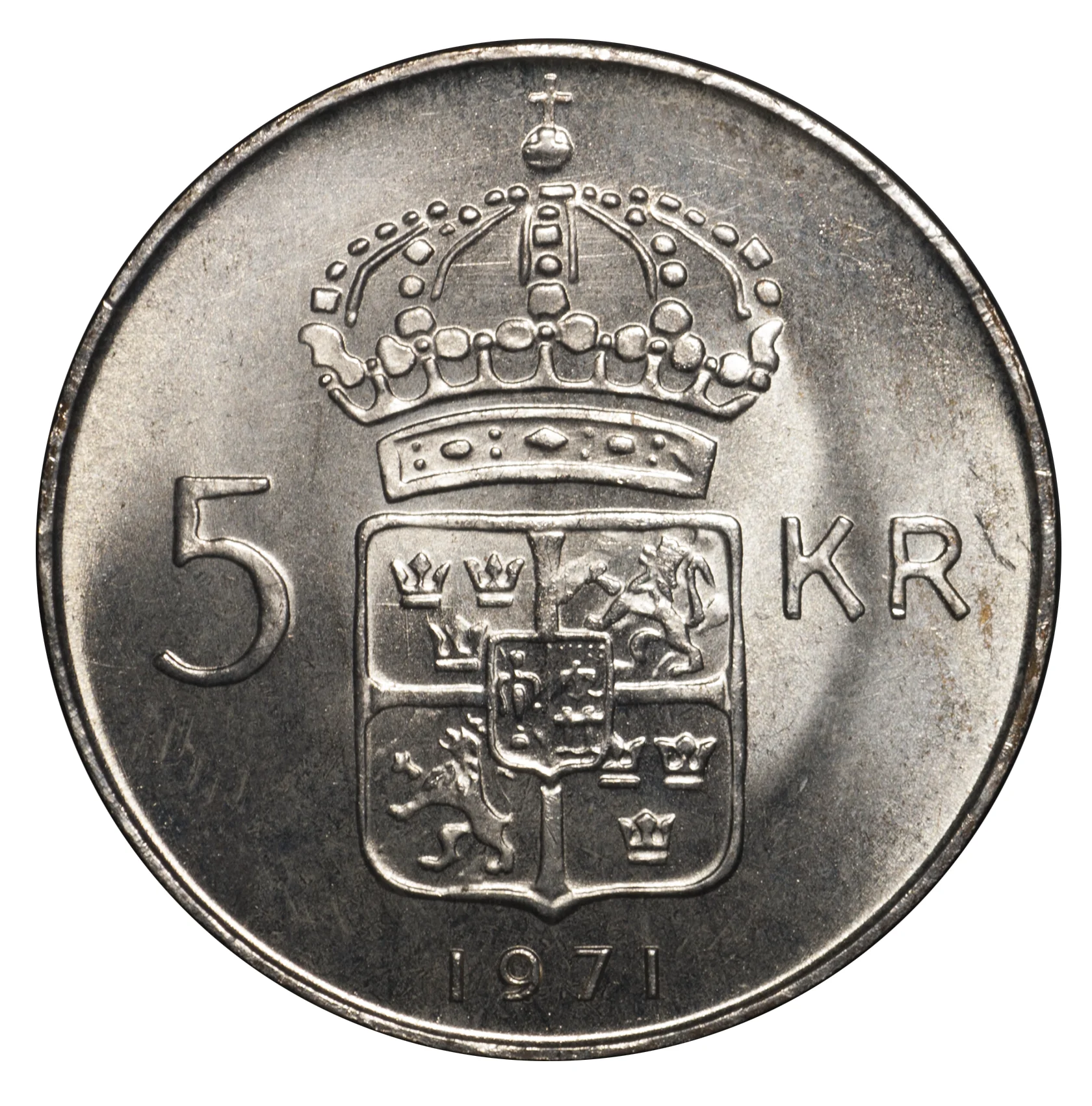
Exchange value: 5 SEK
Obverse
Description:
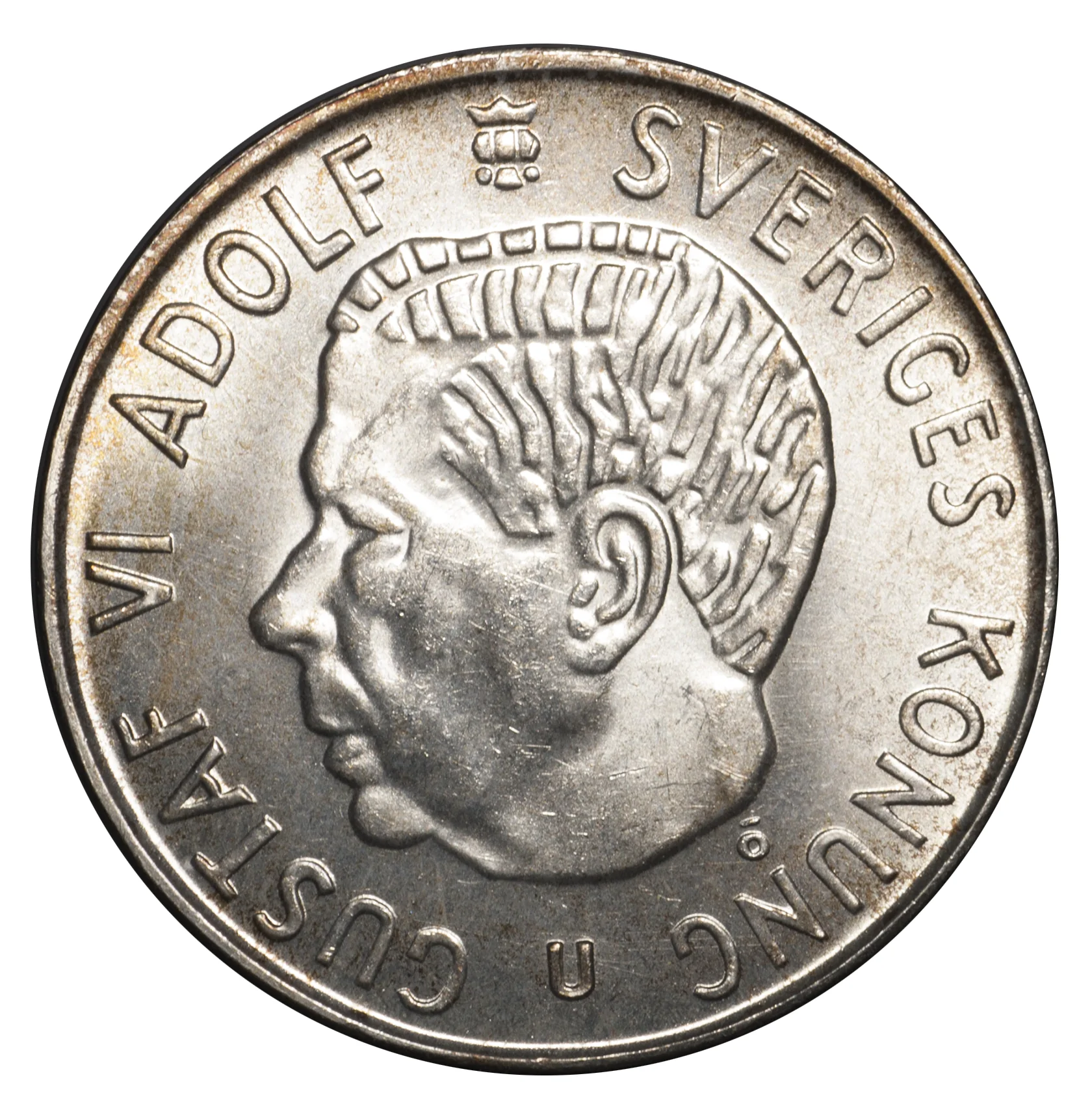
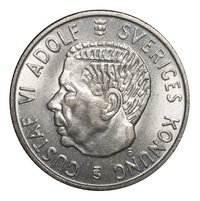
King Gustaf VI Adolf facing left, surrounded by an inscription. The Governor of the Riksbank's initials appear below the neck.
Inscription:
GUSTAF VI ADOLF SVERIGES KONUNG
ö
TS
ö
TS
Translation:
Gustaf VI Adolf Sweden's King
By the Grace of God
By the Grace of God
Script: Latin
Engraver: Edvin Öhrström
Reverse
Edge
Categories
| Symbols> Coat of Arms |
Mints
| Name | Mark |
|---|---|
| Kungliga Myntet | — |
Mintings
| Year | Mint Mark | Mintage | Quality | Collection |
|---|---|---|---|---|
| 1954 | — | 1,510,316 | ||
| 1955 | — | 3,568,985 | ||
| 1971 | — | 712,500 |
Historical background
In 1954, Sweden operated under a tightly regulated currency regime, a legacy of the economic controls implemented during World War II and maintained throughout the post-war reconstruction period. The Swedish krona was not freely convertible, meaning its exchange rate was fixed and controlled by the Riksbank (the central bank), and the movement of capital in and out of the country was heavily restricted. This system, known as the "kronex" system, created a dual-currency market: one official rate for essential trade and another, less favorable, financial rate for other transactions. The primary goal was to shield Sweden's foreign currency reserves, maintain a stable exchange rate to support export industries, and allow the government to direct capital toward domestic industrial investment and the expanding welfare state.
Economically, the year fell within a period of remarkable growth and stability, the beginning of what would later be termed the "record years." However, the currency controls created significant friction for businesses and individuals. Swedish companies seeking to invest abroad, or citizens wishing to travel, faced bureaucratic hurdles and limited access to foreign currency. Internally, there was growing debate about the necessity and efficiency of these restrictions, as other European nations began to liberalize their own financial systems during the early 1950s. Critics argued that the controls were becoming an obstacle to modernization and international integration.
Ultimately, 1954 represented the tail end of this restrictive era. Pressure from the business community, changing international norms, and the sheer administrative burden of the controls were building toward a change. While the full liberalization would not occur until later in the decade—with the krona becoming convertible for non-residents in 1959—the discussions and economic assessments of 1954 were crucial in setting the stage for Sweden's gradual move toward a more open and market-based financial system, aligning itself with the broader European trend toward economic integration and freedom of capital movement.
Economically, the year fell within a period of remarkable growth and stability, the beginning of what would later be termed the "record years." However, the currency controls created significant friction for businesses and individuals. Swedish companies seeking to invest abroad, or citizens wishing to travel, faced bureaucratic hurdles and limited access to foreign currency. Internally, there was growing debate about the necessity and efficiency of these restrictions, as other European nations began to liberalize their own financial systems during the early 1950s. Critics argued that the controls were becoming an obstacle to modernization and international integration.
Ultimately, 1954 represented the tail end of this restrictive era. Pressure from the business community, changing international norms, and the sheer administrative burden of the controls were building toward a change. While the full liberalization would not occur until later in the decade—with the krona becoming convertible for non-residents in 1959—the discussions and economic assessments of 1954 were crucial in setting the stage for Sweden's gradual move toward a more open and market-based financial system, aligning itself with the broader European trend toward economic integration and freedom of capital movement.
🌱 Common