

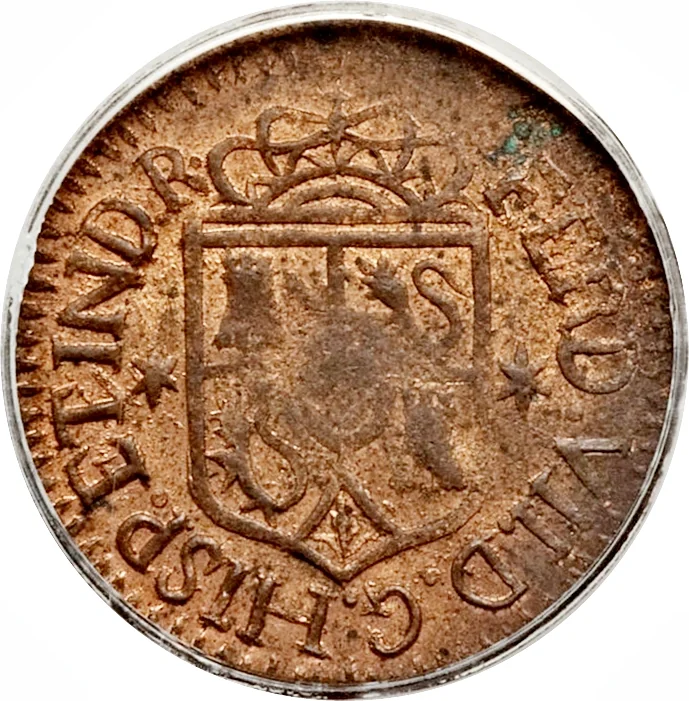
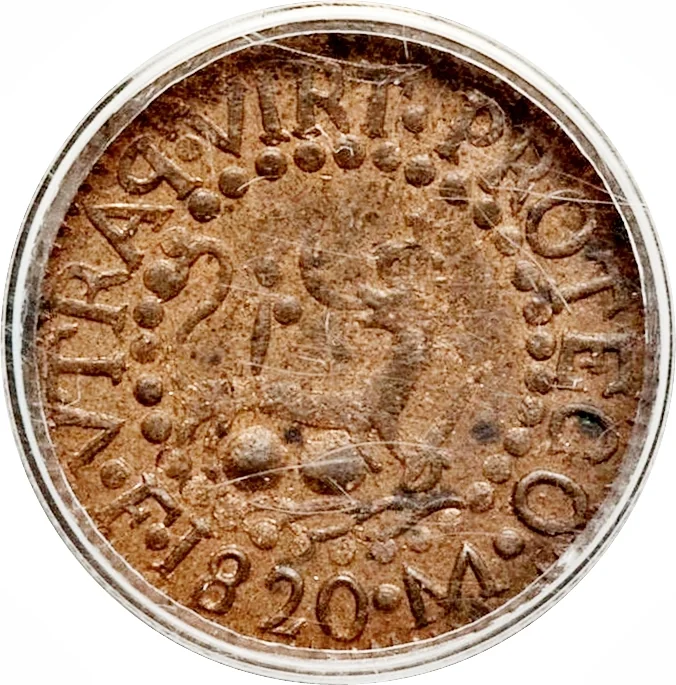
1 Octavo – Philippines
Philippines
Context
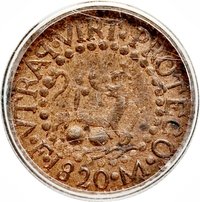
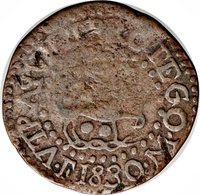
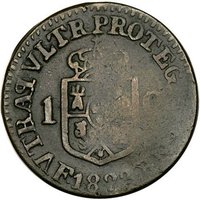
Years: 1820–1830
Issuer: Philippines 
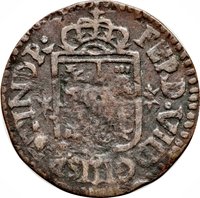
Ruler: Ferdinand VII
Currency:
(1700—1857)
Subdivision: 1 Octavo = ¼ Quarto = ⅛ Real
Demonetized: Yes
Material
References
KM: #Click to copy to clipboard8
Numista: #61801
Obverse
Reverse
Edge
Categories
| Animal> Feline |
| Symbols> Coat of Arms |
Mints
| Name | Mark |
|---|---|
| Manila | M |
Historical background
In 1820, the Philippine currency system was a complex and often chaotic reflection of its colonial status under Spanish rule. The official monetary system was theoretically based on the Spanish dollar or peso, subdivided into 8 reales. However, a severe shortage of official coinage plagued the islands. This scarcity was due to restrictive mercantilist policies from Madrid, which drained silver to finance trade deficits and the colonial administration in Manila. Consequently, the economy relied heavily on a bewildering array of foreign coins that circulated concurrently, including Spanish-American pesos (from Mexico and Peru), other European dollars, and even Chinese and Indian currencies, all accepted at fluctuating and locally determined values.
To address the chronic lack of small change for everyday transactions, a unique and problematic solution had emerged: the widespread use of barilla or barrilla coins. These were crude copper or lead tokens, originally issued by the Royal Company of the Philippines in the late 18th century but later illegally minted by private individuals. By 1820, these low-value tokens were produced in massive, unregulated quantities, leading to severe inflation and a deep loss of public confidence. The proliferation of barilla created a two-tiered system where large transactions used silver, while the common populace struggled with rapidly depreciating copper.
This unstable monetary environment severely hampered both internal commerce and external trade. Merchants faced significant difficulties in accounting and exchange, while the general economic development of the colony was stifled. The situation in 1820 was a point of crisis, prompting increasing complaints from the consulado (merchant guild) and colonial officials. It set the stage for a major monetary reform that would finally come a few years later, in 1828, when Governor-General Mariano Ricafort demonetized the barilla and introduced a new, unified copper coinage to stabilize the fractional currency system.
To address the chronic lack of small change for everyday transactions, a unique and problematic solution had emerged: the widespread use of barilla or barrilla coins. These were crude copper or lead tokens, originally issued by the Royal Company of the Philippines in the late 18th century but later illegally minted by private individuals. By 1820, these low-value tokens were produced in massive, unregulated quantities, leading to severe inflation and a deep loss of public confidence. The proliferation of barilla created a two-tiered system where large transactions used silver, while the common populace struggled with rapidly depreciating copper.
This unstable monetary environment severely hampered both internal commerce and external trade. Merchants faced significant difficulties in accounting and exchange, while the general economic development of the colony was stifled. The situation in 1820 was a point of crisis, prompting increasing complaints from the consulado (merchant guild) and colonial officials. It set the stage for a major monetary reform that would finally come a few years later, in 1828, when Governor-General Mariano Ricafort demonetized the barilla and introduced a new, unified copper coinage to stabilize the fractional currency system.
💎 Extremely Rare