

1 quarto – Philippines
Add to wishlist
Philippines
Context
Years: 1817–1833
Issuer: Philippines
Ruler: Ferdinand VII
Currency:
(1700—1857)
Subdivision: 1 quarto = ¼ Real
Demonetized: Yes
References
KM: #
Numista: #27112
Obverse
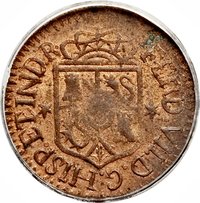
Description:
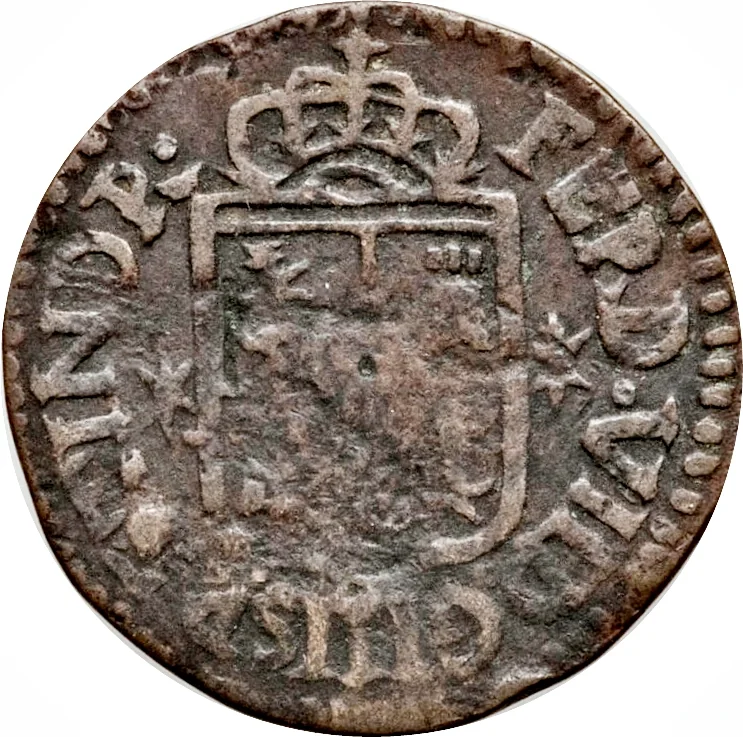
Spanish coat of arms crowned, flanked by elongated six-pointed stars.
Inscription:
FERD · VII D · G · HISP · ET · IND · R ·
Translation:
FERDINANDUS VII DEI GRATIA HISPANIARUM ET INDIARUM REX
FERDINAND THE SEVENTH, BY THE GRACE OF GOD, KING OF THE SPANIES AND THE INDIES.
FERDINAND THE SEVENTH, BY THE GRACE OF GOD, KING OF THE SPANIES AND THE INDIES.
Script: Latin
Language: Latin
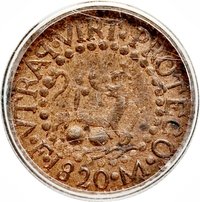
Reverse
Edge
Categories
| Animal> Feline |
| Symbols> Coat of Arms |
Mints
| Name | Mark |
|---|---|
| Manila | M |
Mintings
Historical background
In 1817, the Philippine currency situation was characterized by a complex and often chaotic multiplicity of circulating mediums, a legacy of its colonial history under Spain and its role in the global galleon trade. The official currency was the Spanish silver peso or "real de a ocho," but its supply was chronically insufficient for local needs. This scarcity was exacerbated by the colony's economic isolation from Spain and the fact that much silver was exported to pay for goods from China and other Asian ports. Consequently, a wide variety of foreign coins circulated freely, including Mexican pesos, Peruvian and Bolivian coins, and even Indian rupees and Dutch guilders, their values fluctuating based on silver content and local demand.
To address the chronic shortage of small change, the Spanish colonial government took a significant step in 1817 by authorizing the minting of the first copper coins specifically for the Philippines. These coins, known as "sencillos" or "cuartos," were minted in Manila and bore the profile of King Ferdinand VII. Their introduction was a practical attempt to facilitate everyday minor transactions, which had previously relied on inefficient methods like cutting silver coins into pieces or using promissory notes from religious institutions. However, the public initially met these copper coins with distrust, fearing they were a mere token currency with no intrinsic value, leading to slow acceptance.
Overall, the monetary landscape in 1817 was one of transition and inconsistency. While the new copper coinage marked the beginning of a more formalized local currency system, it did not immediately resolve the underlying problems. The economy still operated on a de facto silver standard dominated by heterogeneous foreign coins, with no central bank to regulate supply or value. This fragmented system reflected the Philippines' position as a distant colonial outpost with a trade-oriented economy, setting the stage for ongoing monetary reforms and instability throughout the rest of the 19th century.
To address the chronic shortage of small change, the Spanish colonial government took a significant step in 1817 by authorizing the minting of the first copper coins specifically for the Philippines. These coins, known as "sencillos" or "cuartos," were minted in Manila and bore the profile of King Ferdinand VII. Their introduction was a practical attempt to facilitate everyday minor transactions, which had previously relied on inefficient methods like cutting silver coins into pieces or using promissory notes from religious institutions. However, the public initially met these copper coins with distrust, fearing they were a mere token currency with no intrinsic value, leading to slow acceptance.
Overall, the monetary landscape in 1817 was one of transition and inconsistency. While the new copper coinage marked the beginning of a more formalized local currency system, it did not immediately resolve the underlying problems. The economy still operated on a de facto silver standard dominated by heterogeneous foreign coins, with no central bank to regulate supply or value. This fragmented system reflected the Philippines' position as a distant colonial outpost with a trade-oriented economy, setting the stage for ongoing monetary reforms and instability throughout the rest of the 19th century.
⭐ Rare