

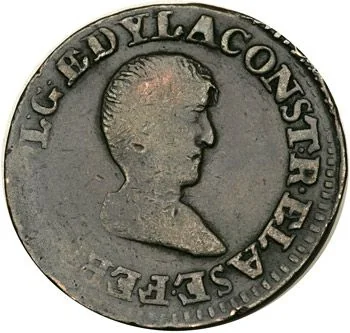
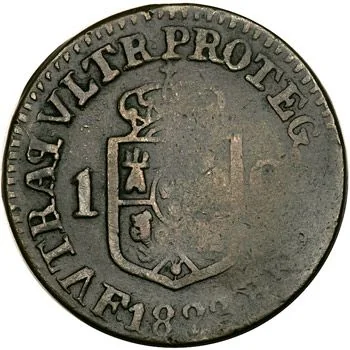
1 quarto – Philippines
Add to wishlist
Philippines
Context
Years: 1822–1824
Issuer: Philippines
Ruler: Ferdinand VII
Currency:
(1700—1857)
Subdivision: 1 quarto = ¼ Real
Demonetized: Yes
Material
References
KM: #
Numista: #310049
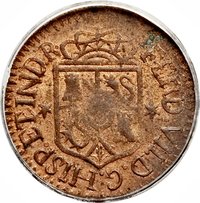
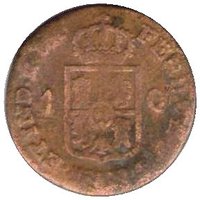
Obverse
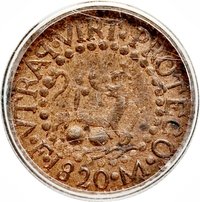
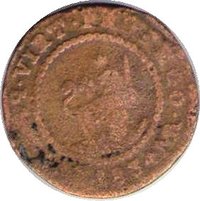
Reverse
Description:
Crowned Spanish arms flank value.
Inscription:
VTRAq · VLTR · PROTEG · MAN · R ·
F 1823
1 Q
F 1823
1 Q
Script: Latin
Edge
Categories
| Symbols> Coat of Arms |
| Person> Monarch |
Mints
| Name | Mark |
|---|---|
| Manila | — |
Mintings
| Year | Mint Mark | Mintage | Quality | Collection |
|---|---|---|---|---|
| 1822 | — | — | ||
| 1823 | — | — | ||
| 1824 | — | — |
Historical background
In 1822, the Philippines operated under a complex and strained monetary system, a legacy of its colonial history under Spain. The official currency was the Spanish silver peso, often called the "peso fuerte" (strong peso), which was part of the broader Spanish-American peso system renowned for its high silver content. However, the colony suffered from a chronic shortage of these official coins due to restrictive mercantilist policies, the outflow of silver to pay for trade deficits with Asia, and the costs of administering the distant colony. This scarcity crippled everyday commerce and stifled economic growth.
To fill the void, a bewildering variety of alternative currencies circulated. These included Mexican and Peruvian silver coins (often cut or clipped), low-quality copper coins called "cuartos" or "sencillos" for small transactions, and even pre-Hispanic gold ornaments and barter in remote areas. Most significantly, the Spanish government had authorized the issuance of paper money, "pesos fuertes" notes, by the Real Banco Español de Isabel II in Manila starting in the 1820s. These were among the first banknotes in Asia, but public trust in paper currency was extremely low, and they saw limited acceptance outside of major mercantile transactions in the capital.
The year 1822 fell within a period of particular monetary instability. Spain itself was in political turmoil following the liberal Trienio (1820–1823), which had reverberations in Manila. The authority and credibility of colonial institutions, including the bank issuing notes, were under pressure. Consequently, the currency situation was characterized by confusion, multiple exchange rates between different coin types, and widespread counterfeiting. This unstable environment hindered both internal trade and the archipelago's integration into global commerce, a problem that would persist until more substantial monetary reforms were enacted later in the 19th century.
To fill the void, a bewildering variety of alternative currencies circulated. These included Mexican and Peruvian silver coins (often cut or clipped), low-quality copper coins called "cuartos" or "sencillos" for small transactions, and even pre-Hispanic gold ornaments and barter in remote areas. Most significantly, the Spanish government had authorized the issuance of paper money, "pesos fuertes" notes, by the Real Banco Español de Isabel II in Manila starting in the 1820s. These were among the first banknotes in Asia, but public trust in paper currency was extremely low, and they saw limited acceptance outside of major mercantile transactions in the capital.
The year 1822 fell within a period of particular monetary instability. Spain itself was in political turmoil following the liberal Trienio (1820–1823), which had reverberations in Manila. The authority and credibility of colonial institutions, including the bank issuing notes, were under pressure. Consequently, the currency situation was characterized by confusion, multiple exchange rates between different coin types, and widespread counterfeiting. This unstable environment hindered both internal trade and the archipelago's integration into global commerce, a problem that would persist until more substantial monetary reforms were enacted later in the 19th century.
✨ Legendary