

Obverse
Description:
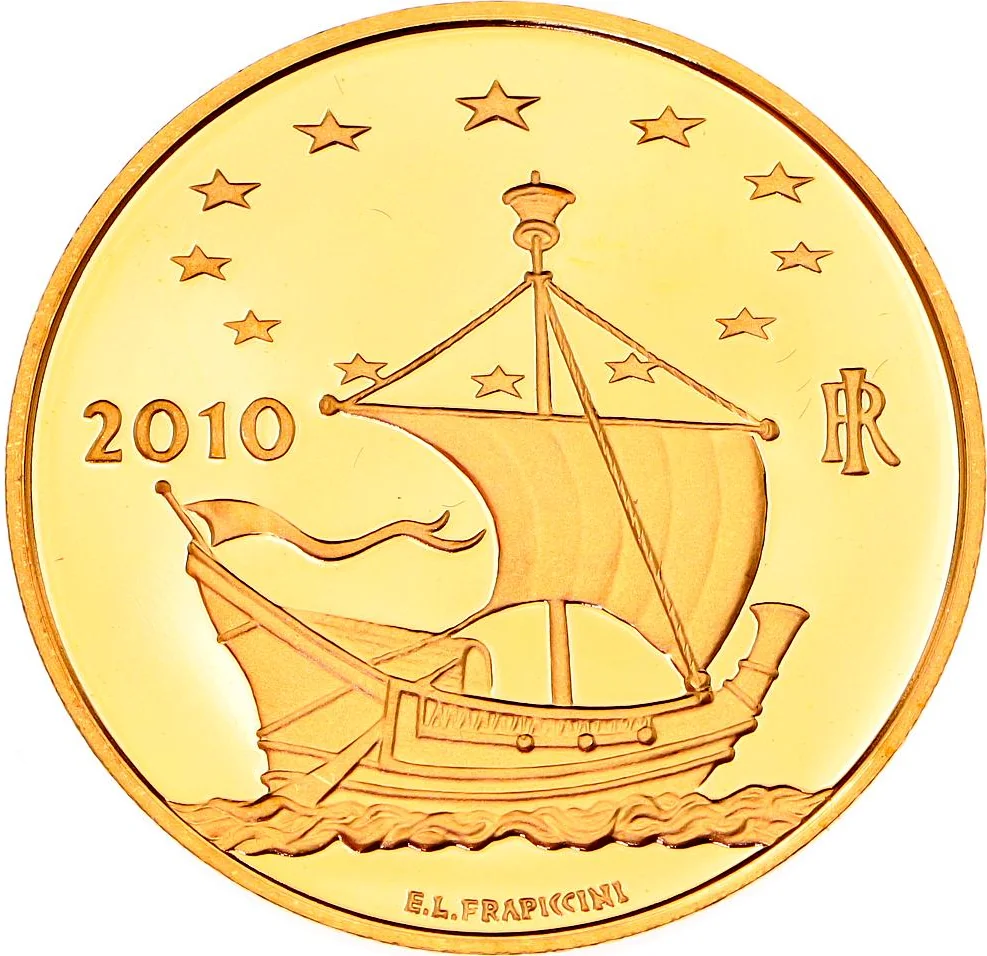
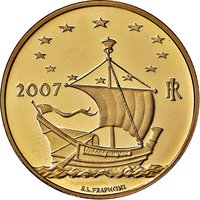
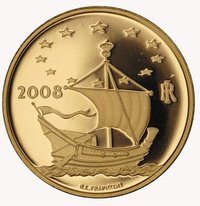
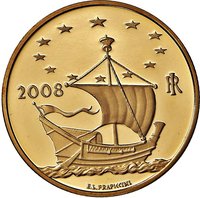
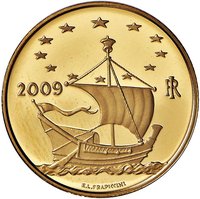
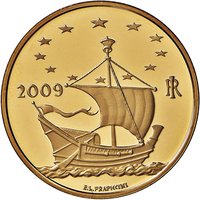
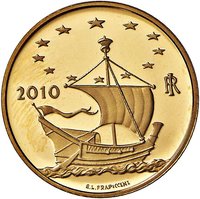
Europe depicted as a ship sailing under the EU's twelve stars. Left: issue year. Right: "RI" monogram. Bottom center: author's name.
Inscription:
2010 RI
E. L. FRAPICCINI
E. L. FRAPICCINI
Translation:
Edward Louis Frapiccini
Script: Latin
Engraver: Ettore Lorenzo Frapiccini
Reverse
Description:
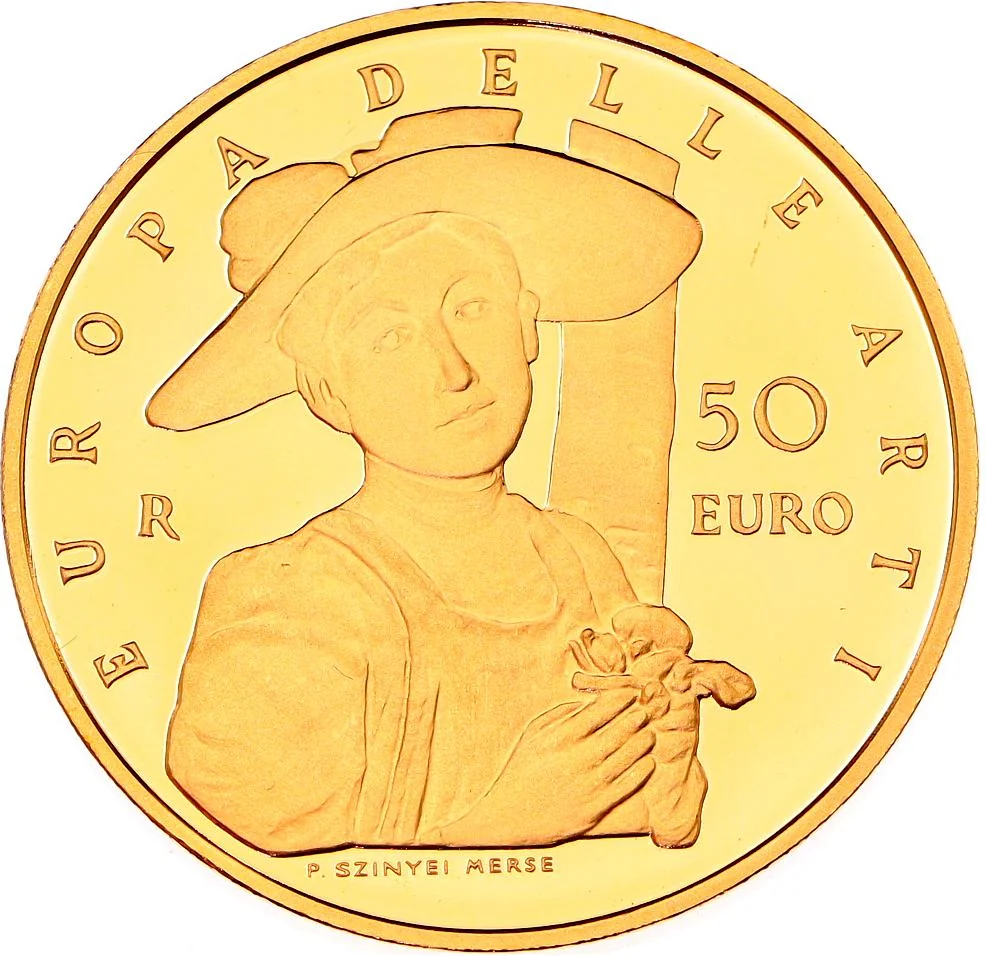
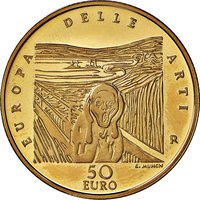
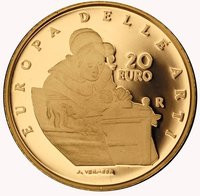
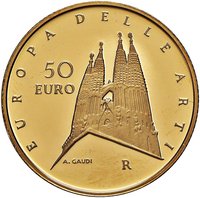
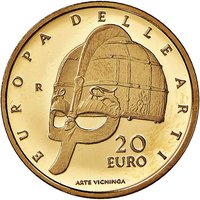
Detail of "Rozsi Szinyei Merse" by Szinyei Merse. Mint mark left, value right.
Inscription:
EUROPA DELLE ARTI
R
50 EURO
P. SZINYEI MERSE
R
50 EURO
P. SZINYEI MERSE
Translation:
Europe of the Arts
R
50 Euro
P. Szinyei Merse
R
50 Euro
P. Szinyei Merse
Script: Latin
Engraver: Ettore Lorenzo Frapiccini
Edge
Milled
Categories
| Plants> Flower |
| Transportation> Watercraft |
| Art> Painting |
| Object> Hat |
Mints
| Name | Mark |
|---|---|
| Rome | R |
Mintings
| Year | Mint Mark | Mintage | Quality | Collection |
|---|---|---|---|---|
| 2010 | R | 1,350 | Proof |
Historical background
In 2010, Italy's currency situation was defined by its membership in the Eurozone, having adopted the euro as its sole legal tender in 2002. The country was therefore insulated from direct currency crises or speculative attacks on the lira, which had been a recurrent feature of the 1990s. However, this stability came at a significant cost: Italy had relinquished control over its monetary policy to the European Central Bank (ECB), which set interest rates for the entire Eurozone. This meant Italy could not devalue its currency to regain competitiveness, a traditional tool for addressing its chronic issues of low growth and high public debt.
The core challenge was a severe loss of economic competitiveness within the Eurozone, often referred to as the "Southern European disease." Since adopting the euro, Italy's unit labor costs had risen dramatically compared to Germany's, making its exports less competitive. This, combined with anaemic productivity growth, led to a decade of economic stagnation even before the 2008 global financial crisis. The Great Recession then exposed these structural weaknesses, causing a deep recession in 2009 and sending Italy's already towering public debt—over 115% of GDP in 2010—to perilous levels.
Consequently, while Italy did not face a currency crisis per se in 2010, it was entering a period of intense market pressure as part of the wider European sovereign debt crisis. Investors began to scrutinize Italy's high debt and poor growth prospects, leading to a widening spread between Italian and German government bond yields. This rising borrowing cost signaled growing market skepticism about Italy's long-term solvency within the monetary union, setting the stage for the severe debt crisis and political turmoil that would engulf the country in 2011-2012.
The core challenge was a severe loss of economic competitiveness within the Eurozone, often referred to as the "Southern European disease." Since adopting the euro, Italy's unit labor costs had risen dramatically compared to Germany's, making its exports less competitive. This, combined with anaemic productivity growth, led to a decade of economic stagnation even before the 2008 global financial crisis. The Great Recession then exposed these structural weaknesses, causing a deep recession in 2009 and sending Italy's already towering public debt—over 115% of GDP in 2010—to perilous levels.
Consequently, while Italy did not face a currency crisis per se in 2010, it was entering a period of intense market pressure as part of the wider European sovereign debt crisis. Investors began to scrutinize Italy's high debt and poor growth prospects, leading to a widening spread between Italian and German government bond yields. This rising borrowing cost signaled growing market skepticism about Italy's long-term solvency within the monetary union, setting the stage for the severe debt crisis and political turmoil that would engulf the country in 2011-2012.
Series: Europe of Arts
✨ Legendary