

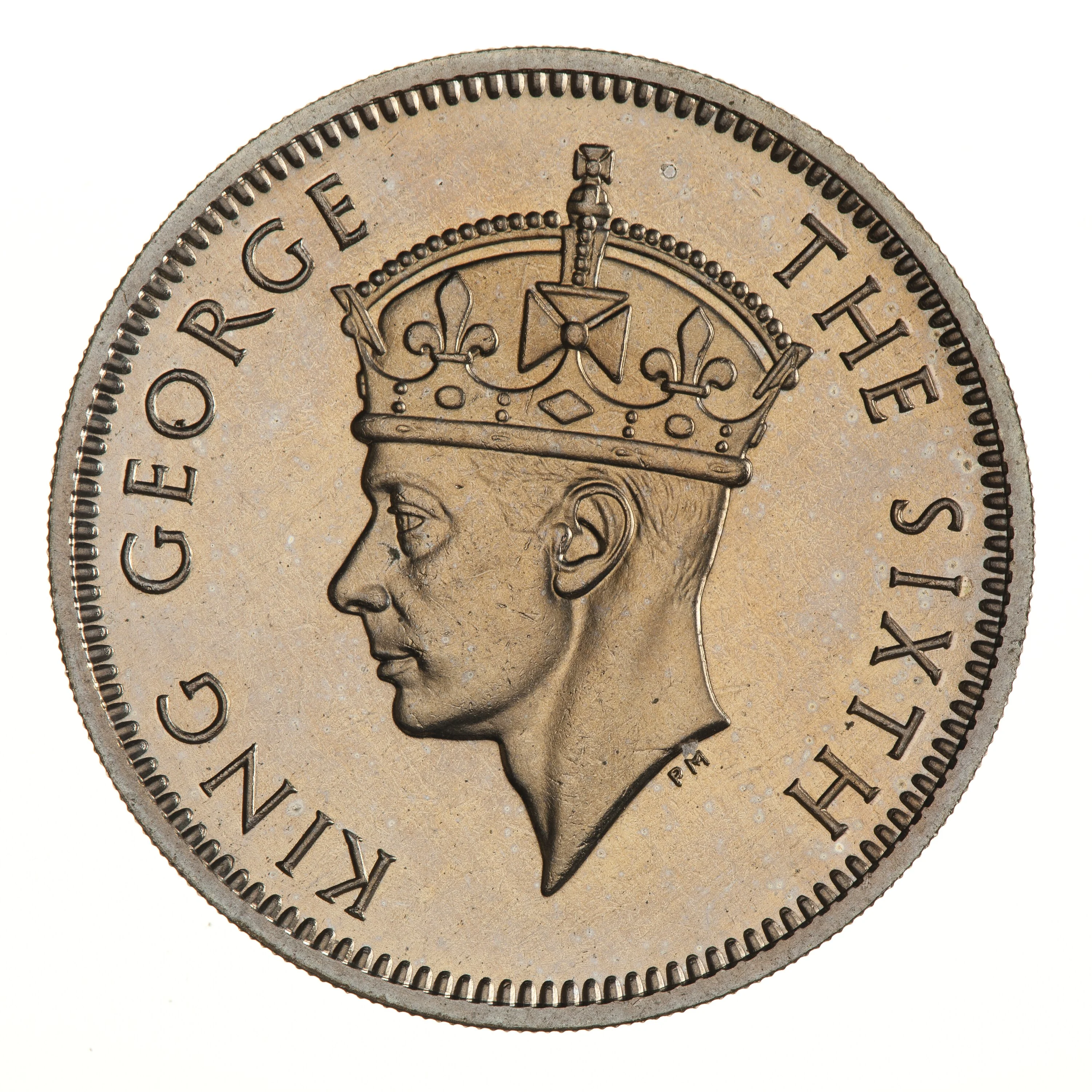
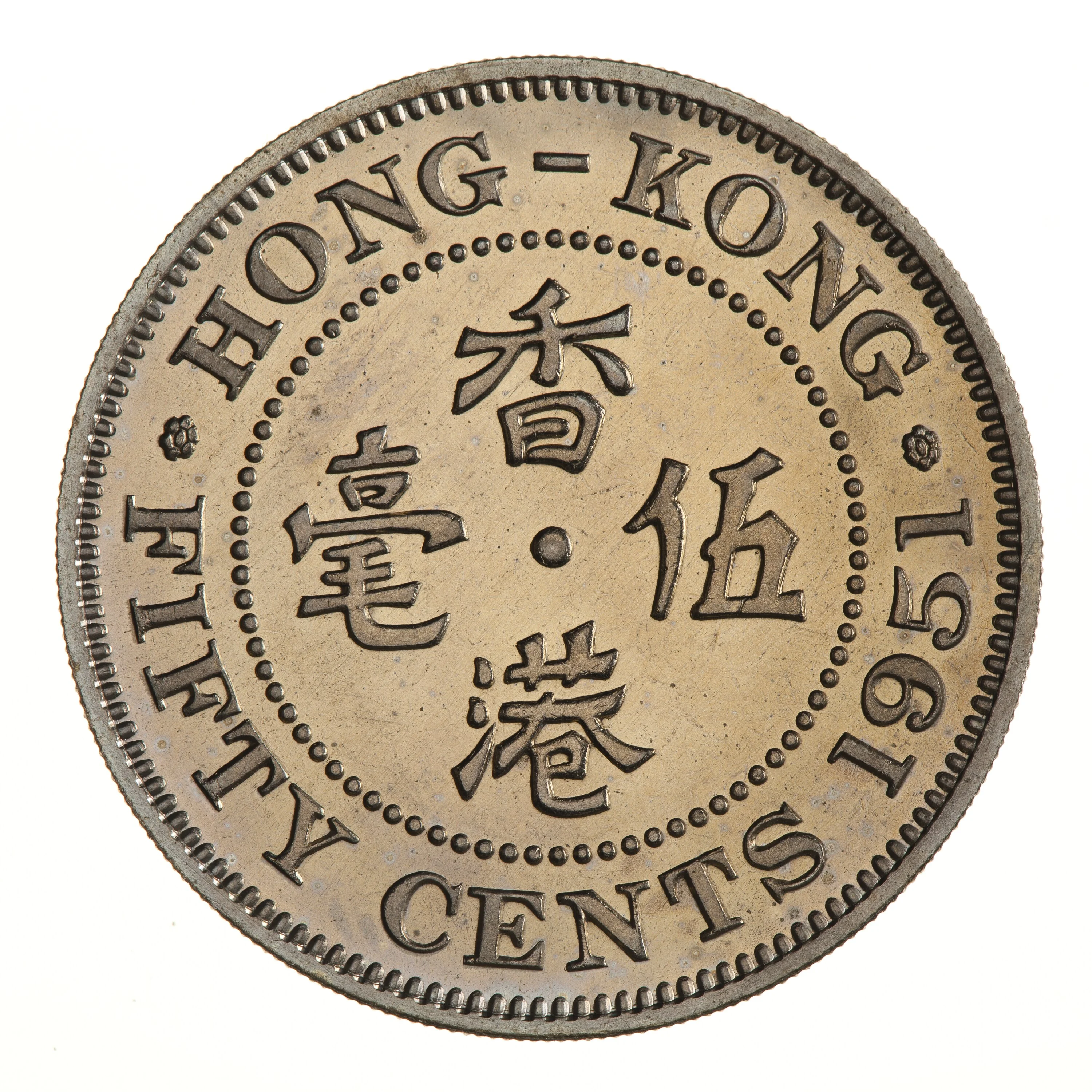
50 cents – Hong Kong
Add to wishlist
China
Context
Material
Diameter: 23.5 mm
Weight: 5.85 g
Thickness: 2 mm
Shape: Round
Composition: Copper-nickel
Technique: Milled
Alignment: Medal alignment
flip
References
KM: #
Numista: #6140
Value
Exchange value: 0.50 HKD
Obverse
Description:
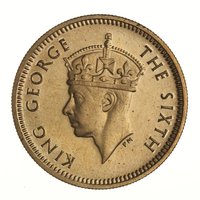
Crowned left-facing bust.
Inscription:
KING GEORGE THE SIXTH
Translation:
KING GEORGE THE SIXTH
Script: Latin
Language: English
Engraver: Percy Metcalfe
Reverse
Edge
Security edge
Mints
| Name | Mark |
|---|---|
| Royal Mint (Tower Hill) | — |
Mintings
| Year | Mint Mark | Mintage | Quality | Collection |
|---|---|---|---|---|
| 1951 | — | 15,000,000 | ||
| 1951 | — | — | Proof | |
| 1951 | — | — | BU |
Historical background
In 1951, Hong Kong's currency situation was defined by its unique colonial status and the turbulent economic aftermath of the Second World War and the Chinese Civil War. The Hong Kong dollar, issued by a small group of commercial banks under government supervision, was pegged to the British pound sterling at a fixed rate of HK$16 = £1. This sterling peg, established in 1935, provided a crucial anchor for stability. However, the system was under significant strain due to Hong Kong's role as a critical entrepôt and financial conduit between a China now under communist rule and the outside world, amidst the trade embargoes of the Korean War.
The economic landscape was one of rapid transformation and speculative pressure. The influx of refugees, capital, and entrepreneurial talent from mainland China fueled a nascent industrial boom, increasing demand for local currency. Simultaneously, the political separation from the mainland and international sanctions severed many traditional trade links, creating currency volatility. A major challenge was the widespread circulation of the "Gold Yuan" and "Silver Yuan" notes from the defunct Republic of China, which refugees had brought in large quantities, creating a complex multi-currency environment that complicated transactions and monetary control.
Despite these pressures, the Hong Kong government and banking system successfully maintained the sterling peg, prioritizing stability above all else. This commitment was vital for fostering the confidence needed for trade and the emerging manufacturing sector. The period solidified the authorities' preference for a rigid, externally anchored exchange rate regime—a philosophy that would persist and later evolve into the modern Linked Exchange Rate System (LERS) with the US dollar in 1983. Thus, 1951 was a year where Hong Kong's monetary system, while tested, began to demonstrate the resilience that would underpin its future as a global financial centre.
The economic landscape was one of rapid transformation and speculative pressure. The influx of refugees, capital, and entrepreneurial talent from mainland China fueled a nascent industrial boom, increasing demand for local currency. Simultaneously, the political separation from the mainland and international sanctions severed many traditional trade links, creating currency volatility. A major challenge was the widespread circulation of the "Gold Yuan" and "Silver Yuan" notes from the defunct Republic of China, which refugees had brought in large quantities, creating a complex multi-currency environment that complicated transactions and monetary control.
Despite these pressures, the Hong Kong government and banking system successfully maintained the sterling peg, prioritizing stability above all else. This commitment was vital for fostering the confidence needed for trade and the emerging manufacturing sector. The period solidified the authorities' preference for a rigid, externally anchored exchange rate regime—a philosophy that would persist and later evolve into the modern Linked Exchange Rate System (LERS) with the US dollar in 1983. Thus, 1951 was a year where Hong Kong's monetary system, while tested, began to demonstrate the resilience that would underpin its future as a global financial centre.
🌱 Very Common