

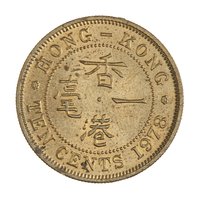
10 cents – Hong Kong
Add to wishlist
China
Context
Years: 1955–1968
Country: China
Issuer: Hong Kong
Ruler: Elizabeth II
Currency:
(since 1863)
Demonetization: 31 December 1988
Total mintage: 243,608,000
Material
References
KM: #
Numista: #1574
Value
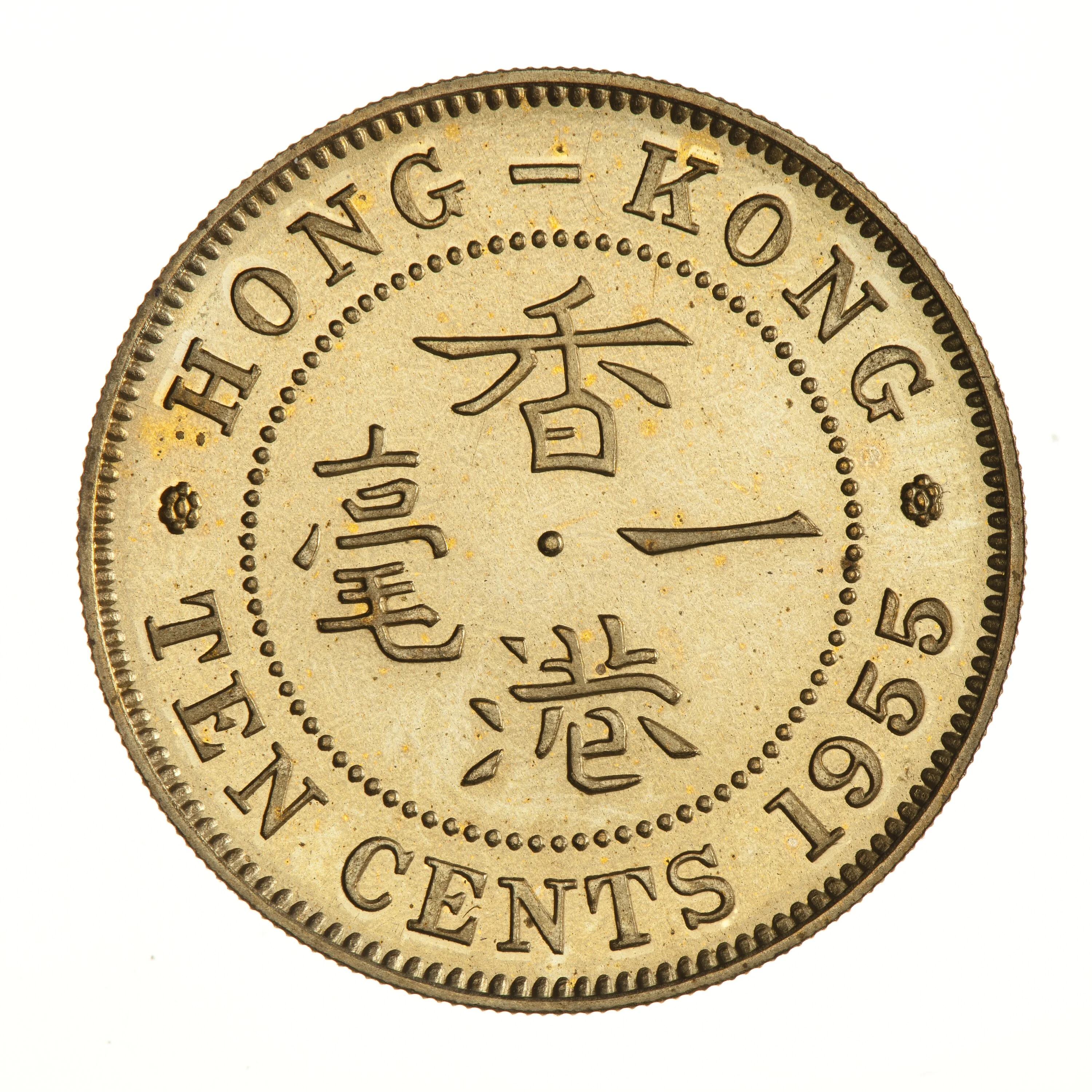
Exchange value: 0.10 HKD
Obverse
Description:
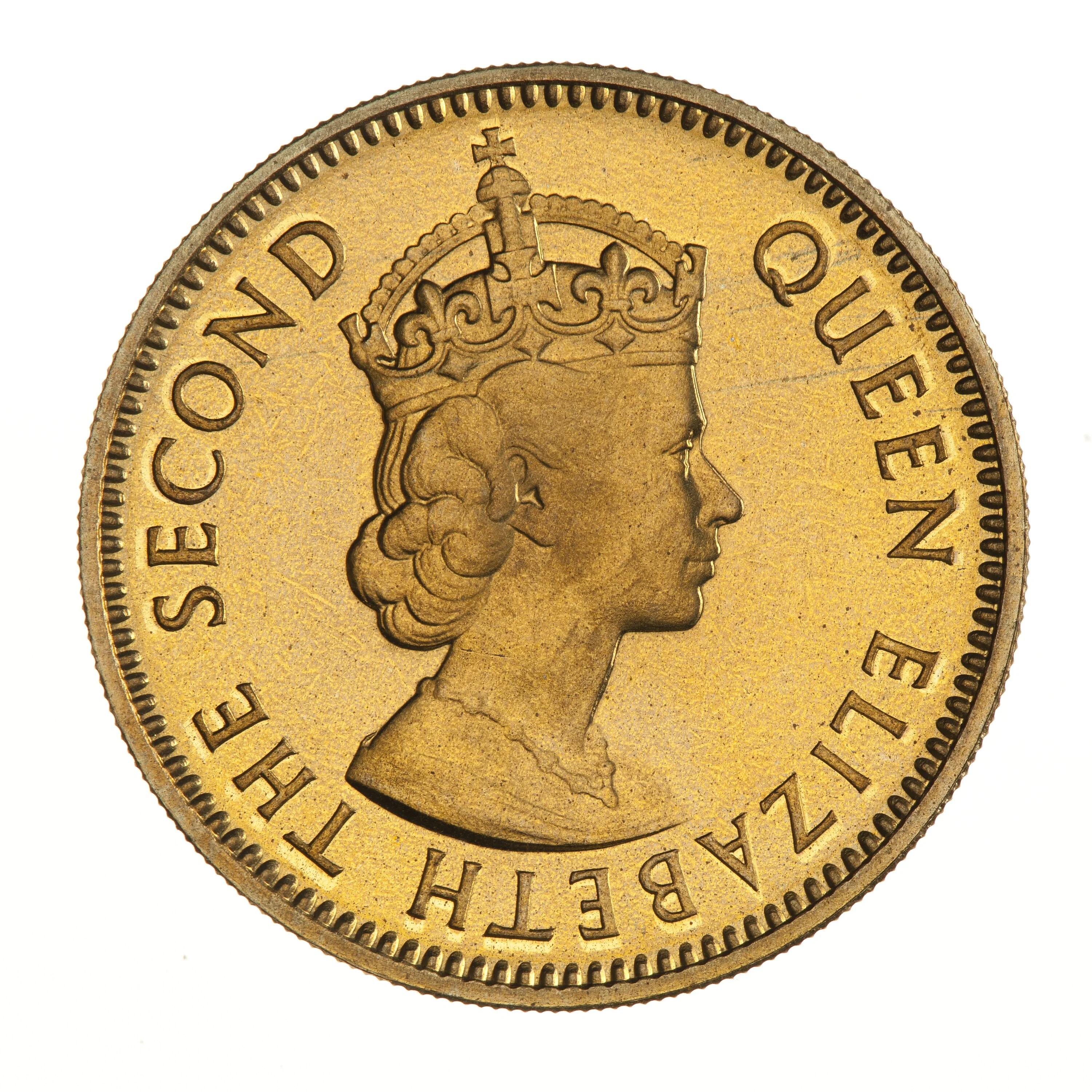
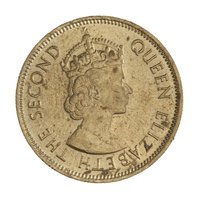
Queen Elizabeth II right-facing bust
Inscription:
QUEEN ELIZABETH THE SECOND
Script: Latin
Engraver: Cecil Thomas
Reverse
Edge
Security edge
Mints
| Name | Mark |
|---|---|
| Royal Mint (Tower Hill) | — |
| Heaton and Sons / The Mint Birmingham | H |
| Kings Norton Metal Company | KN |
Mintings
| Year | Mint Mark | Mintage | Quality | Collection |
|---|---|---|---|---|
| 1955 | — | 10,000,000 | ||
| 1955 | — | — | Proof | |
| 1956 | KN | 2,500,000 | ||
| 1956 | — | 3,110,000 | ||
| 1956 | — | — | Proof | |
| 1956 | H | 4,448,000 | ||
| 1957 | H | 5,250,000 | ||
| 1957 | KN | 2,800,000 | ||
| 1958 | KN | 10,000,000 | ||
| 1959 | H | 20,000,000 | ||
| 1960 | — | — | Proof | |
| 1960 | — | 12,500,000 | ||
| 1960 | H | 10,000,000 | ||
| 1961 | — | — | Proof | |
| 1961 | — | 20,000,000 | ||
| 1961 | H | 5,000,000 | ||
| 1961 | KN | 5,000,000 | ||
| 1963 | — | — | Proof | |
| 1963 | H | 3,000,000 | ||
| 1963 | KN | — | ||
| 1963 | — | 27,000,000 | ||
| 1964 | — | 9,000,000 | ||
| 1964 | H | 21,000,000 | ||
| 1965 | — | 40,000,000 | ||
| 1965 | H | 8,000,000 | ||
| 1965 | KN | — | ||
| 1967 | — | 10,000,000 | ||
| 1968 | H | 15,000,000 |
Historical background
In 1955, Hong Kong's currency situation was defined by the stability of the Hong Kong dollar (HKD), which operated under a sterling exchange standard. The colony's currency was managed by the Exchange Fund, established in 1935, and its value was pegged to the British pound sterling at a fixed rate of HKD $16 = £1. This peg provided crucial monetary stability and facilitated Hong Kong's role as an entrepôt, linking sterling-area trade with the rest of Asia. The notes in circulation were issued by three authorized commercial banks—The Hongkong and Shanghai Banking Corporation (HSBC), the Chartered Bank, and the Mercantile Bank—with their issuance backed by sterling reserves held in London.
This period followed the turbulent years of the Japanese occupation and the immediate post-war reconstruction. The re-establishment of the sterling peg in 1946 had been vital for restoring confidence. By 1955, Hong Kong's economy was transitioning, with the beginnings of light industrialization starting to complement its traditional trading functions. The stable currency, underpinned by the sterling reserves, was essential for attracting investment and financing this nascent industrial growth, as it provided predictability for importers and exporters alike.
However, the system was not without its vulnerabilities. Hong Kong's monetary stability was entirely dependent on the strength of the British pound and the health of the United Kingdom's economy. Any sterling crisis or devaluation in London would have direct and immediate consequences for the Hong Kong dollar. Furthermore, while the banking system was robust by regional standards, the currency's issuance through private banks, rather than a central bank, represented a unique colonial model. This framework would remain largely unchanged until the financial turbulence of the 1970s eventually led to the decoupling from sterling and the establishment of the modern linked exchange rate system to the US dollar in 1983.
This period followed the turbulent years of the Japanese occupation and the immediate post-war reconstruction. The re-establishment of the sterling peg in 1946 had been vital for restoring confidence. By 1955, Hong Kong's economy was transitioning, with the beginnings of light industrialization starting to complement its traditional trading functions. The stable currency, underpinned by the sterling reserves, was essential for attracting investment and financing this nascent industrial growth, as it provided predictability for importers and exporters alike.
However, the system was not without its vulnerabilities. Hong Kong's monetary stability was entirely dependent on the strength of the British pound and the health of the United Kingdom's economy. Any sterling crisis or devaluation in London would have direct and immediate consequences for the Hong Kong dollar. Furthermore, while the banking system was robust by regional standards, the currency's issuance through private banks, rather than a central bank, represented a unique colonial model. This framework would remain largely unchanged until the financial turbulence of the 1970s eventually led to the decoupling from sterling and the establishment of the modern linked exchange rate system to the US dollar in 1983.
🌱 Very Common