

Obverse
Description:
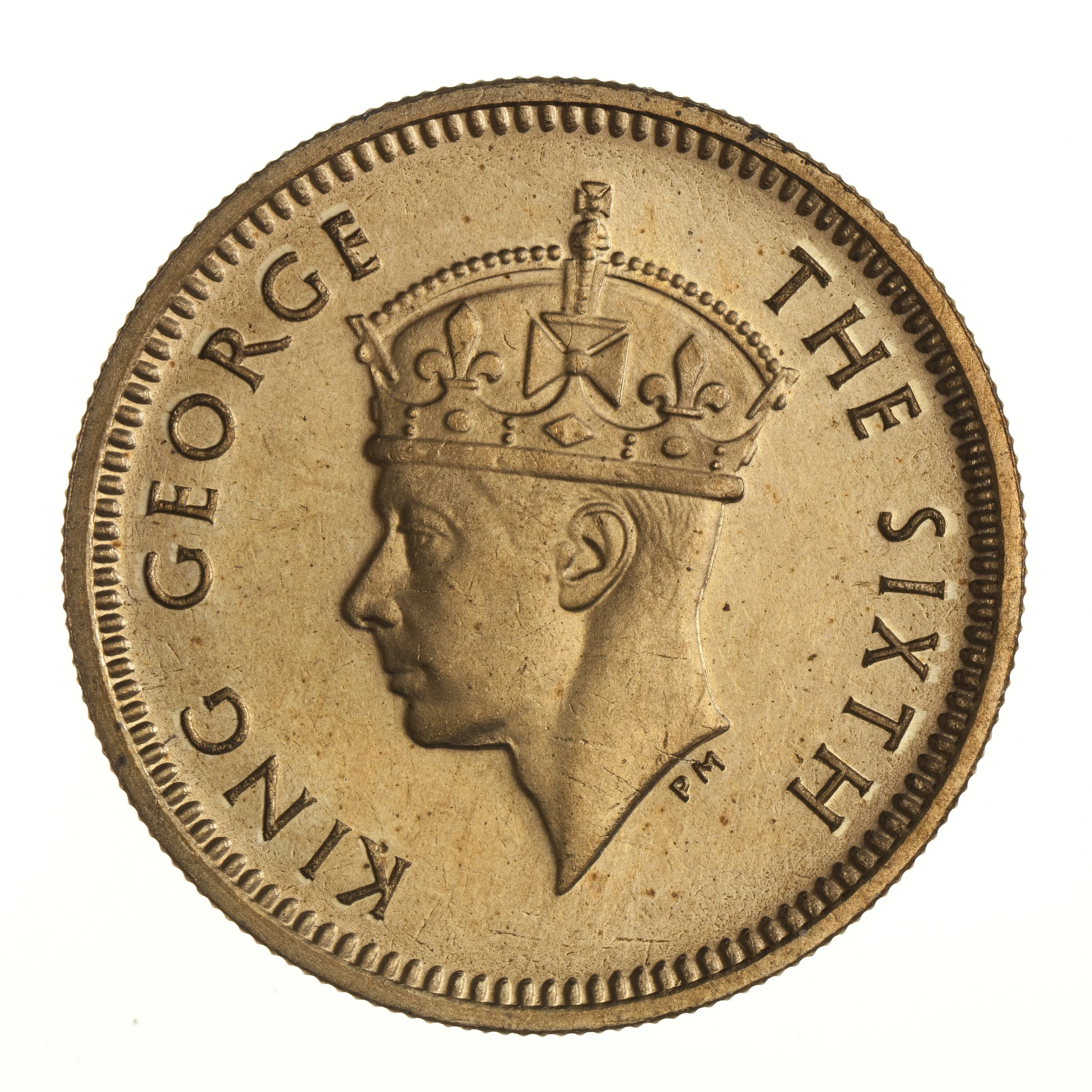
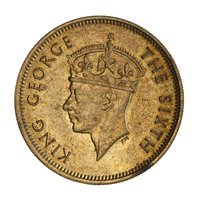
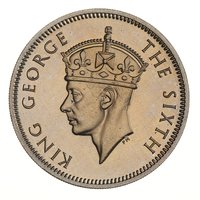
Crowned left-facing bust.
Inscription:
KING GEORGE THE SIXTH
Translation:
KING GEORGE THE SIXTH
Script: Latin
Language: English
Engraver: Percy Metcalfe
Reverse
Edge
Security edge
Mints
| Name | Mark |
|---|---|
| Royal Mint (Tower Hill) | — |
Mintings
| Year | Mint Mark | Mintage | Quality | Collection |
|---|---|---|---|---|
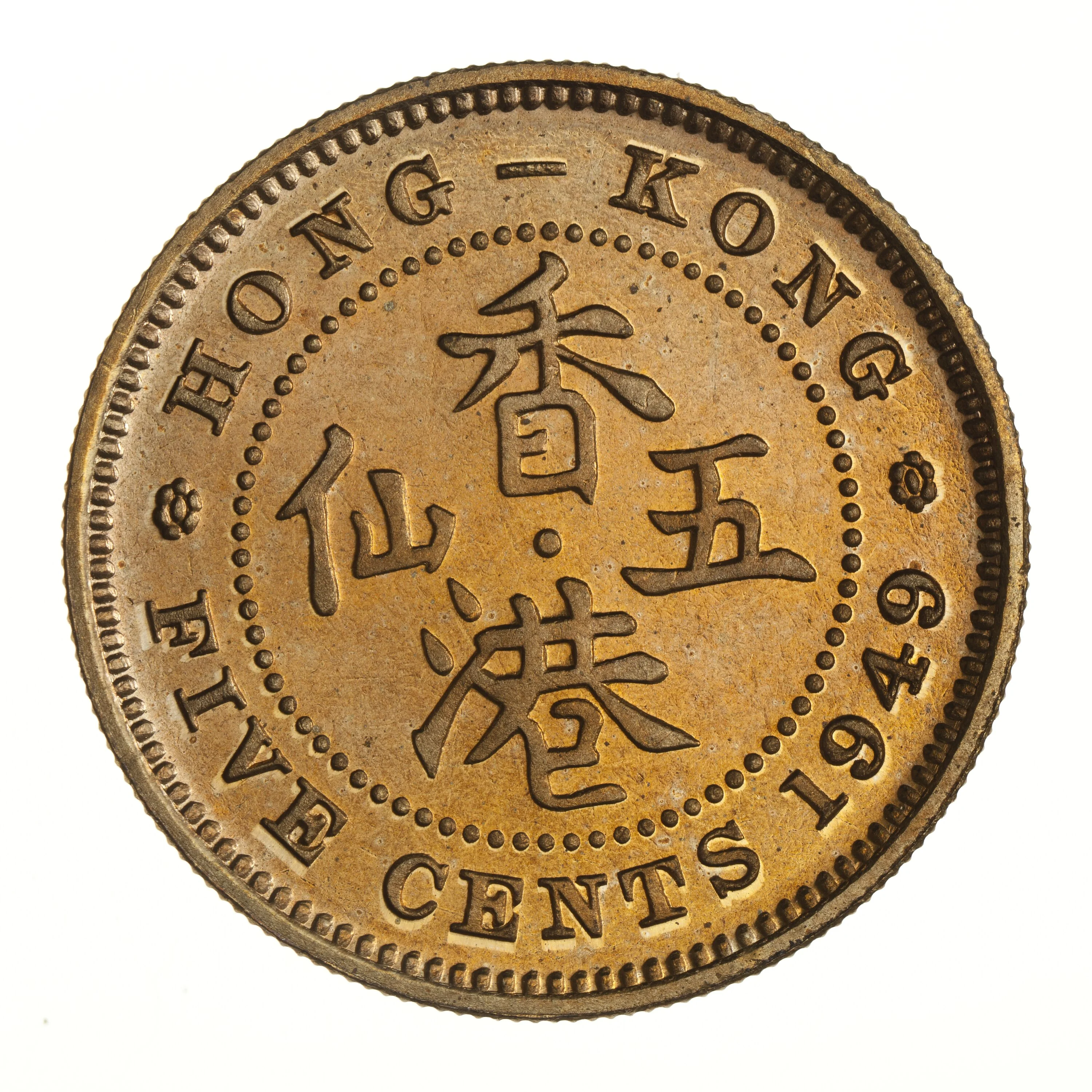
| 1949 | — | 15,000,000 | ||
| 1949 | — | — | Proof | |
| 1950 | — | 20,400,000 | ||
| 1950 | — | — | Proof |
Historical background
In 1949, Hong Kong's currency situation was defined by its unique colonial status amidst the seismic political shift occurring across the border. The British administration maintained the Hong Kong dollar, which was pegged to the pound sterling under the colonial monetary system. However, the currency's stability was challenged by the ongoing Chinese Civil War, culminating in the Communist victory and the establishment of the People's Republic of China in October 1949. This triggered a massive influx of refugees and capital into Hong Kong, creating significant monetary pressures.
The financial system was flooded with various forms of money, most notably the "Gold Yuan" and "Silver Yuan" notes issued by the collapsing Nationalist (Kuomintang) government. These notes became virtually worthless, leading to a crisis of confidence. Hong Kong authorities moved decisively to protect the local economy, demonetizing these Nationalist currencies by the end of the year and reaffirming the Hong Kong dollar as the sole legal tender. This action was crucial in preventing hyperinflation and maintaining the colony's financial integrity.
Furthermore, the period set the stage for Hong Kong's future economic role. The influx of entrepreneurial capital and industrial expertise from Shanghai and other Chinese cities, fleeing the new Communist regime, provided the foundation for the colony's transformation into a manufacturing powerhouse. The successful stabilization of the currency in 1949, amidst regional turmoil, reinforced Hong Kong's position as a secure and separate financial haven from mainland China, a status it would carefully manage throughout the Cold War.
The financial system was flooded with various forms of money, most notably the "Gold Yuan" and "Silver Yuan" notes issued by the collapsing Nationalist (Kuomintang) government. These notes became virtually worthless, leading to a crisis of confidence. Hong Kong authorities moved decisively to protect the local economy, demonetizing these Nationalist currencies by the end of the year and reaffirming the Hong Kong dollar as the sole legal tender. This action was crucial in preventing hyperinflation and maintaining the colony's financial integrity.
Furthermore, the period set the stage for Hong Kong's future economic role. The influx of entrepreneurial capital and industrial expertise from Shanghai and other Chinese cities, fleeing the new Communist regime, provided the foundation for the colony's transformation into a manufacturing powerhouse. The successful stabilization of the currency in 1949, amidst regional turmoil, reinforced Hong Kong's position as a secure and separate financial haven from mainland China, a status it would carefully manage throughout the Cold War.
🌱 Very Common