

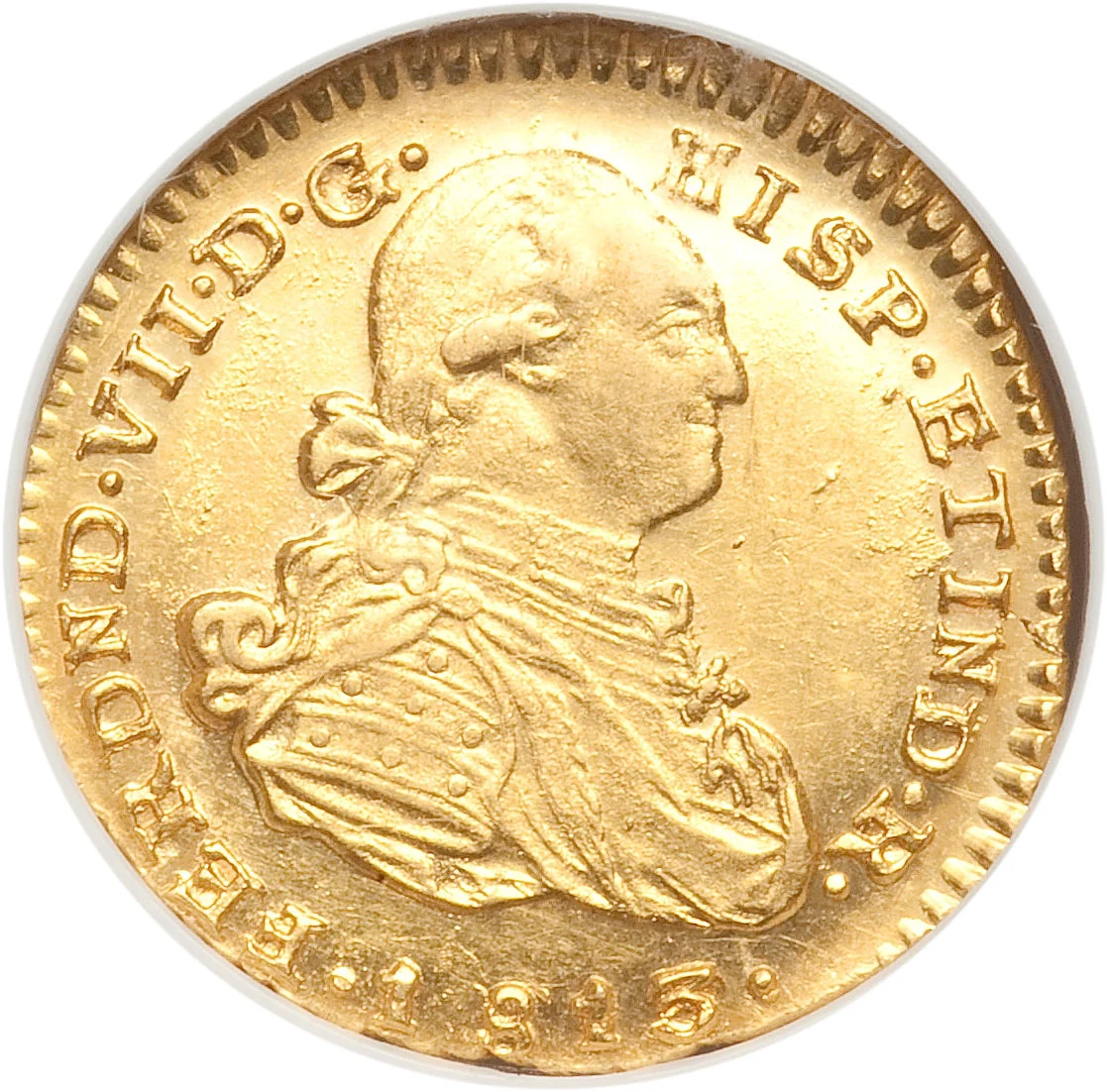
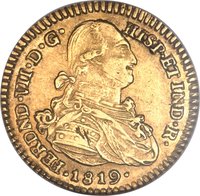
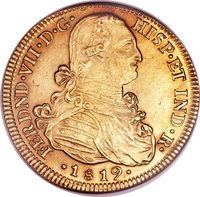
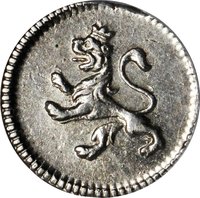
Obverse
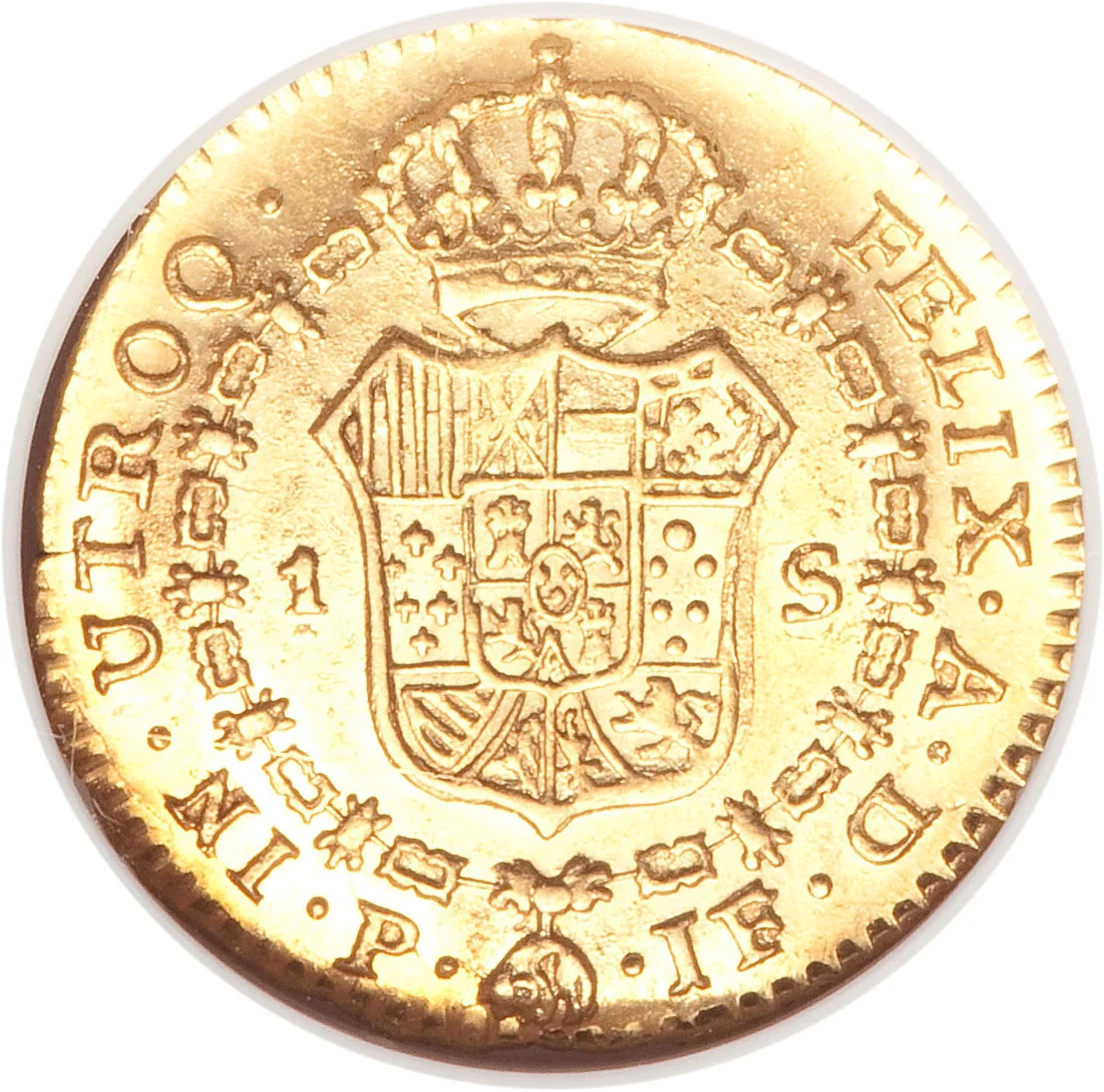
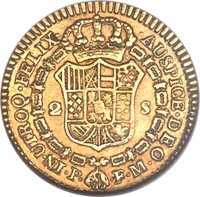
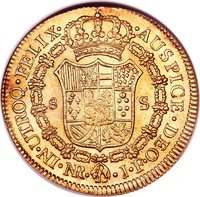
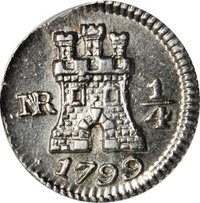
Reverse
Edge
Categories
| Symbols> Coat of Arms |
| Person> Monarch |
Mints
| Name | Mark |
|---|---|
| Bogota Mint | NR |
| Casa de Moneda de Colombia | P |
| Casa de Moneda de Colombia | PN |
Mintings
Historical background
In 1808, the currency situation in the Kingdom of New Granada (modern-day Colombia) was complex and fragmented, reflecting its colonial status under the Spanish Empire. The official monetary system was based on the Spanish silver real, with 8 reales equaling one silver peso (or "piece of eight"). Gold escudos were also minted, valued at 16 silver reales. However, the supply of officially minted coinage from the Bogotá mint was often insufficient for local commerce, leading to widespread circulation of worn, clipped, and counterfeit coins, as well as coins from other Spanish American mints like Potosí and Mexico. This created chronic problems of trust and valuation in everyday transactions.
The year 1808 was a critical juncture, not due to internal monetary reform, but because of the profound political shockwaves from Europe. The Napoleonic invasion of Spain and the abdication of King Ferdinand VII created a crisis of legitimacy and interrupted the traditional flow of royal authority and economic policy to the colony. While the physical currency in circulation did not immediately change, the political foundation that guaranteed its value began to erode. Local juntas, still professing loyalty to the captive king, began to assume governance, setting the stage for the eventual independence struggle.
Consequently, the monetary landscape was on the brink of a turbulent transition. The existing system was already strained by contraband, inconsistent coin quality, and a dual gold-silver standard. The political crisis of 1808 exacerbated these weaknesses, foreshadowing the severe currency chaos and inflationary periods that would follow during the Patria Boba and the wars of independence. In essence, 1808 represents the final year of a fragile colonial monetary order, soon to be destabilized by over a decade of conflict that would lead to the creation of a new nation's financial system.
The year 1808 was a critical juncture, not due to internal monetary reform, but because of the profound political shockwaves from Europe. The Napoleonic invasion of Spain and the abdication of King Ferdinand VII created a crisis of legitimacy and interrupted the traditional flow of royal authority and economic policy to the colony. While the physical currency in circulation did not immediately change, the political foundation that guaranteed its value began to erode. Local juntas, still professing loyalty to the captive king, began to assume governance, setting the stage for the eventual independence struggle.
Consequently, the monetary landscape was on the brink of a turbulent transition. The existing system was already strained by contraband, inconsistent coin quality, and a dual gold-silver standard. The political crisis of 1808 exacerbated these weaknesses, foreshadowing the severe currency chaos and inflationary periods that would follow during the Patria Boba and the wars of independence. In essence, 1808 represents the final year of a fragile colonial monetary order, soon to be destabilized by over a decade of conflict that would lead to the creation of a new nation's financial system.
💎 Extremely Rare