

Obverse
Description:
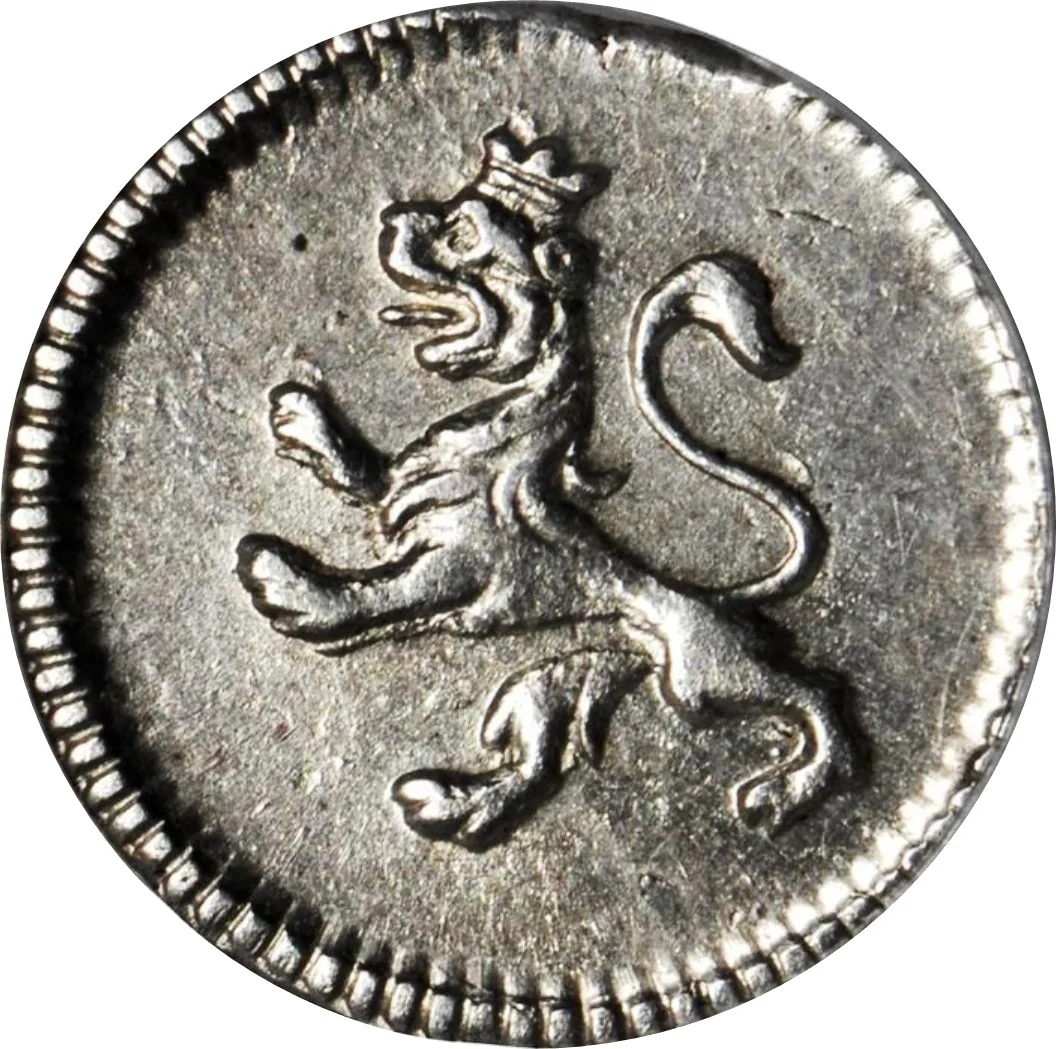
Crowned lion facing left.
Reverse
Edge
Mints
| Name | Mark |
|---|---|
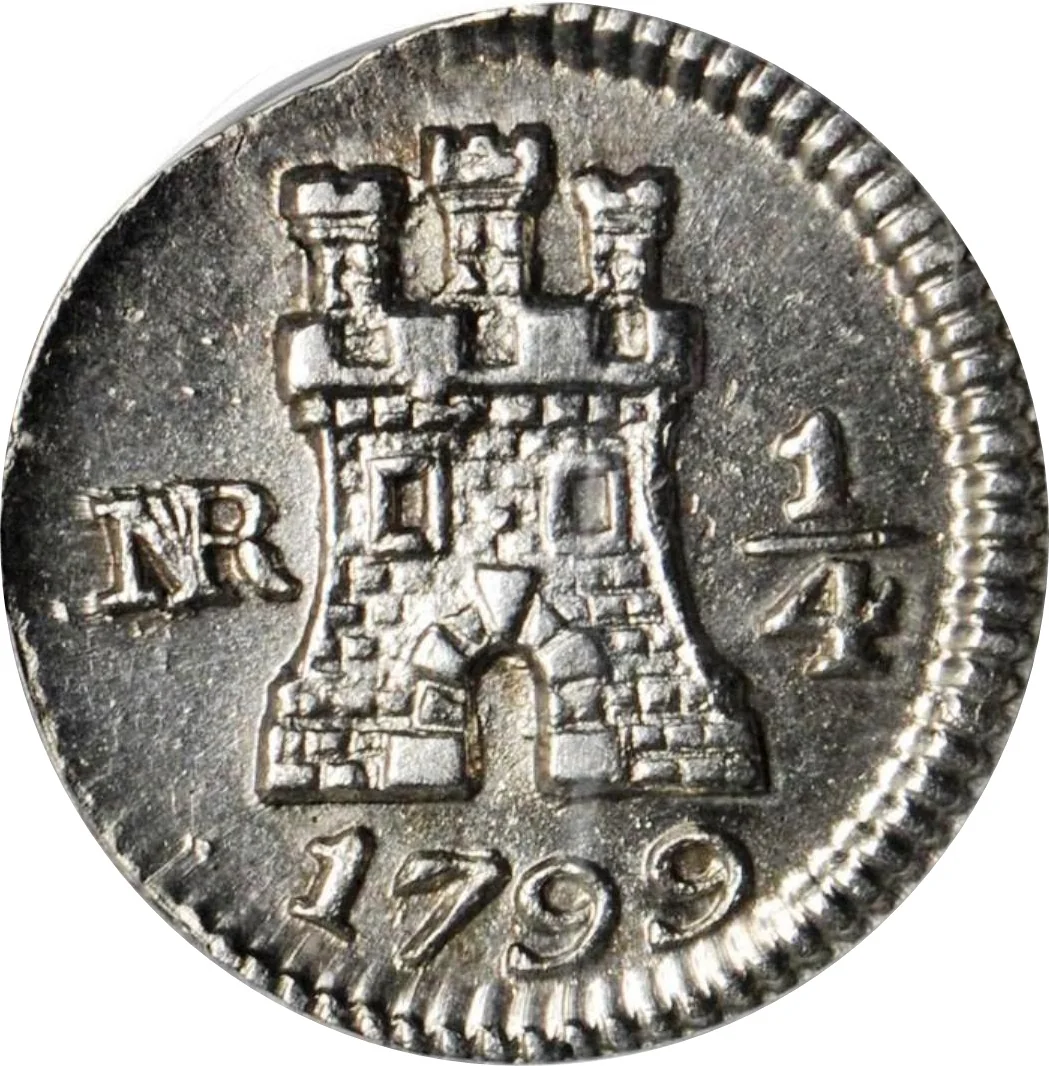
| Bogota Mint | (NR) |
Mintings
| Year | Mint Mark | Mintage | Quality | Collection |
|---|---|---|---|---|
| 1796 | NR | — | ||
| 1797 | NR | — | ||
| 1798 | NR | — | ||
| 1799 | NR | — | ||
| 1800 | NR | — | ||
| 1801 | NR | — | ||
| 1802 | NR | — | ||
| 1803 | NR | — | ||
| 1804 | NR | — | ||
| 1805 | NR | — | ||
| 1806 | NR | — | ||
| 1808 | NR | — |
Historical background
In 1796, the Viceroyalty of New Granada, encompassing modern-day Colombia, operated under a complex and strained monetary system inherited from Spain. The official currency was the Spanish colonial real, with eight reales equaling one silver peso. However, the economy suffered from a chronic shortage of precious metals for coinage, despite the region's significant gold production. This scarcity was exacerbated by mercantilist policies that drained silver and gold to Spain, leaving the local economy with insufficient hard currency for daily transactions and trade.
This scarcity led to a widespread reliance on substitute currencies, creating a chaotic monetary environment. To facilitate local commerce, various forms of credit, commodity money (like cacao in some areas), and most notably, macuquinas (crudely cut and hammered coins) circulated alongside official minted coins from the Bogotá mint. Furthermore, a vast array of foreign coins—including those from other Spanish colonies, Peruvian pesos, and even contraband European currencies—circulated with fluctuating and unofficial exchange rates. This heterogeneity made commerce cumbersome and fostered counterfeiting.
The situation was a significant point of administrative concern for Viceroy José de Ezpeleta. The monetary disorder hindered tax collection, complicated government accounting, and reflected the broader weaknesses of the Spanish colonial economic structure. While calls for reform were growing, any substantive change would require approval from the Crown. Thus, in 1796, the currency system remained an unstable patchwork, a tangible symptom of the fiscal pressures and administrative challenges that would contribute to the creole discontent leading to the independence movements just a few decades later.
This scarcity led to a widespread reliance on substitute currencies, creating a chaotic monetary environment. To facilitate local commerce, various forms of credit, commodity money (like cacao in some areas), and most notably, macuquinas (crudely cut and hammered coins) circulated alongside official minted coins from the Bogotá mint. Furthermore, a vast array of foreign coins—including those from other Spanish colonies, Peruvian pesos, and even contraband European currencies—circulated with fluctuating and unofficial exchange rates. This heterogeneity made commerce cumbersome and fostered counterfeiting.
The situation was a significant point of administrative concern for Viceroy José de Ezpeleta. The monetary disorder hindered tax collection, complicated government accounting, and reflected the broader weaknesses of the Spanish colonial economic structure. While calls for reform were growing, any substantive change would require approval from the Crown. Thus, in 1796, the currency system remained an unstable patchwork, a tangible symptom of the fiscal pressures and administrative challenges that would contribute to the creole discontent leading to the independence movements just a few decades later.
💎 Extremely Rare