

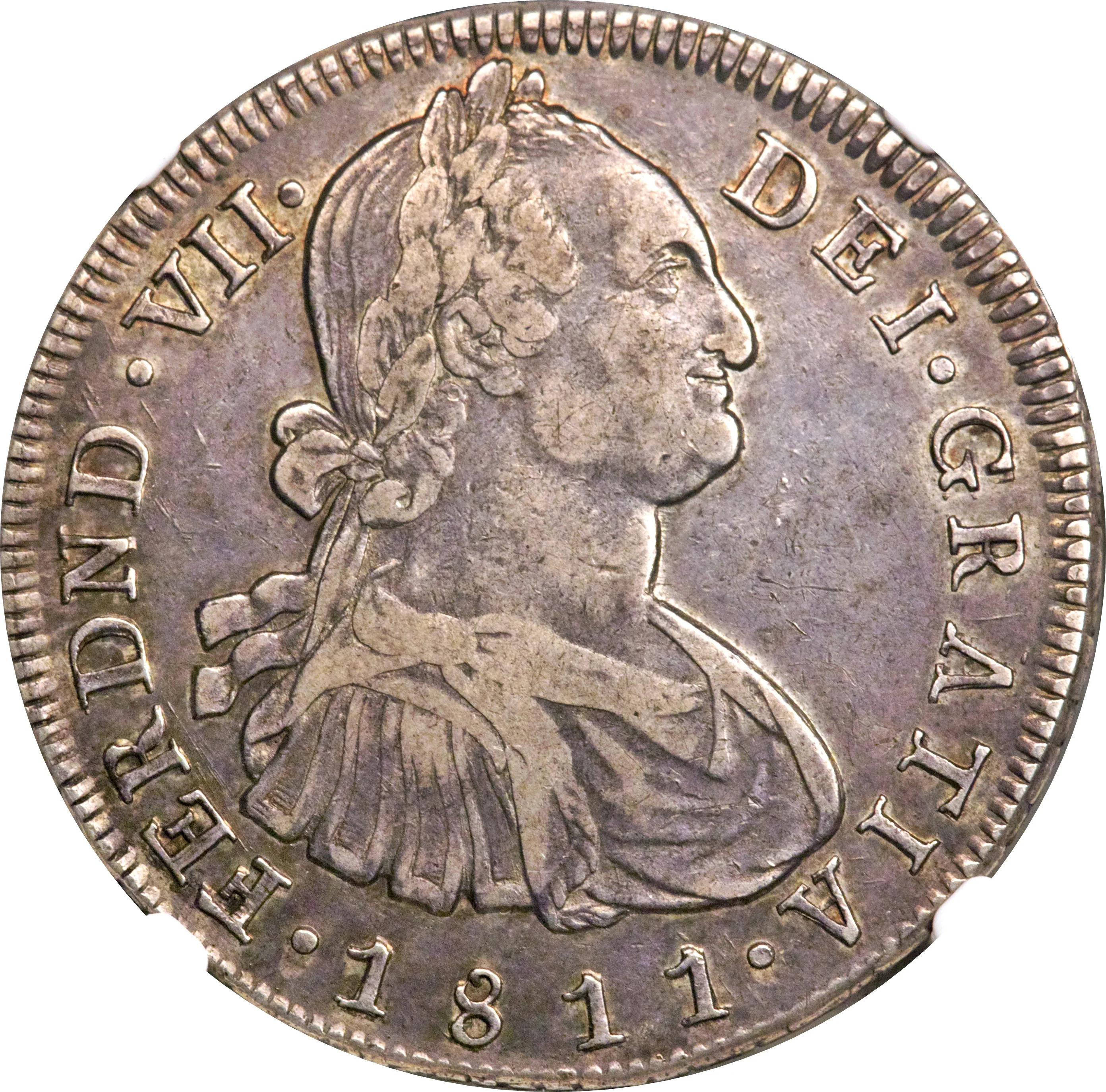
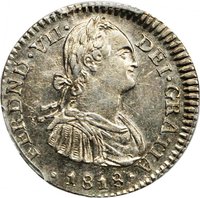
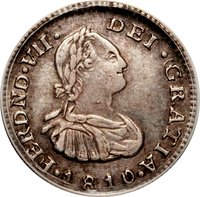
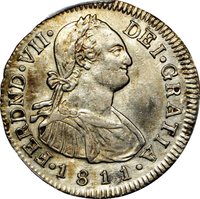
Obverse
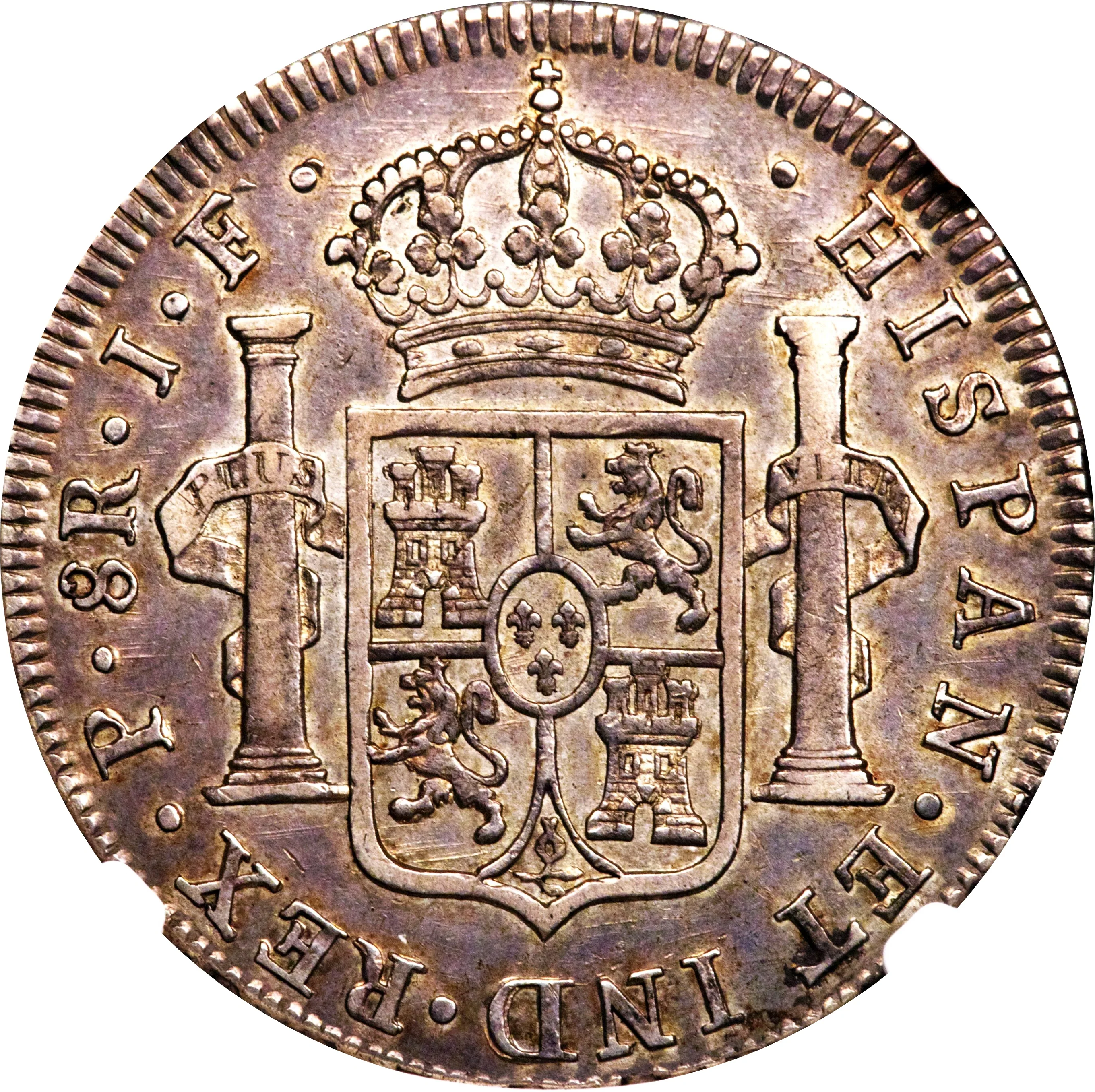
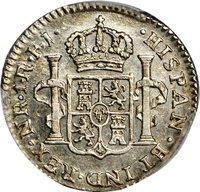
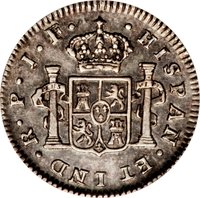
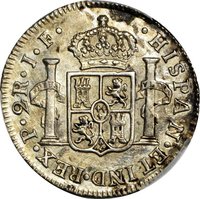
Reverse
Description:
Crowned Castile and León arms between pillars, encircled by legend.
Inscription:
HISPAN·ET IND·REX·P·8R·J·F
Script: Latin
Edge
Alternating rectangles and circles
Mints
| Name | Mark |
|---|---|
| Casa de Moneda de Colombia | P |
Historical background
In 1810, Colombia was not yet a unified nation but a collection of provinces within the Spanish Viceroyalty of New Granada, on the brink of revolution. The currency situation was a direct reflection of colonial administration and economic strain. The official medium of exchange was the Spanish colonial real, with coins minted primarily in precious metals—gold escudos and silver reales—from mines in regions like Popayán. However, a chronic shortage of circulating specie, especially lower-denomination coins for daily transactions, plagued the local economy. This scarcity was exacerbated by Spain's mercantilist policies, which drained bullion to the metropolis, and by the disruption of Atlantic trade due to the Napoleonic Wars in Europe.
The monetary landscape was further complicated by the widespread use of moneda macuquina, crude, hand-hammered coins that were often clipped or debased. Alongside these, a variety of foreign coins, particularly Peruvian and Mexican pesos, circulated with assigned values. To address the coin shortage, local authorities and merchants increasingly relied on papel sellado (stamped paper) for official transactions and even issued rudimentary paper notes or tokens as emergency substitutes. This created a fragmented and unreliable monetary system where the value and acceptance of currency could vary significantly from province to province.
The political crisis of 1810, ignited by the formation of local juntas that rejected Spanish authority, immediately worsened the currency situation. The collapse of central colonial administration severed the already weakened supply of official coinage from Spain. In response, the newly independent juntas, beginning with Cartagena in 1812, took the seminal step of issuing their own provisional coinage, often overstamping existing Spanish coins or minting new ones with revolutionary symbols. Thus, the currency of 1810 represents a pivotal moment of transition—from a strained colonial system to the fragmented and inflationary monetary experiments that would characterize the coming decade of the Patria Boba and the struggle for independence.
The monetary landscape was further complicated by the widespread use of moneda macuquina, crude, hand-hammered coins that were often clipped or debased. Alongside these, a variety of foreign coins, particularly Peruvian and Mexican pesos, circulated with assigned values. To address the coin shortage, local authorities and merchants increasingly relied on papel sellado (stamped paper) for official transactions and even issued rudimentary paper notes or tokens as emergency substitutes. This created a fragmented and unreliable monetary system where the value and acceptance of currency could vary significantly from province to province.
The political crisis of 1810, ignited by the formation of local juntas that rejected Spanish authority, immediately worsened the currency situation. The collapse of central colonial administration severed the already weakened supply of official coinage from Spain. In response, the newly independent juntas, beginning with Cartagena in 1812, took the seminal step of issuing their own provisional coinage, often overstamping existing Spanish coins or minting new ones with revolutionary symbols. Thus, the currency of 1810 represents a pivotal moment of transition—from a strained colonial system to the fragmented and inflationary monetary experiments that would characterize the coming decade of the Patria Boba and the struggle for independence.
Series: 1810 Colombia circulation coins
✨ Legendary