

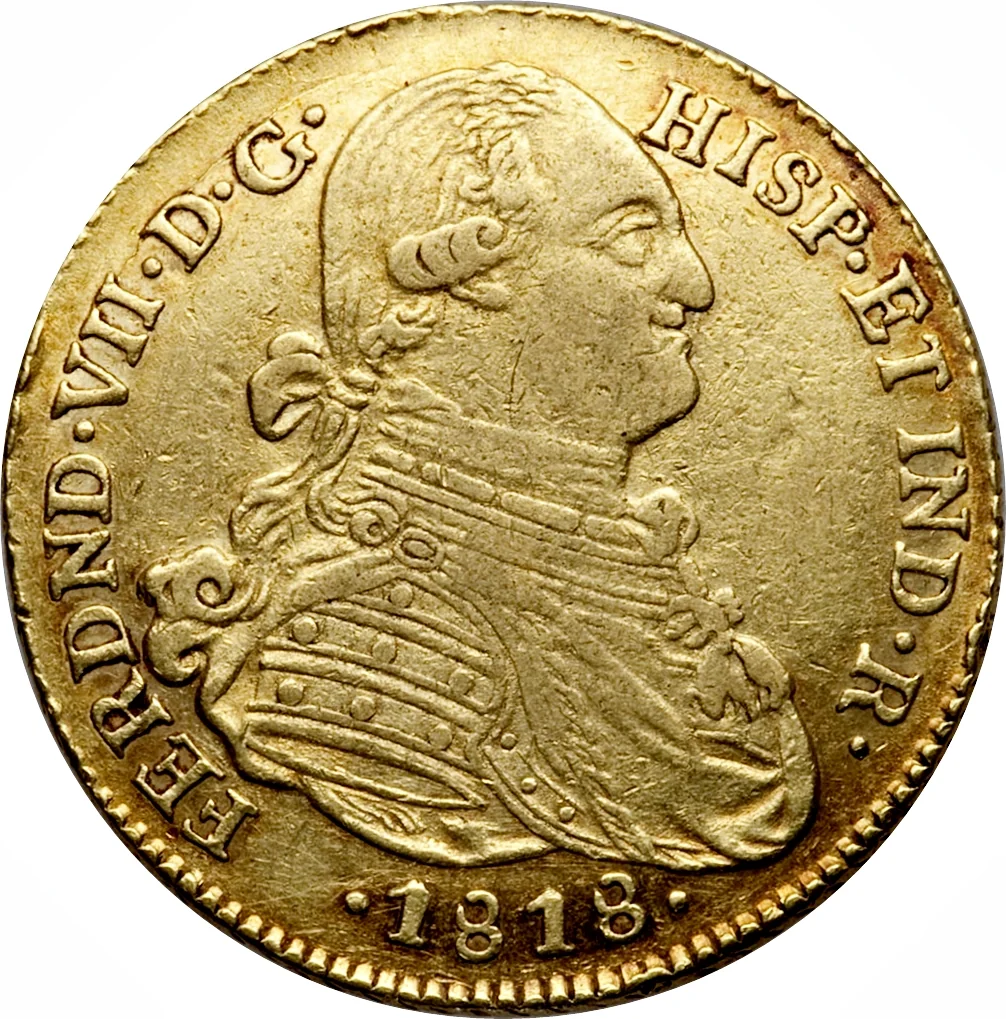
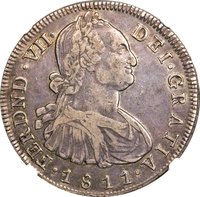
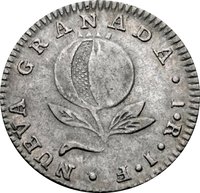
Obverse
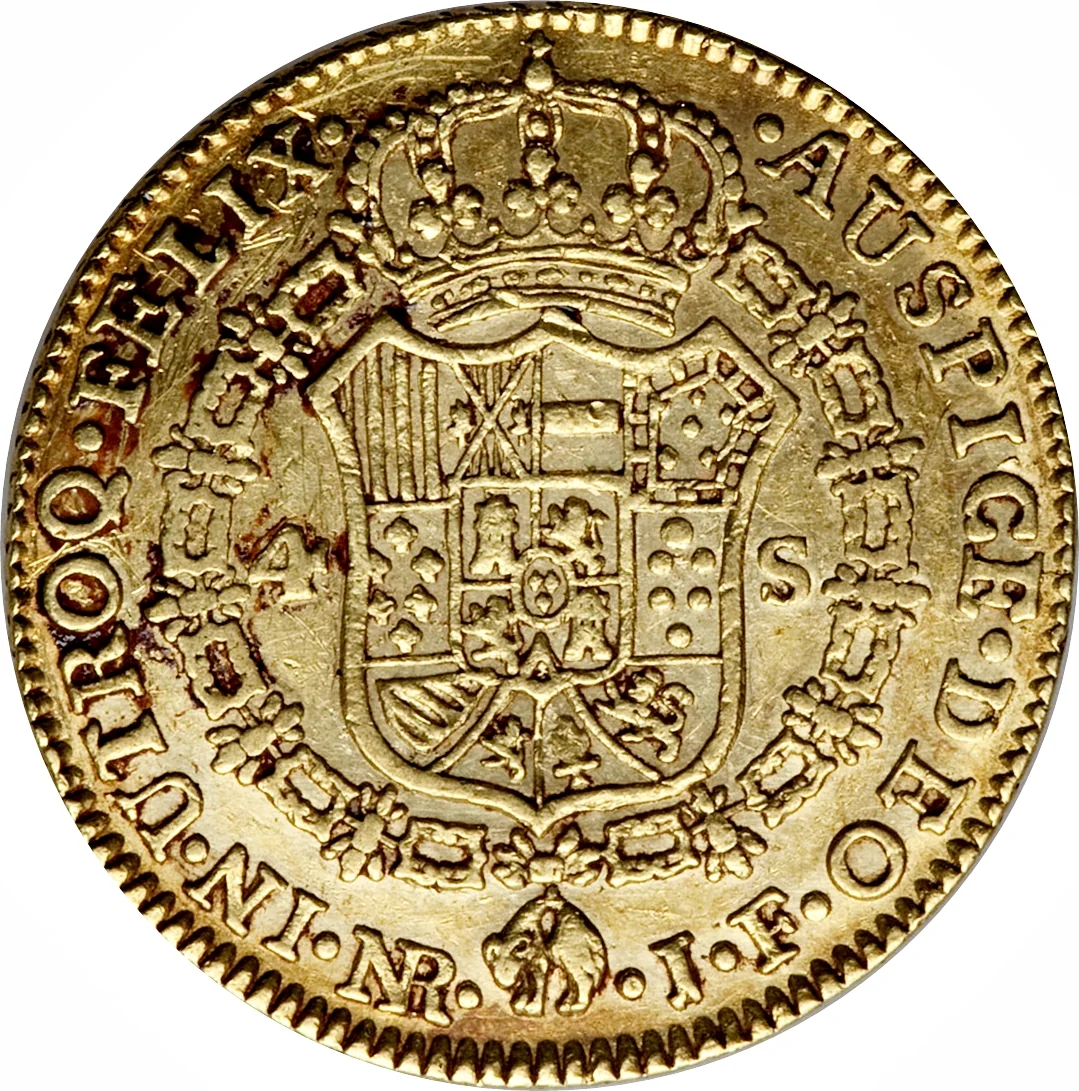
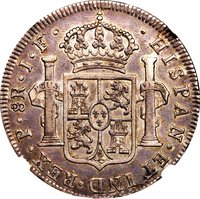
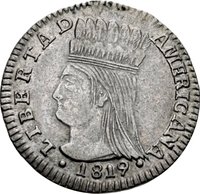
Reverse
Edge
Categories
| Symbols> Coat of Arms |
| Person> Monarch |
Mints
| Name | Mark |
|---|---|
| Bogota Mint | NR |
Historical background
In 1818, Colombia was not yet a unified nation but a collection of provinces in the midst of the protracted and chaotic War of Independence against Spanish rule. The conflict, which began in 1810, had already seen the rise and fall of the First Republic (1810-1816) and the brutal "Reconquista" by Spanish forces under Pablo Morillo. By 1818, Simón Bolívar's campaign to liberate New Granada was gaining critical momentum, culminating in his daring crossing of the Andes and the decisive victory at the Battle of Boyacá in August 1819. The currency situation was therefore a direct reflection of this fractured and war-torn landscape, characterized by competing monetary systems and profound economic instability.
The primary currency in circulation was still the Spanish colonial real and peso, but its authority and supply were severely disrupted. Both royalist forces in strongholds like Cartagena and patriot forces in liberated areas issued their own crude coinage and paper money to finance their military campaigns. These emergency emissions, often minted from melted-down church silver or printed with little backing, led to rampant inflation and a severe loss of public confidence. The result was a fragmented monetary zone where the value and acceptance of money depended entirely on which army controlled a given region, crippling internal trade and commerce.
Furthermore, the war had devastated the colonial economic infrastructure, including mines and mints, leading to a critical shortage of specie (hard coin). This scarcity forced authorities and even private merchants to rely on a chaotic mix of foreign coins (like British sovereigns), old Spanish coins, and low-quality local tokens. In this context, currency was not a tool of economic unity but a symbol of political struggle. The monetary chaos of 1818 underscored the urgent need for a stable, sovereign financial system, a challenge that would become a top priority for Bolívar's nascent Republic of Colombia following its formal establishment in December 1819.
The primary currency in circulation was still the Spanish colonial real and peso, but its authority and supply were severely disrupted. Both royalist forces in strongholds like Cartagena and patriot forces in liberated areas issued their own crude coinage and paper money to finance their military campaigns. These emergency emissions, often minted from melted-down church silver or printed with little backing, led to rampant inflation and a severe loss of public confidence. The result was a fragmented monetary zone where the value and acceptance of money depended entirely on which army controlled a given region, crippling internal trade and commerce.
Furthermore, the war had devastated the colonial economic infrastructure, including mines and mints, leading to a critical shortage of specie (hard coin). This scarcity forced authorities and even private merchants to rely on a chaotic mix of foreign coins (like British sovereigns), old Spanish coins, and low-quality local tokens. In this context, currency was not a tool of economic unity but a symbol of political struggle. The monetary chaos of 1818 underscored the urgent need for a stable, sovereign financial system, a challenge that would become a top priority for Bolívar's nascent Republic of Colombia following its formal establishment in December 1819.
✨ Legendary