

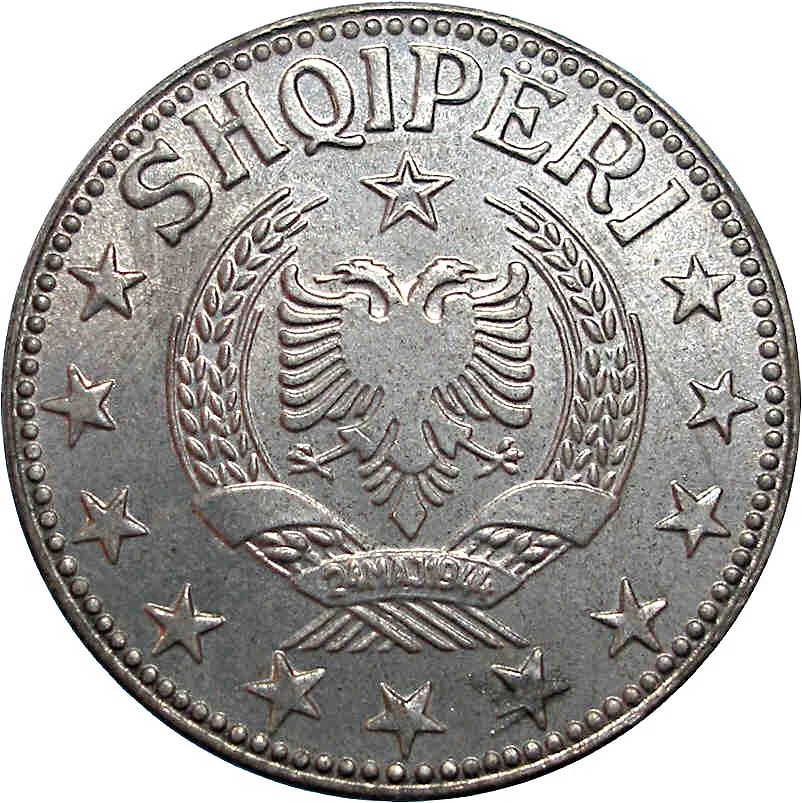
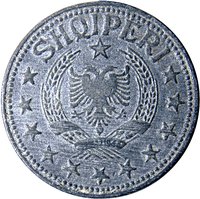
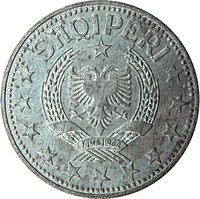
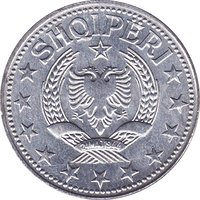
Obverse
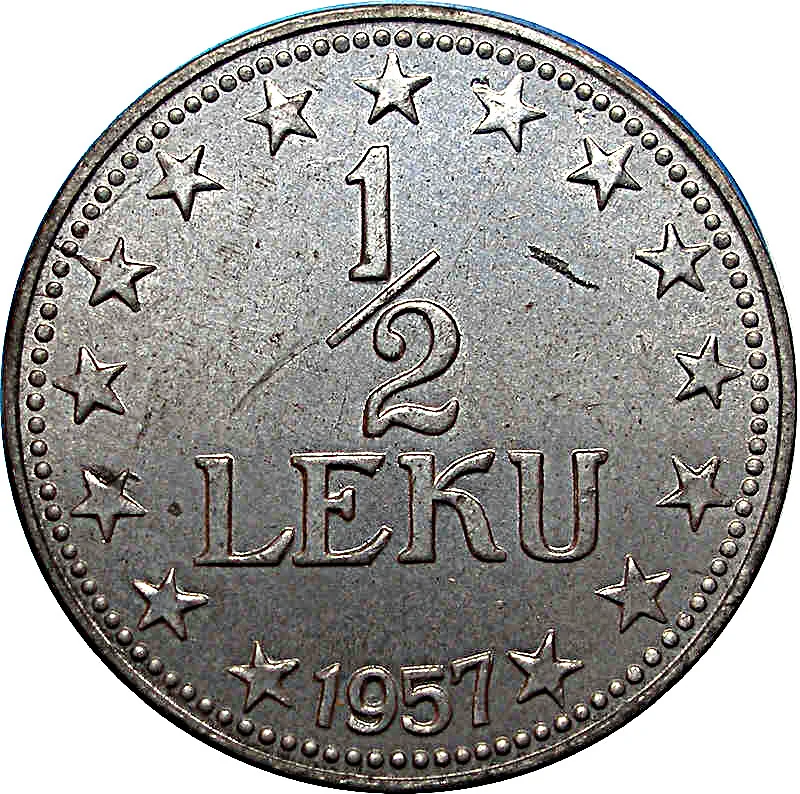
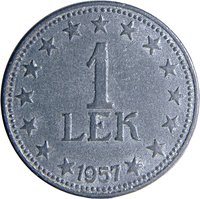
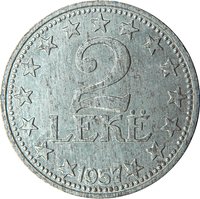
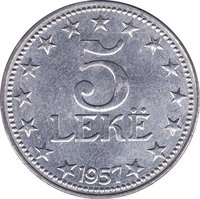
Reverse
Edge
Plain
Categories
| Animal> Bird |
| Symbols> Coat of Arms |
| Symbol> Double-headed eagle |
Mints
| Name | Mark |
|---|---|
| Belgrade | — |
Mintings
| Year | Mint Mark | Mintage | Quality | Collection |
|---|---|---|---|---|
| 1947 | — | — | ||
| 1957 | — | — |
Historical background
In 1947, Albania's currency situation was characterized by the consolidation of communist control and the severing of its last significant economic ties with the outside world. Following the end of World War II and the establishment of Enver Hoxha's regime, the Albanian lek, first introduced in 1926, remained the national currency. However, its management and value were now entirely dictated by the state-planning mechanisms of the new People's Republic. The National Bank of Albania, which had been re-established in 1945, functioned as an instrument of the state, focusing on financing the government's reconstruction and industrialization plans rather than operating as an independent central bank.
This period saw Albania firmly within the Soviet sphere of influence, and its monetary policy was aligned with the principles of a command economy. The government implemented strict currency controls, fixed the official exchange rate by decree, and outlawed the possession of foreign currency by private citizens. The black market for hard currency or goods persisted but operated at great personal risk. The primary economic focus was on autarky (self-sufficiency) and the first Five-Year Plan, launched in 1947, with the lek being used to direct investment into state-prioritized sectors like mining, infrastructure, and heavy industry, rather than reflecting market dynamics.
The year 1947 was particularly significant as it marked Albania's final break from its pre-war economic patterns, notably with the rejection of the Marshall Plan and the signing of new, exclusive economic agreements with Yugoslavia. These pacts further integrated Albania into a socialist economic bloc, creating a closed monetary system where the lek's value and utility were almost entirely domestic. Consequently, the currency became a non-convertible instrument of state control, isolating the Albanian economy from international financial flows and cementing a system that would define its monetary landscape for decades under Hoxha's isolated rule.
This period saw Albania firmly within the Soviet sphere of influence, and its monetary policy was aligned with the principles of a command economy. The government implemented strict currency controls, fixed the official exchange rate by decree, and outlawed the possession of foreign currency by private citizens. The black market for hard currency or goods persisted but operated at great personal risk. The primary economic focus was on autarky (self-sufficiency) and the first Five-Year Plan, launched in 1947, with the lek being used to direct investment into state-prioritized sectors like mining, infrastructure, and heavy industry, rather than reflecting market dynamics.
The year 1947 was particularly significant as it marked Albania's final break from its pre-war economic patterns, notably with the rejection of the Marshall Plan and the signing of new, exclusive economic agreements with Yugoslavia. These pacts further integrated Albania into a socialist economic bloc, creating a closed monetary system where the lek's value and utility were almost entirely domestic. Consequently, the currency became a non-convertible instrument of state control, isolating the Albanian economy from international financial flows and cementing a system that would define its monetary landscape for decades under Hoxha's isolated rule.
Series: 1947 Albania circulation coins
🌱 Common