

0.10 lek – Albania
Add to wishlist
Albania
Context
Years: 1940–1941
Issuer: Albania
Period:
(1939—1943)
Currency:
(1926—1965)
Demonetization: 1 January 1945
Total mintage: 800,000
Material
Diameter: 22.5 mm
Weight: 4.9 g
Thickness: 1 mm
Shape: Round
Composition: Aluminium bronze
Magnetic: No
Technique: Milled
Alignment: Coin alignment
flip
References
KM: #
Numista: #6431
Value
Exchange value: 0.1 ALK
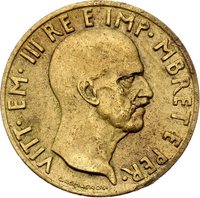
Obverse
Description:
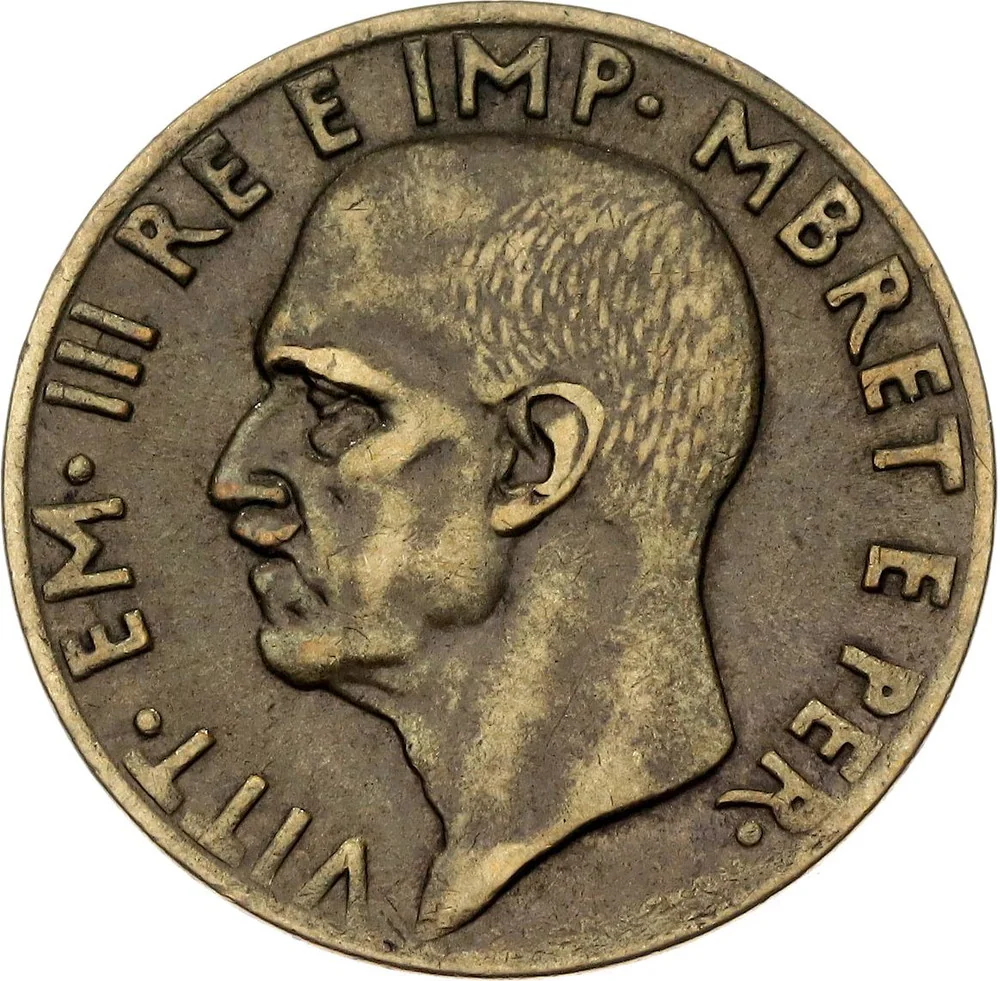
Bust of Vittorio Emanuele III, left profile.
Inscription:
VITT· EM· III RE E IMP· MBRET E PER·
G.ROMAGNOLI
G.ROMAGNOLI
Translation:
VICTORY EMPEROR III REIGN AND EMPEROR MBRET AND PER
G. ROMAGNOLI
G. ROMAGNOLI
Script: Latin
Language: Latin
Engraver: Giuseppe Romagnoli
Reverse
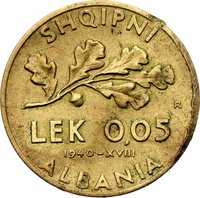
Description:
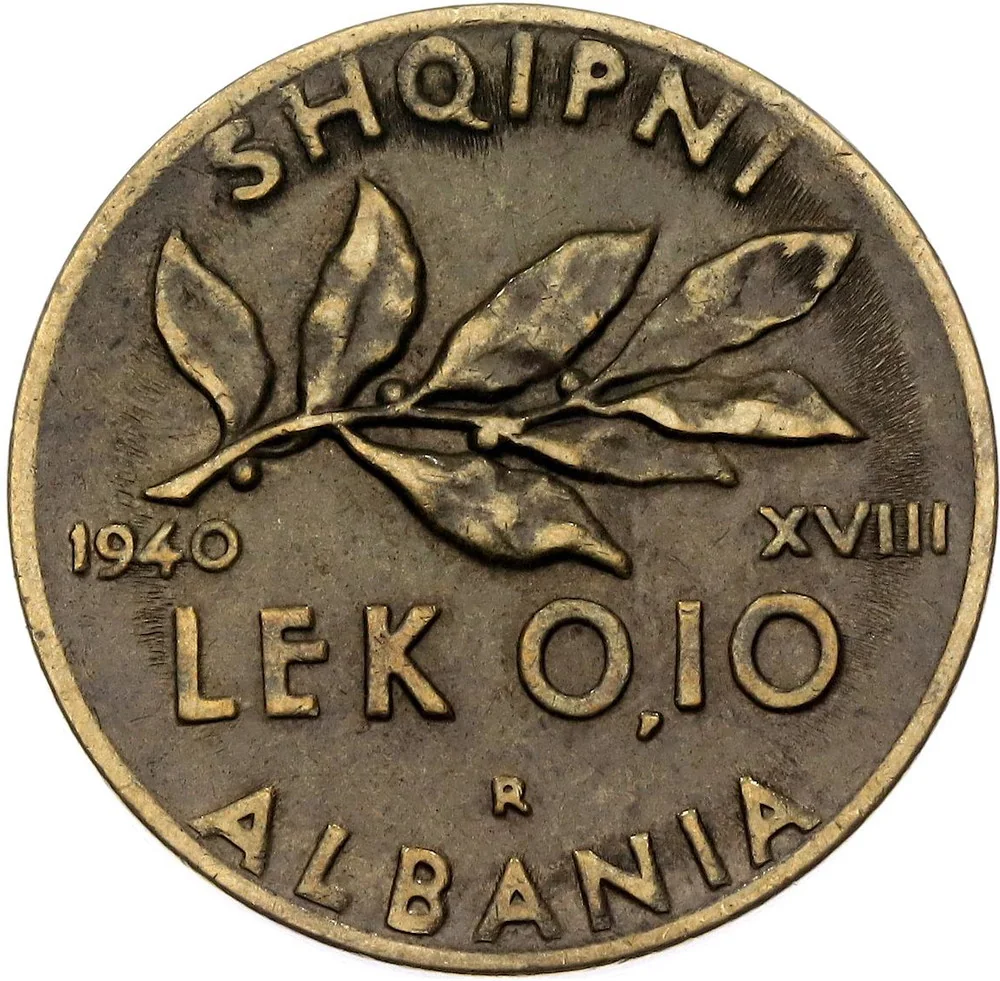
Olive branch, lower denomination.
Inscription:
SHQIPNI
1940 XVIII
LEK 0.10
R
ALBANIA
1940 XVIII
LEK 0.10
R
ALBANIA
Translation:
Albania
1940 XVIII
Lek 0.10
R
1940 XVIII
Lek 0.10
R
Script: Latin
Engraver: Giuseppe Romagnoli
Edge
Plain
Mints
| Name | Mark |
|---|---|
| Rome | R |
Historical background
In 1940, Albania's currency situation was complex and directly tied to its status as an Italian protectorate. Following the invasion and annexation in April 1939, the Kingdom of Italy moved swiftly to integrate Albania into its economic sphere. The Italian lira was declared legal tender alongside the existing Albanian franc (Franga), with an official fixed exchange rate established to bind the two economies. This monetary union was a key tool for Rome to facilitate control, finance its occupation forces, and direct investment—often for strategic military infrastructure rather than local development.
Despite the official policy, a dual-currency system persisted in practice. The Albanian franc, which had been introduced in 1926 with backing from Italy, remained in circulation, particularly for everyday local transactions. However, the Italian authorities pushed for the lira to become dominant, flooding the country with lire to pay for administration and construction projects. This led to inflationary pressures, as the increased money supply was not matched by growth in goods and services, eroding the purchasing power of ordinary Albanians.
The situation was further destabilized by the broader context of World War II. While Albania was not yet a major battlefield in 1940, Italy's entry into the war in June and its subsequent military failures in Greece later that year created economic uncertainty. Confidence in both currencies began to waver, with fears of devaluation and shortages. Thus, by the end of 1940, Albania's monetary system was an instrument of foreign domination, artificially pegged, increasingly inflationary, and vulnerable to the fortunes of Italian fascist ambitions in the wider war.
Despite the official policy, a dual-currency system persisted in practice. The Albanian franc, which had been introduced in 1926 with backing from Italy, remained in circulation, particularly for everyday local transactions. However, the Italian authorities pushed for the lira to become dominant, flooding the country with lire to pay for administration and construction projects. This led to inflationary pressures, as the increased money supply was not matched by growth in goods and services, eroding the purchasing power of ordinary Albanians.
The situation was further destabilized by the broader context of World War II. While Albania was not yet a major battlefield in 1940, Italy's entry into the war in June and its subsequent military failures in Greece later that year created economic uncertainty. Confidence in both currencies began to waver, with fears of devaluation and shortages. Thus, by the end of 1940, Albania's monetary system was an instrument of foreign domination, artificially pegged, increasingly inflationary, and vulnerable to the fortunes of Italian fascist ambitions in the wider war.
🌱 Fairly Common