

10 rials – Iran
Add to wishlist
Iran
Context
Years: 1966–1973
Issuer: Iran
Ruler: Mohammad Reza
Currency:
(since 1932)
Demonetized: Yes
Total mintage: 111,029,000
Material
References
KM: #
Numista: #6017
Value
Exchange value: 10 IRR
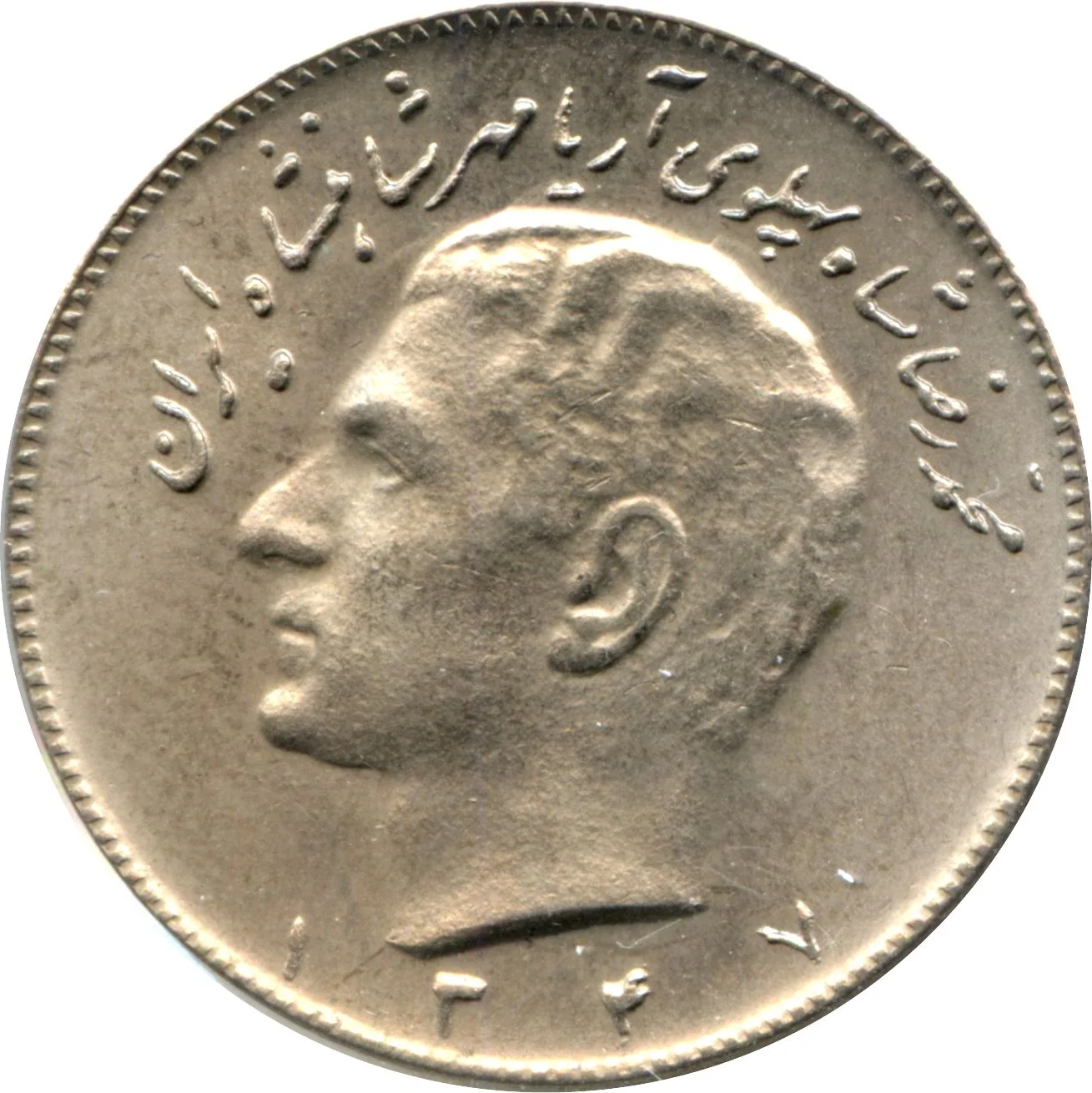
Obverse
Description:
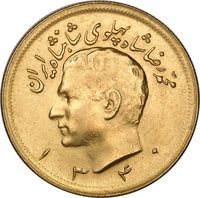
Mohammad Reza Shah Pahlavi in profile.
Inscription:
محمّدرضا شاه پهلوی آریامهر شاهنشاه ایران
۱۳۴٧
۱۳۴٧
Translation:
Mohammad Reza Shah Pahlavi Aryamehr, Shahanshah of Iran
1347
1347
Script: Persian (nastaliq)
Language: Persian
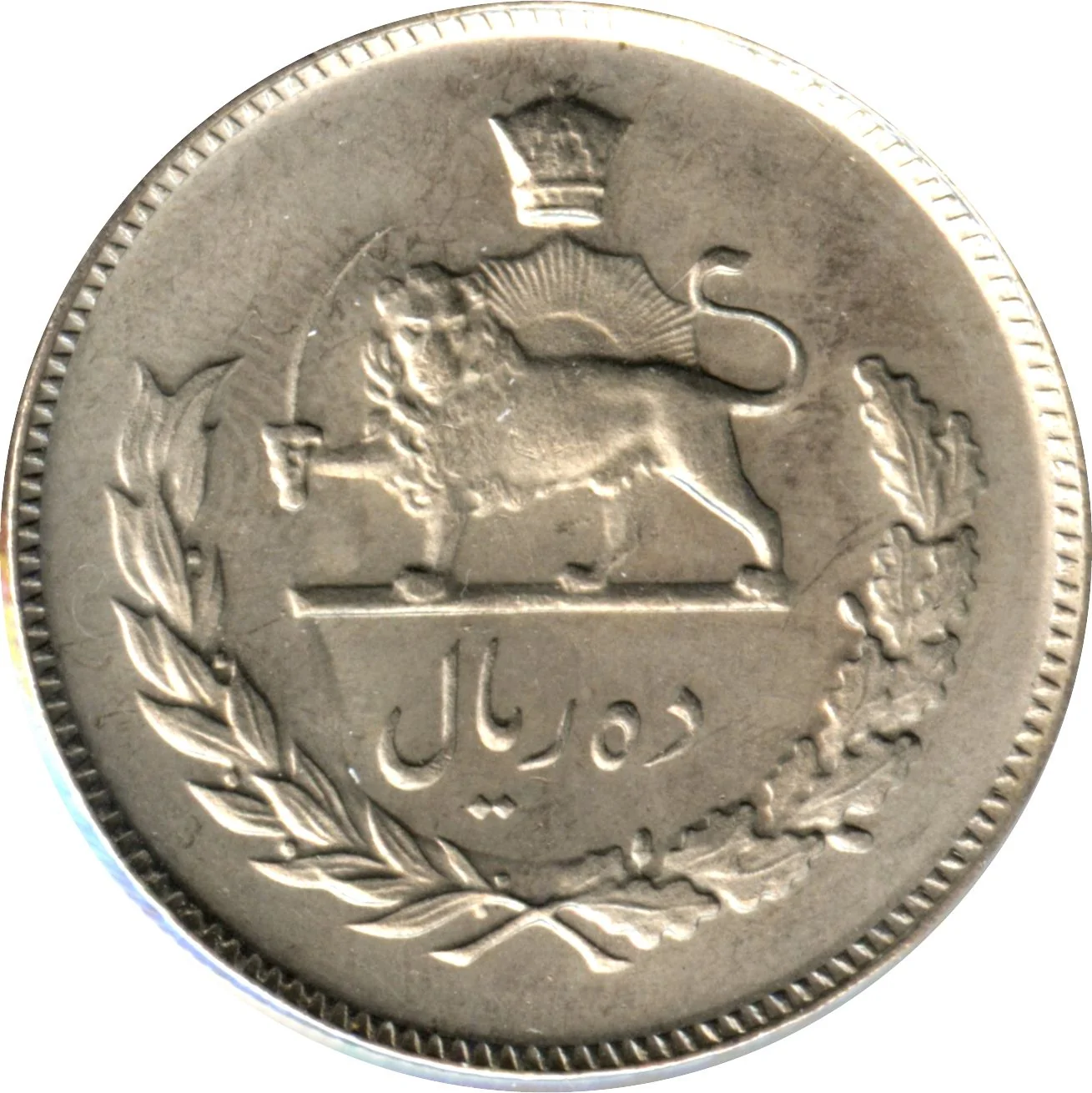
Reverse
Description:
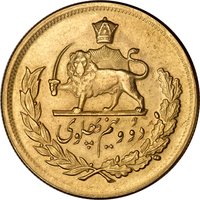
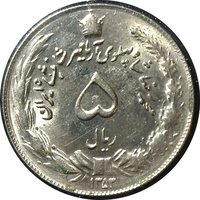
Oak and olive leaves
Inscription:
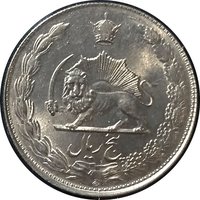
ده﷼
Translation:
Ten Riyals
Script: Persian (nastaliq)
Language: Arabic
Edge
Reeded
Mints
| Name | Mark |
|---|---|
| Tehran | — |
Mintings
| Year | Mint Mark | Mintage | Quality | Collection |
|---|---|---|---|---|
| 1966 | — | 1,699,000 | ||
| 1967 | — | 38,897,000 | ||
| 1968 | — | 8,220,000 | ||
| 1969 | — | 7,156,000 | ||
| 1970 | — | 7,397,000 | ||
| 1971 | — | 8,972,000 | ||
| 1972 | — | 9,912,000 | ||
| 1973 | — | 28,776,000 |
Historical background
In 1966, Iran's currency situation was characterized by relative stability and confidence, underpinned by the economic modernization drive of the Shah's "White Revolution." The national currency, the rial, was pegged to the U.S. dollar at a fixed rate of 75.75 rials per dollar, a parity established in 1957 and maintained through the 1960s. This fixed exchange rate regime was managed by the Central Bank of Iran (established in 1960) and was supported by growing foreign exchange reserves, primarily from rising oil revenues following the formation of the OPEC cartel in 1960 and subsequent increases in production.
This monetary stability facilitated state-led development and foreign investment. The government, flush with petrodollars, embarked on ambitious infrastructure and industrial projects, importing capital goods and technology. The strong and predictable rial made these imports cheaper and helped control inflation in the short term. Internally, the currency was fully convertible, and there were no significant foreign exchange restrictions for trade, reflecting the regime's outward-looking economic policy and its close political and financial ties with the West.
However, this apparent stability contained underlying pressures that would later escalate. The rapid increase in government spending began to strain domestic capacity, leading to nascent inflationary trends. Furthermore, the economy's growing dependence on oil revenues—a volatile commodity—and increased imports to fuel development created a structural vulnerability. While not a crisis point in 1966, this model sowed the seeds for future imbalances, as the fixed peg would eventually come under severe pressure from inflation and external shocks in the following decade.
This monetary stability facilitated state-led development and foreign investment. The government, flush with petrodollars, embarked on ambitious infrastructure and industrial projects, importing capital goods and technology. The strong and predictable rial made these imports cheaper and helped control inflation in the short term. Internally, the currency was fully convertible, and there were no significant foreign exchange restrictions for trade, reflecting the regime's outward-looking economic policy and its close political and financial ties with the West.
However, this apparent stability contained underlying pressures that would later escalate. The rapid increase in government spending began to strain domestic capacity, leading to nascent inflationary trends. Furthermore, the economy's growing dependence on oil revenues—a volatile commodity—and increased imports to fuel development created a structural vulnerability. While not a crisis point in 1966, this model sowed the seeds for future imbalances, as the fixed peg would eventually come under severe pressure from inflation and external shocks in the following decade.
🌱 Very Common