

2½ pahlavī – Iran
Add to wishlist
Iran
Context
Years: 1960–1974
Issuer: Iran
Ruler: Mohammad Reza
Currency:
Demonetization: 1979
Total mintage: 15,000
Material
References
KM: #
Numista: #29164
Value
Bullion value: $2790.44
Obverse
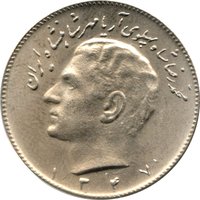
Description:
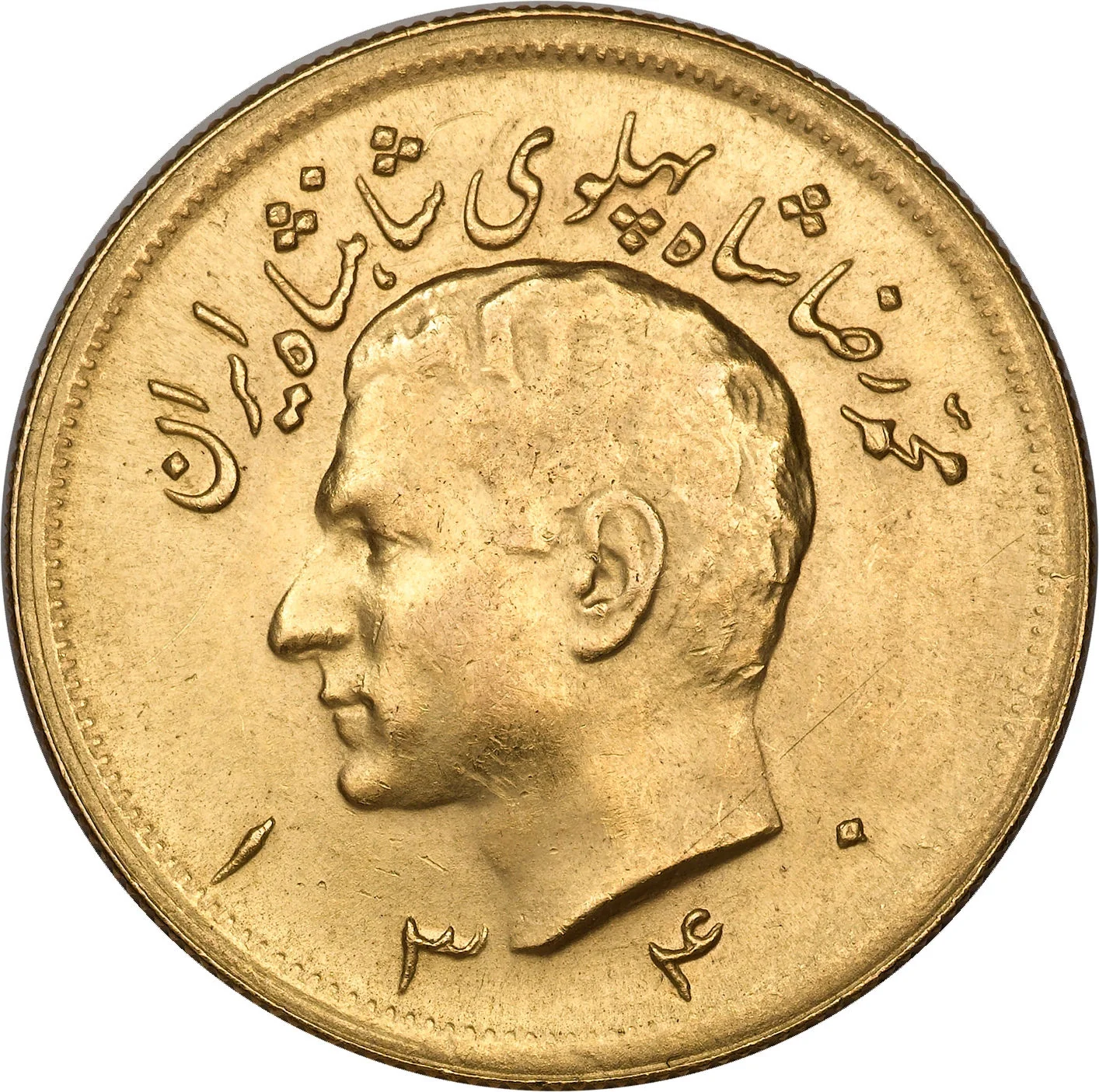
Mohammad Reza Shah Pahlavi left profile coin.
Inscription:
محمّدرضا شاه پهلوى شاهنشاه ايران
۱۳۴۰
۱۳۴۰
Translation:
Mohammad Reza Shah Pahlavi, Shahanshah of Iran
1340
1340
Language: Persian
Reverse
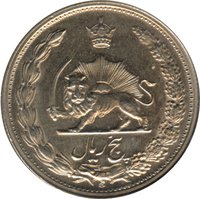
Description:
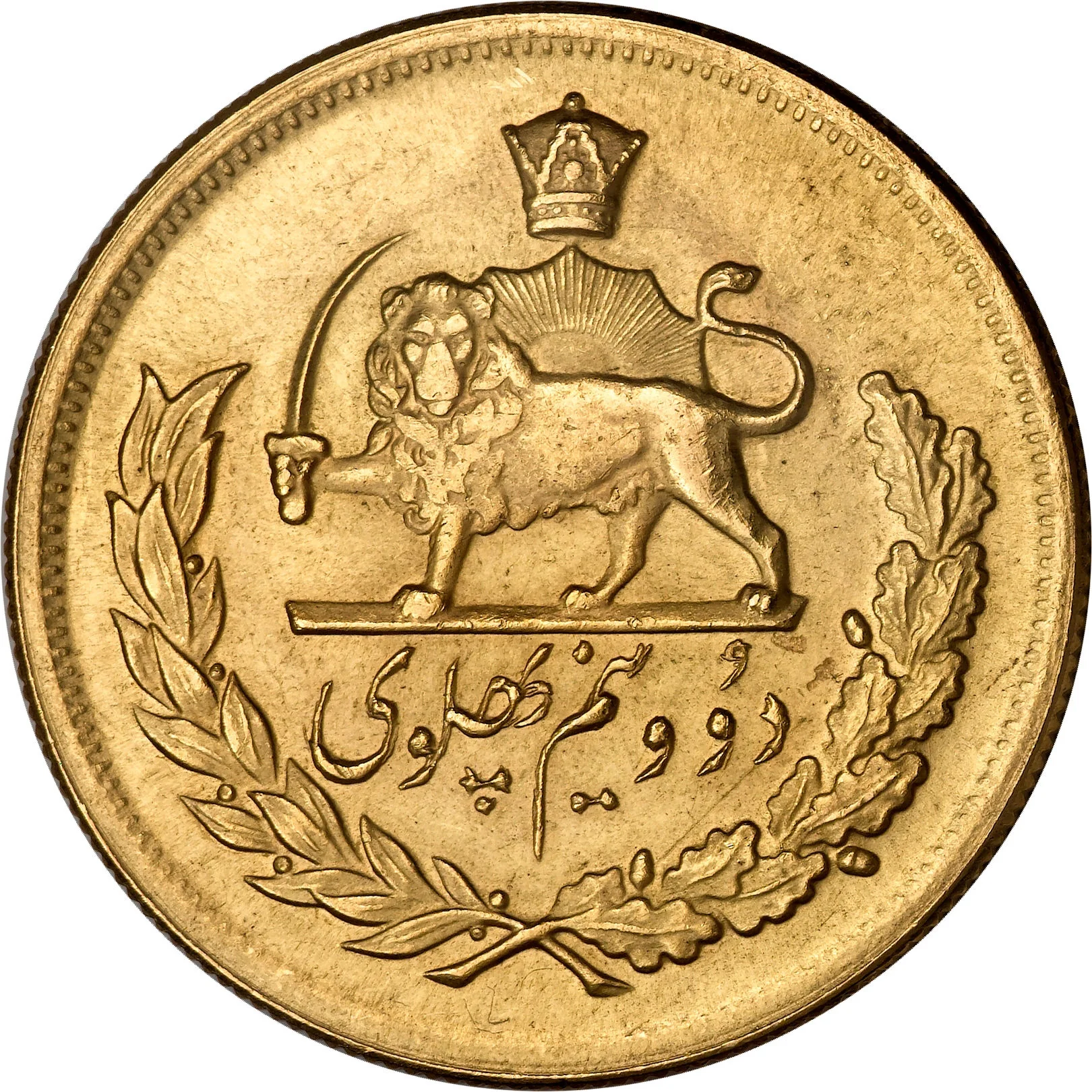
Pahlavi Crown with Lion and Sun, framed by oak and olive leaves. Legend: 2½ Pahlavi.
Inscription:
دوُ و نيم پهلوى
Translation:
Two and a half Pahlavi
Language: Persian
Edge
Mintings
| Year | Mint Mark | Mintage | Quality | Collection |
|---|---|---|---|---|
| 1960 | — | 1,682 | ||
| 1961 | — | 2,788 | ||
| 1963 | — | 30 | ||
| 1969 | — | 3,000 | ||
| 1971 | — | 2,000 | ||
| 1972 | — | 2,500 | ||
| 1973 | — | 3,000 | ||
| 1974 | — | — |
Historical background
In 1960, Iran's currency situation was characterized by relative stability under the Pahlavi monarchy, but it existed within a framework of economic dependency and underlying structural vulnerabilities. The national currency, the rial, was pegged to the U.S. dollar at a fixed rate of approximately 75.75 rials per dollar, a regime established in 1955 with guidance from the International Monetary Fund (IMF). This peg provided a facade of strength and facilitated international trade, yet it was fundamentally supported by Iran's oil revenues, which constituted the vast majority of the country's foreign exchange earnings. The state's budget and monetary stability were therefore directly tethered to the volatile global oil market.
Economically, the period was one of state-led development driven by the oil boom, following the 1953 coup and the subsequent oil consortium agreement of 1954. While significant infrastructure projects and the beginnings of industrialization were funded by petrodollars, the economy suffered from persistent inflation, a growing trade deficit, and an overvalued rial that hurt non-oil exports. The fixed exchange rate masked these inflationary pressures, but it also made Iranian manufactured goods less competitive abroad and encouraged imports, draining foreign reserves. This created a fragile equilibrium where monetary policy was largely passive, reacting to the flow of oil income rather than actively managing domestic economic conditions.
The stability of 1960 proved short-lived. By the early 1960s, the pressures became unsustainable, leading to a major currency crisis. A combination of excessive government spending, a slowdown in oil revenue growth, and a sustained loss of foreign reserves forced the government to devalue the rial by nearly 50% in 1961. This devaluation was a stark admission that the fixed parity was untenable, marking the end of this period of apparent calm and exposing the deep-seated economic imbalances that would continue to challenge the Iranian state throughout the decade.
Economically, the period was one of state-led development driven by the oil boom, following the 1953 coup and the subsequent oil consortium agreement of 1954. While significant infrastructure projects and the beginnings of industrialization were funded by petrodollars, the economy suffered from persistent inflation, a growing trade deficit, and an overvalued rial that hurt non-oil exports. The fixed exchange rate masked these inflationary pressures, but it also made Iranian manufactured goods less competitive abroad and encouraged imports, draining foreign reserves. This created a fragile equilibrium where monetary policy was largely passive, reacting to the flow of oil income rather than actively managing domestic economic conditions.
The stability of 1960 proved short-lived. By the early 1960s, the pressures became unsustainable, leading to a major currency crisis. A combination of excessive government spending, a slowdown in oil revenue growth, and a sustained loss of foreign reserves forced the government to devalue the rial by nearly 50% in 1961. This devaluation was a stark admission that the fixed parity was untenable, marking the end of this period of apparent calm and exposing the deep-seated economic imbalances that would continue to challenge the Iranian state throughout the decade.
💎 Extremely Rare